Why Custom Apparel Differentiates Brands That Last

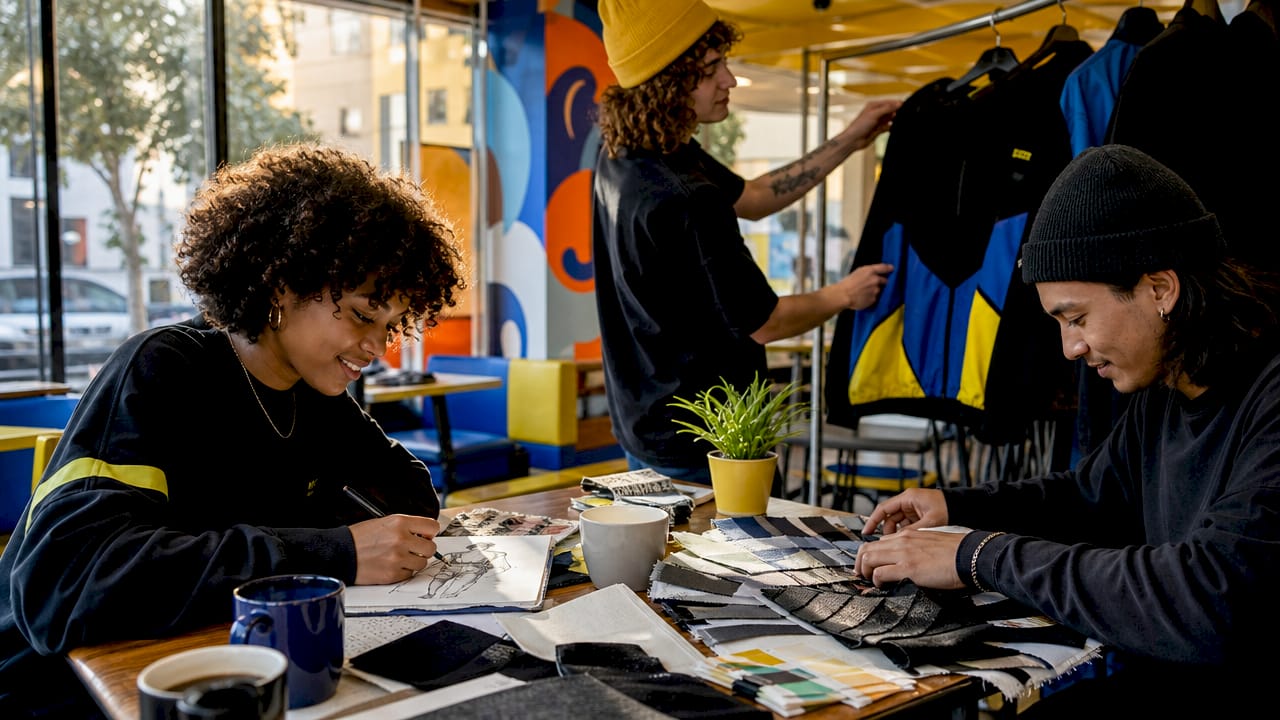
Custom apparel is defined as clothing designed and produced specifically to express a brand’s identity, values, and visual language. It is the most tactile form of brand communication available to marketers today. While digital ads disappear in seconds, a well-crafted garment worn in public generates 4.6 impressions per dollar spent and stays in rotation for years. Brand managers who treat custom clothing as a strategic asset rather than promotional merchandise are building something far more durable than any campaign. This article explains why custom apparel differentiates brands, how to choose the right production approach, and how to integrate apparel into a marketing strategy that compounds over time.
Why custom apparel differentiates brands from the competition
Custom apparel works as a branding tool because it transforms passive consumers into active participants in your brand story. A person wearing your garment is not just a customer. They are a walking endorsement, a conversation starter, and a signal to everyone around them about who your brand is and what it stands for. That kind of organic reach is nearly impossible to replicate through paid media alone.
The numbers behind apparel’s marketing power are striking. Branded apparel delivers 85% brand recall compared to just 27% for online ads. That gap reflects a fundamental difference in how people process physical versus digital experiences. A garment is touched, worn, and seen repeatedly. An ad is scrolled past in under two seconds.
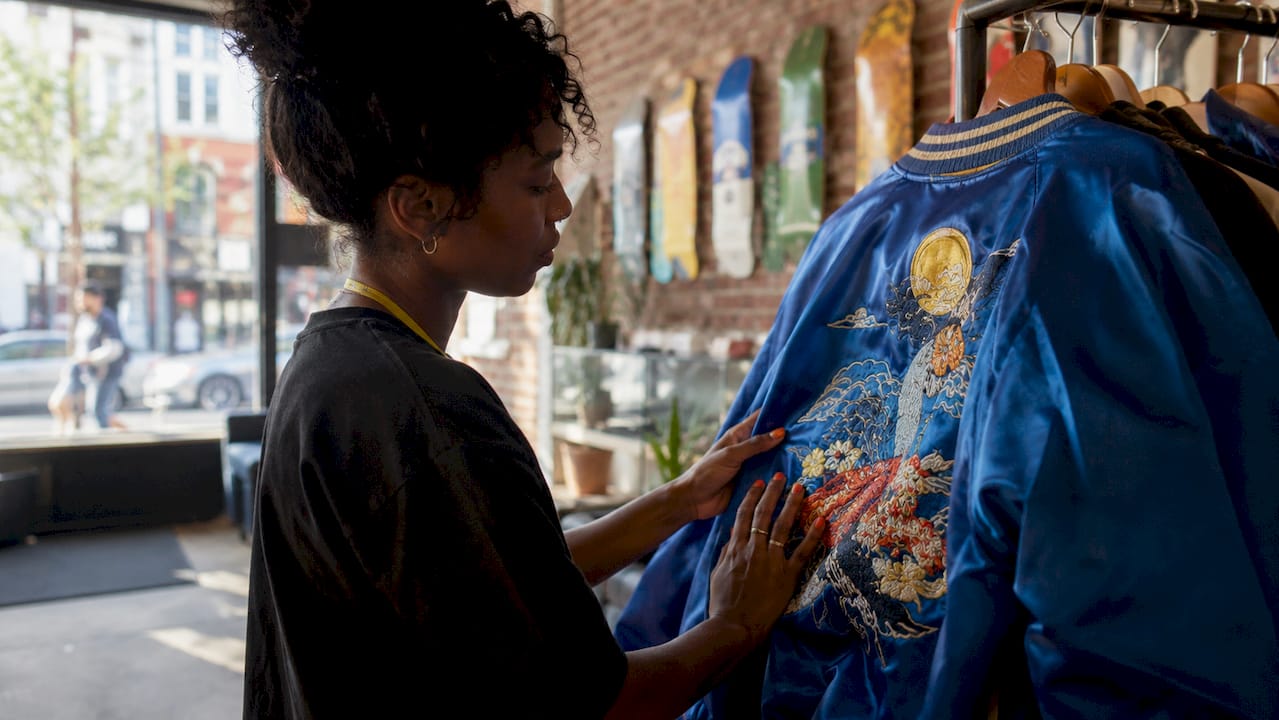
Custom clothing also builds emotional connection in ways that static logos cannot. Apparel sparks genuine conversations and human interactions that no digital asset can replicate. When someone asks “where did you get that?” the brand enters a real social moment. That moment builds affinity, not just awareness.
The industry is also evolving. The shift is moving from simple logo placement toward a holistic branding decision that integrates brand personality and storytelling into every design choice. For brand managers, this means the bar for custom apparel has risen. Generic branded T-shirts no longer differentiate. Thoughtful, well-made garments do.
The benefits of custom apparel go beyond visibility
The benefits of custom apparel extend across three distinct areas: visibility, professionalism, and loyalty.
Visibility: Custom branded items are often kept for over 5 years, creating sustained exposure that no digital campaign can match at the same cost per impression.
Professionalism: 75% of consumers perceive uniformed staff as more professional and trustworthy. For service businesses, this perception directly influences purchase decisions.
Loyalty: Team uniforms and branded merchandise create shared identity among employees and customers alike, deepening emotional investment in the brand.
Pro Tip: When launching a uniform program, standardize on two or three core garment styles before expanding. Consistency in silhouette and color builds recognition faster than variety.
Cut-and-sew vs. white-label: which approach builds a stronger brand?
The manufacturing model you choose shapes how defensible and distinctive your brand becomes in the market. Two primary approaches exist for brands entering or scaling custom apparel: cut-and-sew production and white-label customization. Each carries different implications for cost, timeline, uniqueness, and long-term brand equity.
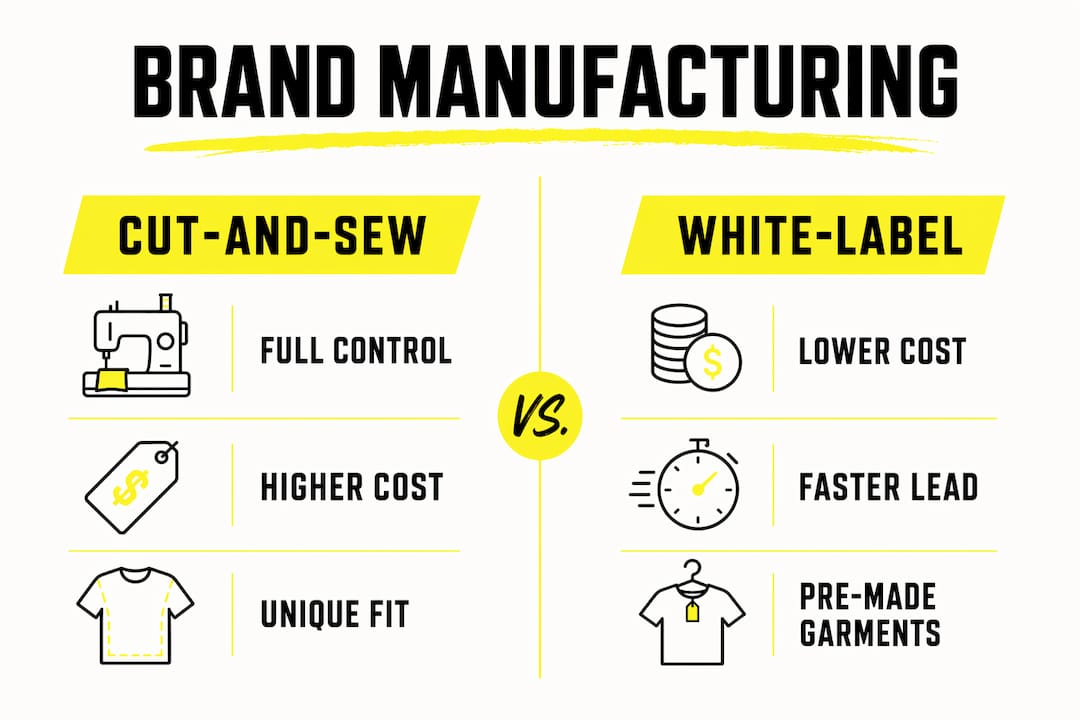
Cut-and-sew manufacturing means building garments from raw fabric according to your exact specifications. You control the silhouette, fabric weight, construction details, and every design element. Cut-and-sew requires upfront investment of $5,000 to $50,000 or more, with lead times of three to six months. The reward is margins of 50 to 70% and a product that competitors cannot easily copy. This is the approach that builds brand defensibility.
White-label apparel involves purchasing pre-made blank garments and adding your branding through printing, embroidery, or other decoration. Launch costs range from nearly zero to $500, and timelines are measured in weeks rather than months. The tradeoff is limited differentiation. Every brand using the same blank supplier starts from the same product. Your decoration becomes the only point of difference, and that is a fragile foundation for premium positioning.
Custom manufacturing solves specific design challenges by enabling exact color matching and product uniqueness, which increases customer retention by raising switching costs. When your garment fits differently, feels different, and looks different from anything else on the market, customers have a concrete reason to stay loyal.
Criteria | Cut-and-sew | White-label |
Startup cost | $5,000 to $50,000+ | $0 to $500 |
Lead time | 3 to 6 months | 2 to 6 weeks |
Gross margin | 50 to 70% | 20 to 40% |
Brand defensibility | High | Low |
Design control | Full | Decoration only |
Best for | Premium, long-term brand building | Speed to market, testing |
Pro Tip: Start with white-label to validate demand and customer preferences, then reinvest revenue into cut-and-sew development for your two or three best-selling styles. This sequencing reduces risk without sacrificing long-term brand ambition.
How quality and design shape customer perception of your brand
Quality is not a feature of custom apparel. It is the message. When a customer holds a garment and feels the weight of the fabric, the precision of the stitching, and the clarity of the decoration, they are forming a judgment about your brand’s standards. High-quality custom apparel communicates attention to detail and professionalism, reinforcing brand authority and customer trust in ways that no tagline can.
Decoration method is one of the most consequential decisions in custom apparel production. Custom embroidery withstands 200+ washes, significantly outlasting screen printing at around 60 washes. That difference in durability translates directly into years of additional brand exposure per garment. For premium brands, embroidery also signals craftsmanship in a way that printed graphics rarely do.
Design choices carry equal weight. Consider these principles when developing your custom apparel line:
Subtle branding outperforms loud logos. A tonal embroidered mark or a small woven label reads as confident and intentional. An oversized screen-printed logo reads as promotional merchandise.
Cohesive color palettes build recognition. Limiting your apparel palette to two or three brand colors creates visual consistency across every touchpoint where your garments appear.
Fit communicates brand positioning. A relaxed, oversized silhouette signals a different brand personality than a structured, tailored cut. Neither is wrong. Both must be deliberate.
Fabric choice affects perceived value. Heavyweight cotton, French terry, and technical fabrics all carry different associations. Match the material to the brand experience you want customers to have.
Poor quality apparel does not just underperform. It actively damages brand equity. A garment that pills, fades, or shrinks after three washes tells customers that your brand does not follow through on its promises.
Pro Tip: Request physical samples from at least three production partners before committing to a run. Evaluate each sample after washing it five times. The garment that survives that test is the one worth building your brand on.
Practical strategies for using custom apparel in your marketing mix
Integrating custom apparel into your brand marketing requires the same discipline as any other channel investment. The goal is not to produce clothing. The goal is to use clothing to achieve measurable outcomes, whether that is improving customer loyalty, increasing average order value, or building community around your brand.
Align every apparel decision with a specific business goal. A restaurant group investing in staff uniforms is targeting customer trust and service perception. A direct-to-consumer brand launching a limited-edition drop is targeting social sharing and urgency. Define the goal before designing the garment.
Use made-to-order and small-batch production for timely relevance. Small runs allow you to respond to cultural moments, seasonal shifts, or campaign themes without committing to large inventory. This flexibility keeps your apparel feeling current rather than evergreen.
Build community through apparel, not just awareness. Apparel worn by real customers in real settings generates authentic social proof that paid content cannot buy. Seed key pieces with community members, collaborators, and brand advocates who will wear them in contexts your audience respects.
Plan for scalability from the start. Many brand failures stem from poor planning and jumping to logo design without a product roadmap that includes reorder planning and sourcing stability. Develop a core product set of six to twelve pieces before expanding, and establish reorder minimums with your production partner before your first launch.
Leverage bulk purchasing for uniform programs. Structured uniform programs reduce annual apparel procurement costs by 40 to 50%. Standardizing on a defined set of garments and ordering in volume creates significant cost efficiency while maintaining brand consistency across every customer-facing team member.
Pro Tip: Treat your apparel line like a product roadmap, not a merchandise catalog. Assign each piece a role: one for team identity, one for customer gifting, one for community building. Clarity of purpose produces better design decisions.
Key takeaways
Custom apparel differentiates brands by combining physical durability, emotional resonance, and design intentionality into a single asset that performs across every environment where your audience lives.
Point | Details |
Apparel outperforms digital ads | Branded garments generate 85% brand recall versus 27% for online ads, with a lifespan of five or more years. |
Manufacturing model determines defensibility | Cut-and-sew delivers higher margins and brand uniqueness; white-label suits speed but limits differentiation. |
Decoration method affects long-term ROI | Embroidery lasts 200+ washes versus screen printing at 60, making it the stronger investment for premium brands. |
Quality signals brand standards | Physical garment quality directly shapes customer perception of brand authority and trustworthiness. |
Apparel strategy requires a product roadmap | Align each garment to a business goal and plan for reorders before launching to avoid costly gaps in supply. |
Why I think most brands are still underestimating apparel
I have watched brand managers spend six figures on digital campaigns that generate a week of engagement, then hand out $4 screen-printed T-shirts at their next event and call it merchandise. The disconnect is almost painful to observe. The campaign disappears. The T-shirt, if it is good enough, gets worn for years.
The brands that understand custom apparel as a strategic extension of their identity are playing a different game entirely. They are not asking “what should we print on a shirt?” They are asking “what does this garment say about who we are, and who will wear it, and where?” That shift in framing changes everything from the fabric selection to the decoration method to the distribution strategy.
What I find most compelling about custom apparel as a branding tool is its social dimension. A well-designed garment enters spaces that no ad can reach. It shows up at a dinner table, on a hiking trail, in a coffee shop. It generates conversations that are entirely outside your control, and that is exactly what makes them credible. Paid media tells people what to think about your brand. A great garment lets them discover it for themselves.
The manufacturing decision is where most brands either commit to differentiation or quietly abandon it. Choosing cut-and-sew over white-label is not just a production choice. It is a declaration that your brand is worth building something original around. That declaration, made consistently over time, is what separates brands that are recognized from brands that are remembered.
— Neville
Build your brand identity with Vainnewyork
At Vainnewyork, we believe that every brand deserves clothing that does more than carry a logo. Our custom apparel work is built around the same creative philosophy that drives everything we do: making the ordinary extraordinary through craft, intention, and collaboration.
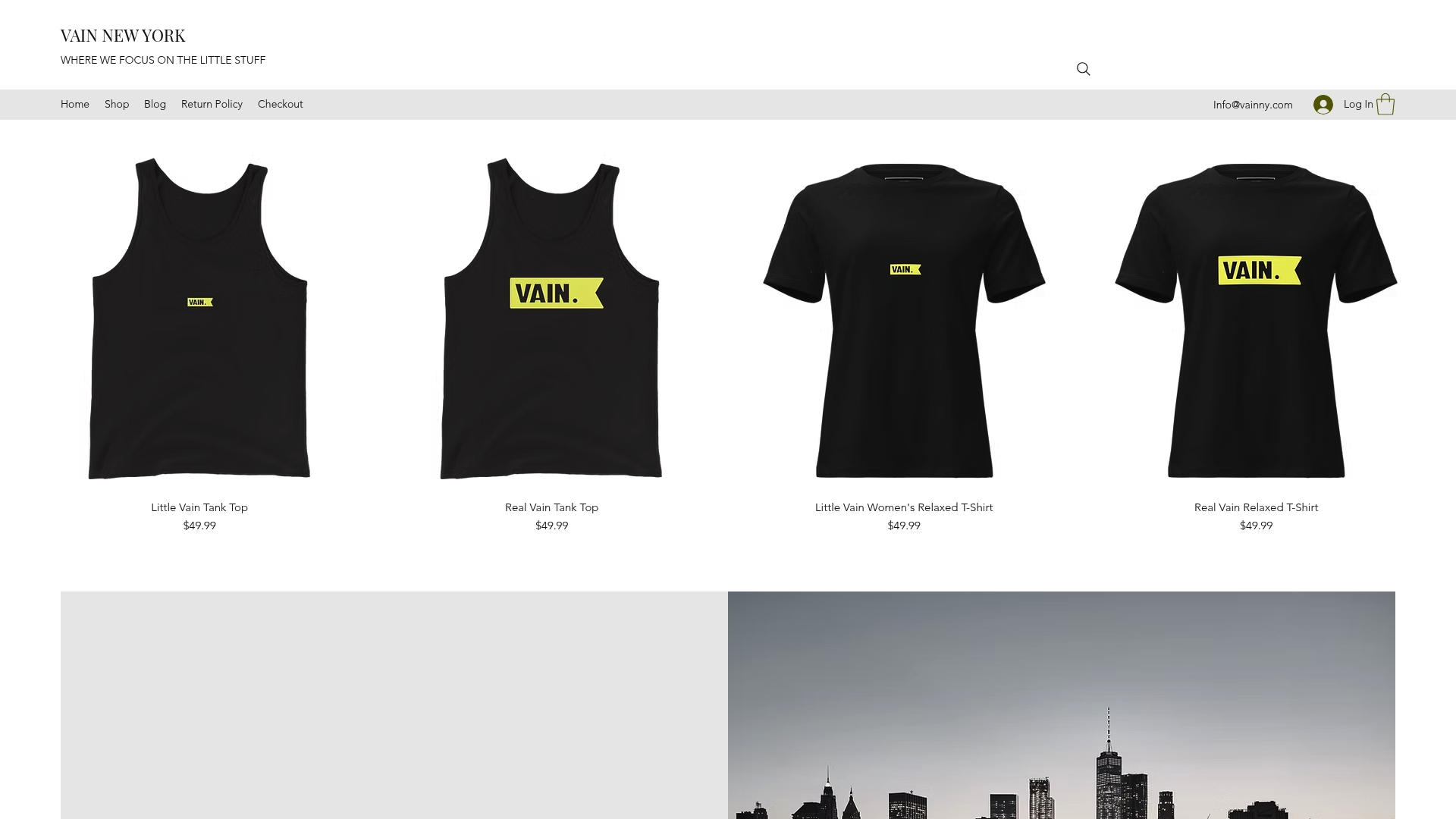
Whether you are developing a uniform program for your team, launching a limited-edition collection, or building a product line that reflects your brand’s full identity, we bring the creative and production expertise to make it real. Explore the Vainnewyork shop to see how quality and design come together in every piece we produce. If you are ready to turn your brand vision into wearable reality, we are ready to build it with you.
FAQ
What makes custom apparel more effective than standard branded merchandise?
Custom apparel delivers 85% brand recall compared to 27% for online ads, and garments are typically kept for over five years. The combination of physical durability and daily visibility makes custom clothing one of the highest-ROI brand assets available.
How does cut-and-sew differ from white-label for brand differentiation?
Cut-and-sew gives brands full control over fabric, fit, and construction, producing garments that competitors cannot replicate. White-label uses pre-made blanks with added decoration, which limits differentiation but reduces startup costs and lead times significantly.
Which decoration method is best for long-term brand quality?
Embroidery is the stronger choice for premium brands because it withstands 200+ washes versus approximately 60 for screen printing. The added durability extends garment life and brand exposure, improving long-term marketing ROI.
How should brand managers measure the ROI of a custom apparel program?
Track impressions per garment over its lifespan, monitor changes in customer perception scores after uniform rollouts, and measure social sharing generated by community-seeded pieces. Structured uniform programs also reduce procurement costs by 40 to 50%, creating a measurable operational return alongside the brand value.
When should a brand invest in cut-and-sew manufacturing?
A brand is ready for cut-and-sew when it has validated product-market fit through white-label testing, has a clear product roadmap of six to twelve core pieces, and has established reorder minimums with a production partner. Jumping to cut-and-sew without this foundation is one of the most common causes of early brand failure in apparel.
Recommended
Comments