The Role of Graphic Design Merchandise in Brand Identity

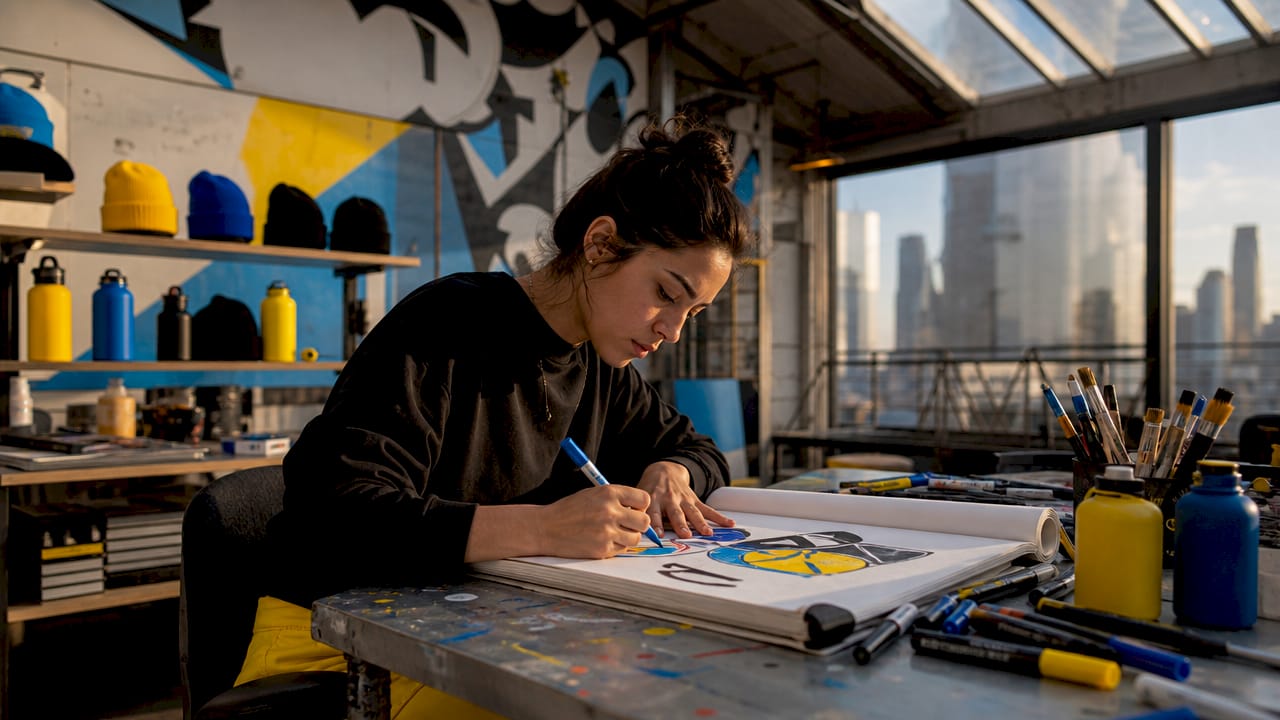
Graphic design merchandise is defined as any physical product intentionally crafted with visual design elements to communicate brand identity, build emotional connection, and function as a marketing asset. The role of graphic design merchandise extends far beyond putting a logo on a t-shirt. It is a strategic discipline that transforms everyday objects into brand ambassadors, creating recognition and loyalty that paid advertising rarely achieves on its own. Platforms like Printful, Redbubble, and Printify have made production accessible, but the real differentiator in 2026 is not access to production. It is the quality and intentionality of the design itself. Brands that treat merchandise as a strategic cultural engine build collectability and long-term equity. Those that treat it as a logo delivery vehicle do not.
How does graphic design influence brand identity through merchandise?
Graphic design in branding works through a precise visual language: color, typography, imagery, and composition. Each element carries meaning before a single word is read. A muted earth-tone palette on a tote bag communicates sustainability and craft. A bold, high-contrast geometric print on a hoodie signals energy and confidence. These are not accidents. They are deliberate choices that extend a brand’s personality into the physical world, where consumer behavior is shaped by color, typography, and finish at every point of contact.
Merchandise extends a brand’s visual language beyond digital and traditional media into spaces those channels cannot reach. A well-designed piece of apparel appears at coffee shops, gyms, concerts, and airports. It generates impressions without a media buy. The difference between merchandise that achieves this and merchandise that gets stuffed in a drawer comes down to one word: wearability.
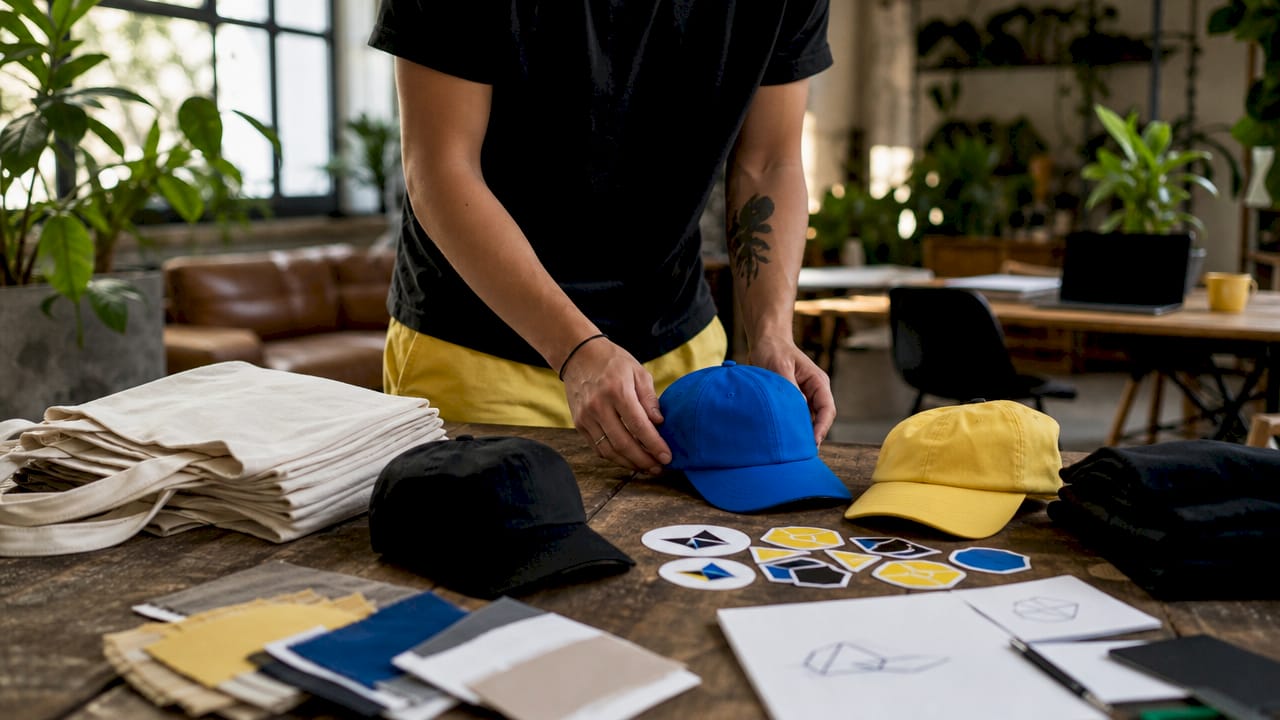
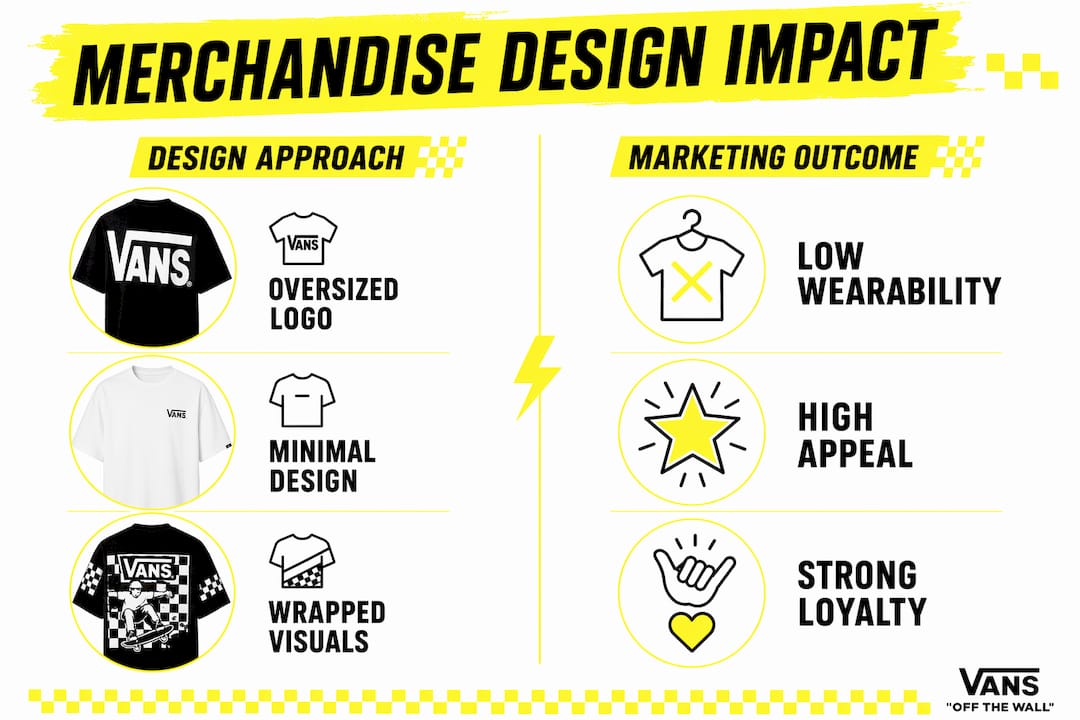
Many brands make the mistake of oversizing their logo, believing bigger equals more visibility. The opposite is true. Subtle branding and high wearability are the keys to merchandise that people actually use and display. Garment fit, print technique, and placement matter as much as the graphic itself.
Here is what intentional merchandise design actually involves:
Color contrast: Choosing foreground and background combinations that remain legible across lighting conditions and photograph well on social media
Typography selection: Using typefaces that reflect brand personality while remaining readable at small sizes on physical products
Imagery and illustration: Creating original artwork or motifs that carry meaning beyond the logo, giving the product standalone visual appeal
Logo placement: Positioning marks subtly, such as on a chest, sleeve, or back neck, rather than dominating the entire garment
Pro Tip: Before finalizing any merchandise design, photograph a mockup under natural light and on a phone camera. If the design reads clearly and looks compelling in that context, it will perform well in user-generated content and social sharing.
What role does merchandise design play in consumer engagement?
Merchandise that resonates emotionally does something advertising cannot replicate. It gives people a physical object through which they express identity and signal belonging. When someone wears a brand’s apparel, they are not just displaying a logo. They are saying something about who they are and what they value. That is the psychology at the core of why well-designed merchandise builds communities.
“Successful merch creates a bridge connecting fans to a community. It should resonate on a personal level, creating intrinsic value that strengthens loyalty.” — Designing Merch That People Actually Want to Wear
The graphic design for products that achieves this level of connection shares several characteristics:
It reflects the brand’s actual values, not just its color palette
It offers visual appeal independent of the brand name, so the wearer feels stylish rather than like a walking advertisement
It creates a sense of exclusivity or cultural relevance, making ownership feel meaningful
It connects to a specific community, subculture, or shared experience that the audience already identifies with
The brands that understand this treat merchandise as a cultural artifact rather than a promotional item. Supreme built an entire business model on this principle. Palace, Kith, and Fear of God each demonstrate how graphic design for products can carry cultural weight that transcends the product category entirely. The design is the product. The physical item is simply the medium.
Merchandise must offer intrinsic value that resonates with users’ identities or brings genuine joy. Without that, even a high-quality product fails as a brand asset. This is the distinction between merchandise people keep for years and merchandise that ends up at a thrift store within months.
How does intentional design execution drive marketing effectiveness?
The mindset shift that separates effective merchandise programs from ineffective ones is treating merch as a marketing tool, not a product. Intentional design drives far more marketing value than the physical product alone, shifting merchandise from giveaways to strategic brand assets. This reframing changes every decision that follows.
Here is how that plays out in practice:
Define the marketing objective first. Is this merchandise meant to drive social sharing, reward loyal customers, or create a revenue stream? The objective determines the design direction.
Select the product based on use case. A water bottle works for a fitness brand. A tote bag works for a bookstore. Forcing a product category that does not fit the audience’s lifestyle guarantees low usage and low visibility.
Design for the camera, not just the eye. Merchandise and packaging are now compounding digital assets designed for social media impact. A design that photographs beautifully generates organic reach every time someone posts it.
Apply visual hierarchy. The most important element should dominate. Secondary elements should support without competing. Poor visual hierarchy is the most common reason merchandise designs feel cluttered and forgettable.
Test before scaling. Run small production batches, gather real-world feedback, and iterate before committing to large inventory.
Design Approach | Marketing Outcome |
Oversized logo, minimal design | Low wearability, limited organic reach, short product lifespan |
Subtle branding, original artwork | High wearability, strong social sharing, long-term brand recall |
Generic product, any design | Forgettable, discarded quickly, no community signal |
Product matched to audience lifestyle | Daily use, repeated brand impressions, identity alignment |
The visual design impact on sales is not theoretical. When design decisions align with how, where, and why people actually use a product, the merchandise becomes part of their daily life. That daily presence compounds into brand recall that no single ad impression can match.
Pro Tip: Evaluate your merchandise design the same way you evaluate a paid digital ad. Ask: Does this stop the scroll? Does it communicate the brand clearly in under two seconds? If not, the design needs revision before production.
What are best practices for leveraging graphic design merchandise?
Effective merchandise programs do not happen in isolation. Collaboration among creative, product, and marketing teams from the start of a project is what aligns design output with measurable marketing goals. When these teams operate in silos, merchandise ends up looking polished but performing poorly because no one aligned the design to a specific audience behavior or campaign objective.
Here are the practices that consistently produce strong results:
Start with audience research. Know what your audience already wears, uses, and shares. Design into their existing aesthetic, not against it.
Use print-on-demand platforms for testing. Services like Printful and Gelato allow you to scale merchandise production with lower upfront costs, enabling rapid design testing without inventory risk.
Maintain brand consistency while allowing creative range. Your core visual identity, including color system, typeface, and logo usage, should remain consistent. But the artwork and composition can vary across product lines to keep the collection feeling fresh.
Design the unboxing experience. Custom tissue paper, branded stickers, and thoughtful packaging create shareable moments that extend the merchandise’s marketing reach beyond the product itself.
Optimize for social media from the design stage. Consider how the product will look in a flat lay, on a person, and in a close-up shot. All three contexts matter for organic content creation.
Tools like Adobe Illustrator, Figma, and Canva Pro each serve different stages of the design process, from initial concept to production-ready files. For teams without in-house design capacity, platforms like 99designs and Dribbble connect brands with specialized merchandise designers who understand both print production and brand strategy.
The role of packaging design in merchandise follows the same logic. Packaging is not just protection. It is the first physical expression of the brand that a customer touches, and it sets the expectation for everything inside. The packaging market is projected to reach 950 billion USD by 2034, which reflects how seriously the industry takes design as a commercial driver. Brands that invest in packaging design at the same level as product design capture a disproportionate share of that value.
Pro Tip: When briefing a designer on merchandise, provide three reference images of products you admire and three you want to avoid. This single step reduces revision cycles by more than half and produces work that aligns with your vision faster.
Key takeaways
Graphic design merchandise succeeds when intentional design, audience insight, and cross-team collaboration combine to create products that carry genuine cultural and emotional value for the people who use them.
Point | Details |
Design over logo placement | Subtle, wearable design outperforms oversized logos in both longevity and organic reach. |
Merchandise as marketing tool | Treat every design decision as a marketing decision, not just an aesthetic one. |
Emotional and identity value | Merchandise that reflects audience identity builds community and long-term brand loyalty. |
Cross-team collaboration | Creative, growth, and product teams must co-own the process to align design with marketing goals. |
Social media optimization | Design for how products photograph, not just how they look in person. |
Why I think most brands are still getting merchandise wrong
I have watched brands spend serious money on merchandise programs that produce nothing but warehouse inventory. The pattern is almost always the same: someone in marketing approves a design that looks fine on a screen, the product ships, and then it sits. No one wears it. No one posts it. The brand concludes that merchandise does not work for them.
The real problem is that they treated the product as the output and the design as decoration. The brands I have seen build genuine communities through merchandise do the opposite. They start with a design that could stand alone as art, then find the right product to carry it. The Vainnewyork V1 t-shirt and V2 t-shirt are examples of this thinking in practice. The design has a point of view. It communicates something specific about the culture around it.
The other thing I would push back on is the idea that merchandise needs to be a revenue center to justify the investment. For most brands, the marketing value of well-designed merchandise worn by real people in real contexts far exceeds what you could buy with the same budget in paid media. That math changes how you think about production costs, design investment, and distribution strategy entirely.
— Neville
Explore Vainnewyork’s graphic design merchandise
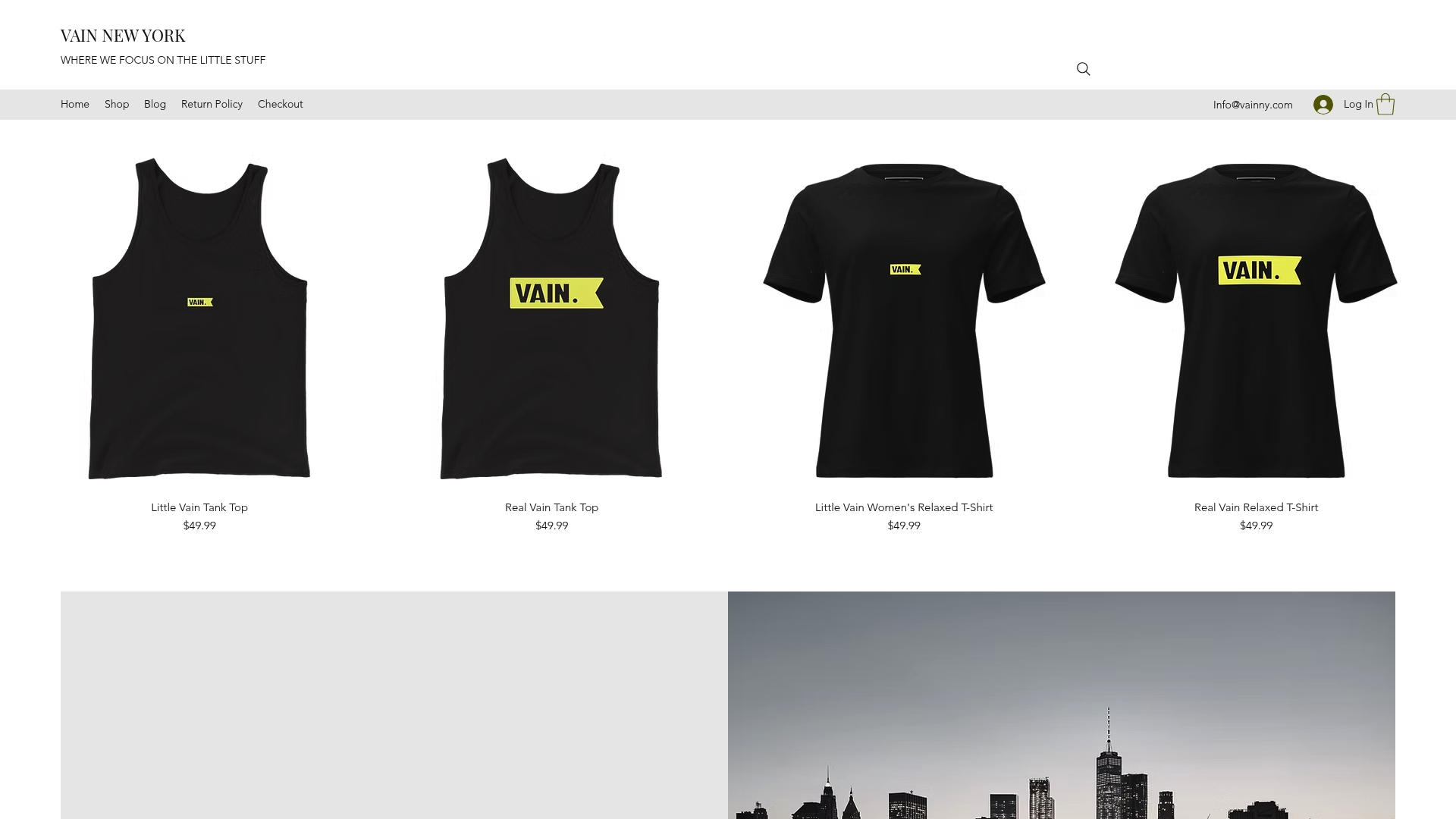
Vainnewyork approaches merchandise the way this article describes: design first, product second, community always. Every piece in the collection reflects a specific creative point of view, from the graphic language to the garment quality. If you want to see what intentional merchandise design looks like in practice, the Vainnewyork shop is worth your time. You will find pieces like the V3 t-shirt that demonstrate how a brand can communicate culture, craft, and identity through a single well-designed product. Browse the collection and let the work speak for itself.
FAQ
What is the role of graphic design in merchandise?
Graphic design in merchandise communicates brand identity, builds emotional connection, and drives consumer engagement through deliberate use of color, typography, imagery, and composition. It transforms physical products into marketing assets that generate brand impressions in everyday life.
Why does design matter more than the product itself?
Intentional design execution drives marketing effectiveness far beyond the physical product, because design determines wearability, social shareability, and emotional resonance. A generic product with outstanding design outperforms a premium product with a forgettable logo every time.
How does merchandise design build brand loyalty?
Merchandise builds loyalty when it carries intrinsic value that reflects the audience’s identity and connects them to a community. People keep and display products that say something meaningful about who they are, which creates repeated brand impressions and deepens emotional attachment over time.
What tools do marketers use to design merchandise?
Adobe Illustrator and Figma are the industry standards for creating production-ready merchandise artwork. For teams without in-house designers, platforms like 99designs and Dribbble connect brands with specialists, while print-on-demand services like Printful handle production and fulfillment at scale.
How should brands optimize merchandise for social media?
Design merchandise with photography in mind from the start, considering how the product looks in flat lays, on a person, and in close-up detail shots. Packaging and unboxing experiences also function as compounding digital assets that generate organic social reach well beyond the initial purchase moment.
Recommended
Comments