Avoid Scope Gaps in Production Company Services With a Five Stage RFP Map

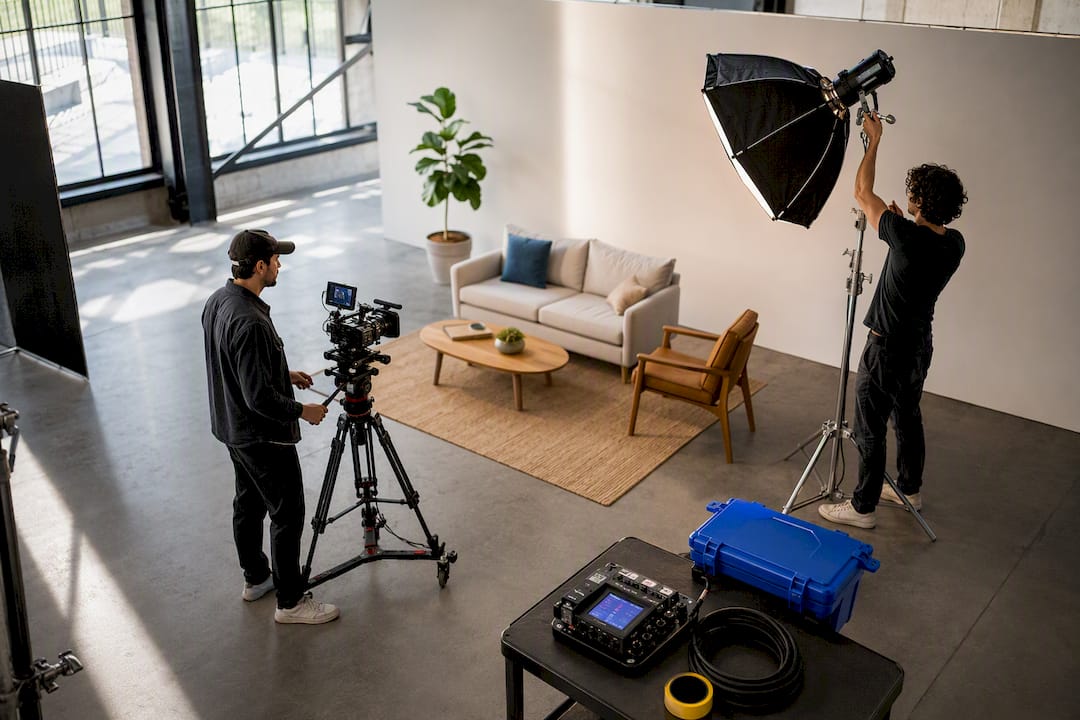
Production company services span five stage groups: development, pre-production, production, post-production, and delivery, plus specialist add-ons like VFX, animation, and casting that may sit in-house or get subcontracted to trusted partners. Knowing where each task lives lets you brief vendors accurately and spot gaps in a proposal before you sign anything.
TL;DR:
Most projects involve multiple vendors at different stages, requiring clear communication about task ownership and subcontracting specifics.
Services like VFX, animation, and stunts are mostly subcontracted, so project managers must verify vendor insurance and union signatory status carefully.
Budget and timeline variations depend heavily on project format, with post-production and VFX often being the most time-consuming and costly phases.
Selecting the right production partner hinges on assessing their operational systems, format experience, and subcontracting management, not just creative portfolio.
Cost drivers include scope, team size, location complexity, union requirements, and post-work, with clear specs and schedules reducing overruns.
Table of Contents
What Do Production Company Services Actually Include?
Not every company that calls itself a “production company” does the same job. The industry uses the term loosely, and the differences matter once money is on the table.
A full-service production company owns the whole arc: it develops the concept, staffs the shoot, and delivers a finished, distribution-ready file. A specialist shop, by contrast, plugs into someone else’s project for one narrow function, animation, sound design, or aerial cinematography, and hands the output back upstream. A co-producer model splits ownership and risk between two or more companies, often because financing, distribution relationships, or union jurisdiction require a local or genre-specific partner. Industry commentary consistently frames the term as elastic: some firms focus purely on financing and packaging, while others get their hands dirty running the production floor, and scale and project ownership are the real differentiators.
Projects split across vendors more often than clients expect. A brand might hire a creative agency for strategy, a production company for the shoot, and a separate post house for color and sound, three invoices, one deliverable.
At a glance, here’s what typically shows up in a production company’s service menu:
Creative development and script or concept work
Budgeting, scheduling, and line producing
Casting, location scouting, and permitting
Crew staffing across camera, lighting, sound, and art departments
Editing, sound design, color grading, and visual effects
Final delivery, encoding, and distributor or festival liaison
Reading a proposal against this list tells you fast whether you’re getting a true partner or a single-function vendor dressed up as one.
Services By Production Stage: What Happens When
A production company handles end-to-end creation tasks across development, pre-production, production, post-production, and distribution, sometimes funding the work itself, sometimes executing under a studio or network’s umbrella. Here’s how responsibility typically breaks down at each stage:
Development. This is where intellectual property gets secured, scripts get written or refined, and the project gets “packaged,” meaning attaching a director, key cast, or a recognizable creative voice that makes the pitch sellable. Early budget modeling happens here too, often rough, but rough enough to tell a client whether the vision is fundable.
Pre-production. Scheduling locks down, casting finalizes, locations get scouted and cleared, permits get filed, and insurance certificates get issued. This is unglamorous, logistics-heavy work, but it’s where most budget overruns get prevented or baked in. A weak pre-production plan is the single biggest predictor of a chaotic shoot.
Production. On set, a line producer and a unit production manager (UPM) run the operational engine while department heads, camera, lighting, sound, art, wardrobe, execute the creative plan. This is the phase most people picture when they think “film production,” but it’s usually the shortest in duration relative to development and post.
Post-production. Editing shapes the story, sound design and mixing build atmosphere, VFX supervisors coordinate any digital work, and colorists grade the final look. Production companies performing script development, budgeting, casting, crew hiring, and post-production coordination treat this stage as inseparable from the creative outcome, not an afterthought bolted on at the end.
Delivery. The finished project gets encoded to spec, quality-controlled against broadcast or platform standards, and handed off with the appropriate metadata. For festival or distributor submissions, this stage includes liaison work, making sure the file, the paperwork, and the timing all align. A practical workflow model divides these responsibilities cleanly across development, pre-production, production, post, and delivery, and vendors coordinate scheduling and technical pipelines across that whole arc.
Our own breakdown of this lifecycle in Film Production: A Complete Stage-by-Stage Guide goes deeper into what each phase demands from a crew.
Which Specialist Services Get Subcontracted?
Some capabilities are common enough that a mid-size production company keeps them in-house. Others are specialized enough that even large companies subcontract them, and that’s not a red flag, it’s how the industry runs.
Visual effects (VFX): digital compositing, CGI elements, and green-screen integration, usually handled by a dedicated VFX house with its own render pipeline.
Animation pipelines: 2D or 3D animation studios with specialized software and artist teams, rarely built in-house unless animation is the company’s core business.
Stunt coordination: safety-critical work requiring certified coordinators and insurance riders specific to physical risk.
ADR and sound mix: dialogue replacement and final audio mixing, often done at a dedicated audio post facility.
Casting directors: independent professionals with deep talent networks, frequently brought on as contractors even by full-service companies.
Location services: scouting, permitting, and neighbor relations, sometimes run by a location manager on staff, sometimes by a local fixer.
Equipment rental: camera packages, lighting rigs, and grip trucks, almost always rented rather than owned outright.
A creative production studio’s published service list typically bundles concept work, cinematography, and post workflows while still leaning on outside vendors for niche technical needs. The pattern holds industry-wide: production companies frequently subcontract VFX, animation, and sound post rather than owning every capability themselves, which means the real question isn’t whether they subcontract, it’s whether they manage those relationships well.
Pro Tip: Ask specifically who carries the insurance certificate for stunt work or drone cinematography, and whether the vendor is a signatory to the relevant union or guild. A company that hesitates on either question is telling you something.
Location-heavy projects benefit from reading Location Management in Film and TV: A Career Guide before finalizing a shoot schedule.
How Do Services Shift Across Formats?
A 30-second commercial and a six-episode streaming series draw from the same five-stage framework, but the emphasis moves dramatically depending on format.
Commercials and branded content are post-heavy. Development is fast, sometimes a single creative brief, but color grading, sound design, and quick-turn editing dominate the budget and timeline. Deliverables usually mean multiple aspect ratios and cutdowns for different platforms.
Feature films and TV/streaming series live and die on development and distribution relationships. Packaging talent, securing financing, and lining up a distributor or platform buyer often take longer than the shoot itself.
Documentaries carry unique overhead: archival footage clearance, rights negotiation, and long-form interview logistics that don’t map neatly onto scripted timelines.
Animation replaces a traditional shoot entirely with a production pipeline, storyboard, animatic, asset creation, rendering, that runs on an entirely different schedule than live action.
Live events demand real-time technical coordination, multi-camera switching, and contingency planning that post-production simply can’t fix after the fact.
For short-form work, post-production speed and delivery turnaround matter more than almost anything else, while features and series live or die on development and distribution relationships. Knowing which bucket your project falls into tells you which stage deserves the most scrutiny in a proposal.
Brands scoping commercial work should see Commercial Production for Brands: What to Expect for a closer look at post-heavy deliverables and turnaround expectations. Audio-driven projects, radio spots, podcasts, branded audio series, follow a different production logic worth understanding before you brief a vendor; Seeger Media’s guide to station branding covers how broadcast-style production differs from video work.
How Do You Choose the Right Production Company?
Picking a vendor comes down to matching their operational strength to your project’s actual needs, not just admiring their reel.
Check portfolio fit against your format, not just production quality in general. A gorgeous commercial reel doesn’t guarantee documentary chops.
Ask about production-management systems, not only creative talent. The industry increasingly frames capability as both creative and operational, and buyers benefit from evaluating a company’s management processes as rigorously as its portfolio.
Confirm union or guild signatory status if your project requires it, this affects hiring options and cost structure significantly.
Verify insurance coverage for the specific risks your shoot involves, stunts, drones, water work, or travel.
Ask how subcontracting works. Which departments are in-house, which get outsourced, and who manages those vendor relationships day to day?
Request a real change-order policy. Scope creep is normal; a vendor without a clear process for pricing changes is a vendor who’ll surprise you later.
Trade guidance consistently recommends probing insurance, signatory status, subcontracting approach, and deliverable formats before signing, because these details predict how smoothly the actual production will run far better than a highlight reel does.
Red flags worth walking away from: no itemized cost breakdown, vague language around deliverables, no proof of insurance or location clearances, and slow or evasive communication during the proposal stage. If a vendor can’t answer scope questions clearly before you’ve paid them, that pattern rarely improves after you have.
Pro Tip: Request references from a project similar in scale and format to yours, not just their biggest, flashiest credit. A company that nailed a national campaign might still struggle with a scrappy 48-hour documentary shoot.
Our Production Management for Creative Teams playbook walks through vendor coordination systems in more detail if you’re building an RFP from scratch.
What Do Production Services Typically Cost?
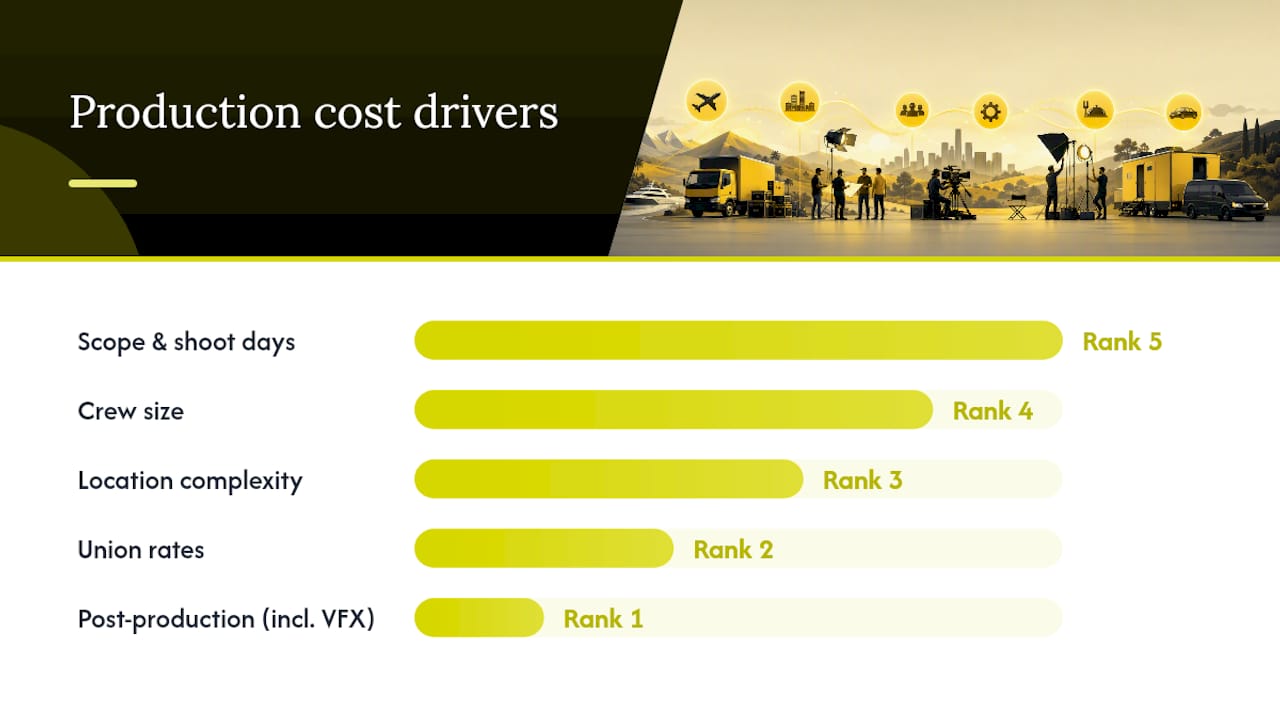
Cost drivers stack in a fairly predictable order: scope and shoot days first, then crew size, location complexity, union rates, equipment rental, and finally post-production workload, especially VFX.
Ballpark figures vary enormously by format and market, but the general pattern holds: a straightforward branded short or social commercial runs leaner than a national broadcast spot, and a documentary’s budget depends heavily on archival licensing and travel rather than crew size alone. Feature films and multi-episode series carry the widest range of all, since financing structure and union requirements swing costs dramatically project to project.
Timeline drivers matter just as much as dollar figures:
Casting and location scouting typically need several weeks of lead time before a shoot date locks.
VFX-heavy projects require the longest post-production runway, sometimes months beyond principal photography.
Color grading and sound mixing usually happen in parallel toward the final weeks of post.
Post-production bottlenecks, VFX timelines, color grading, audio mixing, are the most common source of schedule extensions and cost overruns, which is exactly why clear delivery specs at the RFP stage save money later. A vendor who can’t estimate their own post timeline honestly is a vendor whose final invoice will surprise you.
How Vain. Scopes and Staffs a Production
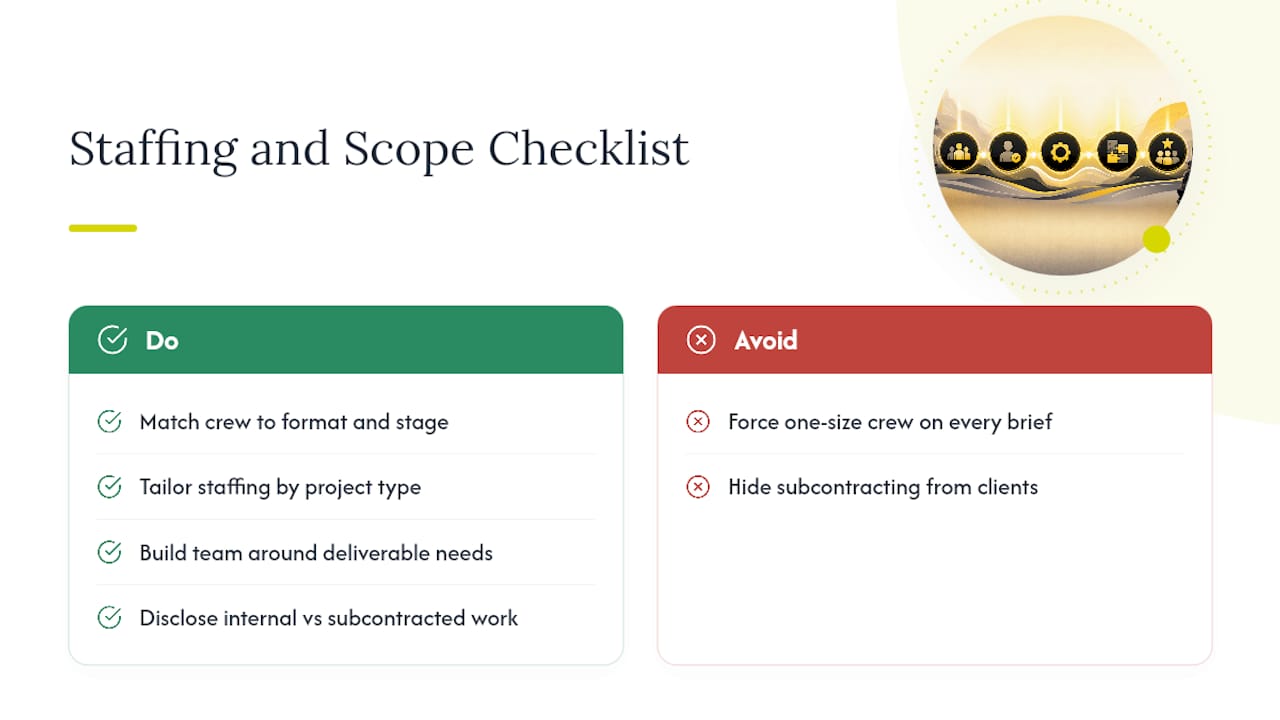
Every engagement starts with matching the project’s format and stage needs to the right mix of talent and specialists, rather than forcing a one-size crew onto every brief. A branded commercial gets a different staffing plan than a documentary or a multi-part series, and we build the team around what the deliverable actually requires, not around a fixed roster.
That means being direct with clients about what’s handled internally versus subcontracted, and why, whether it’s a specialist partner for a complex composite shot or a location specialist for a permit-heavy shoot. Guides like Video Production: A Complete Guide for Professionals and The Diverse Departments of Film Production explain this staging logic and breakdown of department roles.
What’s Changing in Production Services Right Now?
Remote collaboration tools have made it normal for clients to sit in on dailies and color sessions from another city entirely, which shifts how proposals should describe communication cadence. Post-production is getting more modular too, editors, colorists, and sound designers increasingly work as interchangeable specialists across projects rather than fixed in-house teams, which is good for flexibility but demands tighter coordination. Permitting and sustainability pressures are also tightening in many cities, adding lead time that budgets don’t always account for. For procurement, the practical takeaway is simple: ask any vendor how they manage distributed teams and permit timelines before you assume their quoted schedule holds.
Ready to Talk About Your Project?
A creative consultancy and production company exists for exactly the moment this article is describing: when you’ve mapped out what your project needs across development, production, and post, and you’d rather hand that whole map to one accountable partner than manage five separate vendor relationships yourself.
That’s the practical difference. Instead of stitching together a strategy shop, a production crew, and a post house on your own, a company that runs creative consultancy and production work under one roof keeps scope, budget, and creative vision aligned from the first pitch to final delivery. When you reach out, expect a conversation about your format, timeline, and goals before anyone talks logistics, with scoping around the project rather than a fixed package. If integrated marketing and brand storytelling matter alongside the production itself, resources like Clareefai’s breakdown of video testimonials for B2B marketers show how production and marketing outcomes connect in practice. Start the conversation at Vainnewyork and tell us what you’re building.
Sources
Recommended
Comments