Nine Corporate Video Types Marketers Need and How to Repurpose Each

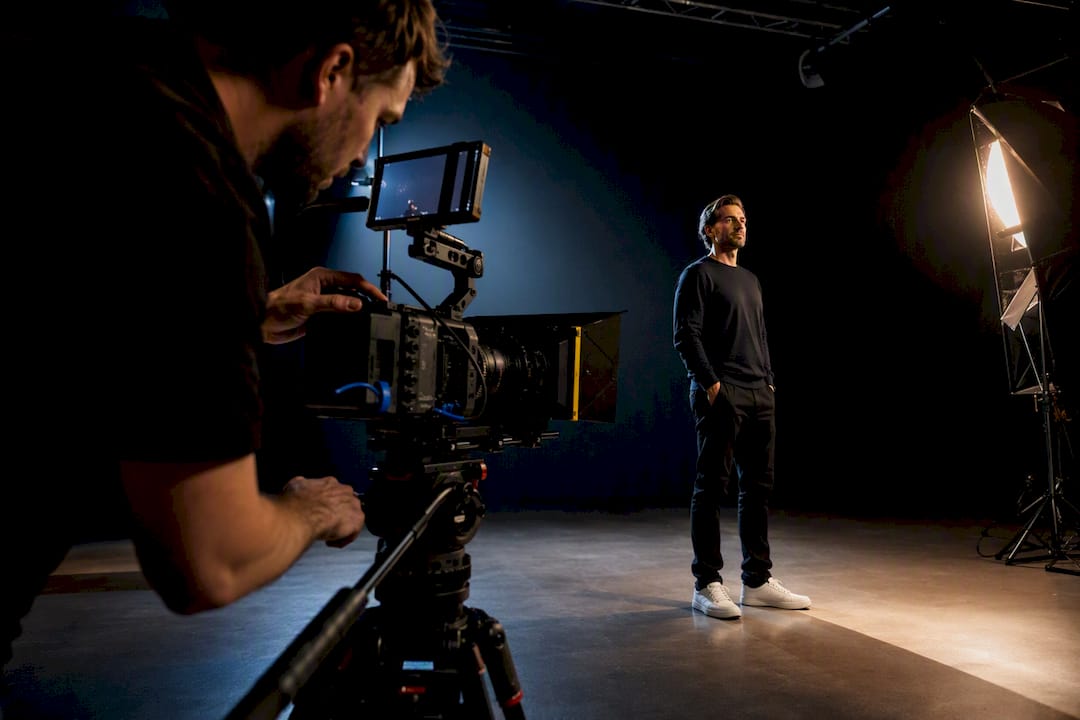
Nine corporate video types cover almost every business need: brand films, explainer videos, product demos, testimonials, training and onboarding content, recruitment videos, event recaps, short-form social clips, and animated explainers. Each one earns its place through a different job, from earning press coverage to closing a sale, and the right choice depends less on budget than on what you need the footage to accomplish. This guide breaks down when to use each format, how long it should run, and what it costs in production complexity.
TL;DR:
Customer testimonial videos should be 60 to 180 seconds, emphasizing authentic, unscripted speech to boost credibility.
Short-form social videos between 15 and 60 seconds perform best when shot vertically, with a strong hook in the first three seconds.
Animation projects typically take 3 to 6 weeks and are most cost-effective for illustrating abstract concepts or frequent updates.
Planning a repurposing strategy upfront, including shot composition for vertical cropping, significantly increases content mileage from a single shoot.
Table of Contents
Corporate Video Types at a Glance
Before committing to a production budget, match your goal to the right format. Here’s the quick map we hand to clients during strategy calls, organized by what each video type does best.
Brand films — build emotional awareness and PR buzz; 2-4 minutes; repurpose into 15-second teaser cuts.
Explainer videos — simplify a product or service fast; 60-90 seconds; clip into vertical ad snippets.
Product demos — show the thing working in real conditions; about one to a few minutes; cut into feature-specific shorts.
Testimonials — build trust through customer voice; 60-180 seconds; excerpt quotes as caption cards.
Training/onboarding — teach internal skills at scale; 5-10 minute modules; break into searchable chapters.
Recruitment/culture — attract talent with authentic workplace footage; 90 seconds to 2 minutes; slice into employee-spotlight reels.
Event recaps — prove an event mattered; 60-120 seconds; extract sound bites for weeks of social content.
Social/short-form — capture attention in feed; 15-60 seconds; the repurposing engine for everything above.
Animated explainers — clarify abstract or technical ideas; 60-90 seconds; pair with FAQ documentation.
Brand Films and External-Facing Storytelling Videos
Brand films exist to earn attention, not conversions. They work toward awareness, press pickup, and the kind of hero placement that lives on your homepage for years. Expect 2 to 4 minutes of runtime and the highest production complexity on this list, often involving scripted narrative, cinematic lighting, and a dedicated crew. Brand films perform best for shareability and earned media, so measure success through views, press mentions, and social shares rather than direct leads. Distribute through your homepage, YouTube, and press kits, and lean on commercial-level production planning to keep scope realistic.
Explainer Videos and Product Demos
Animated explainers win when the idea is abstract, a workflow, a policy shift, a complicated pricing tier. Live-action demos win when the product itself is the selling point and viewers need to see it in someone’s hands. Explainer videos and short product demos reduce user confusion and improve conversion on product pages and in paid ads, where attention spans are short. Place them at the top of your funnel and on pricing pages, then repurpose the strongest 15 seconds into a paid social ad. Our video production guide covers the technical planning both formats require.
Customer Testimonials and Case-Study Videos
Testimonials convert because they carry someone else’s voice, not your marketing copy. Credibility comes from specificity: a customer naming an actual result beats generic praise every time. Testimonial videos typically run 60 to 180 seconds and work hardest when editing preserves natural speech patterns instead of scripting every line. Keep some rough edges. A slightly imperfect answer reads as real; a polished monologue reads as rehearsed. Publish on your site, in sales decks, and inside retargeting ads for the strongest lift.
Training, Onboarding, and Internal Communications Videos
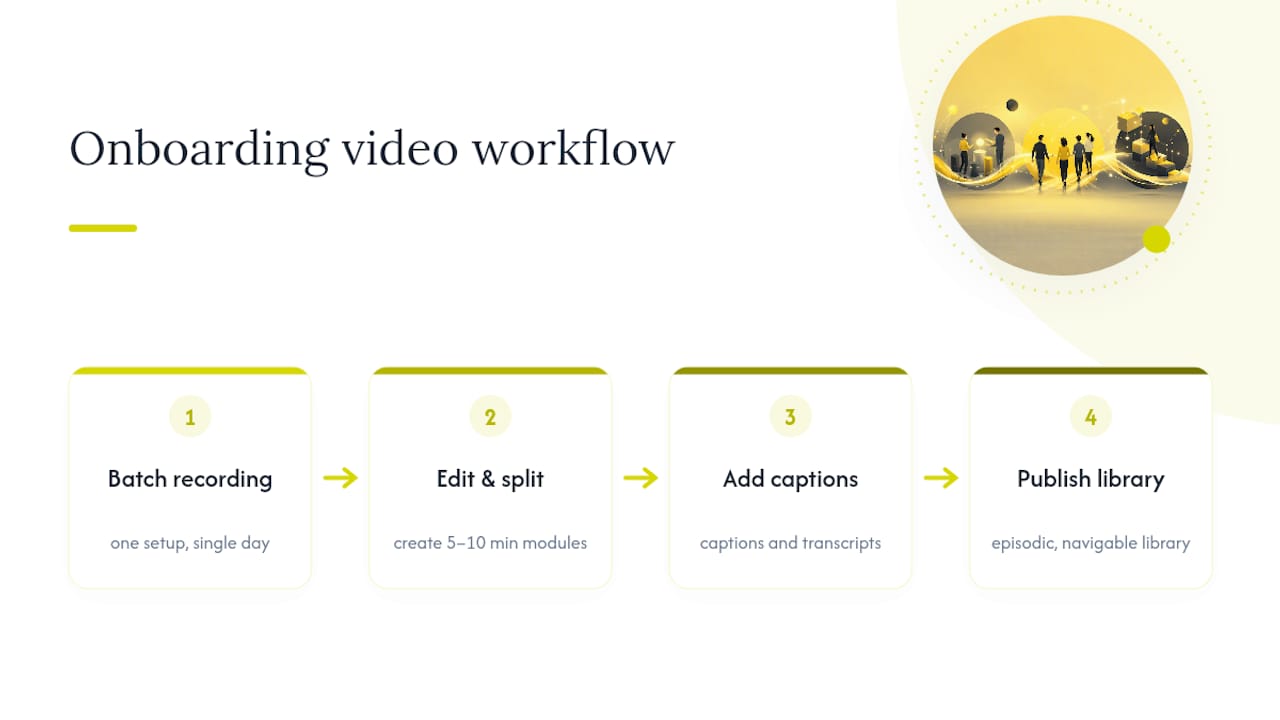
Internal video works best as a system, not a one-off. Decide upfront whether you need a standalone module or a full episodic series, since series build easier navigation for employees revisiting specific steps. Training videos perform best when organized episodically in 5 to 10 minute modules, paired with captions and transcripts for accessibility and retention. Cost-saving tip: batch-record multiple modules in a single session with one setup, then split them in editing. That single production day can yield an entire onboarding library.
Recruitment, Culture, and Day-in-the-Life Videos
Candidates can smell a staged testimonial from a mile away, so the strongest recruitment videos hand the microphone to actual employees describing actual days. Highlight the texture of the workplace: what a Tuesday looks like, what people are proud of, what’s genuinely difficult. Keep these to 90 seconds or 2 minutes, shot handheld or semi-documentary style rather than corporate-polished. Avoid scripted lines entirely. The moment a sentence sounds rehearsed, the whole video loses credibility with the audience it’s trying to reach. Distribute on your careers page, LinkedIn, and Instagram Reels.
Event Recap and Highlight Videos
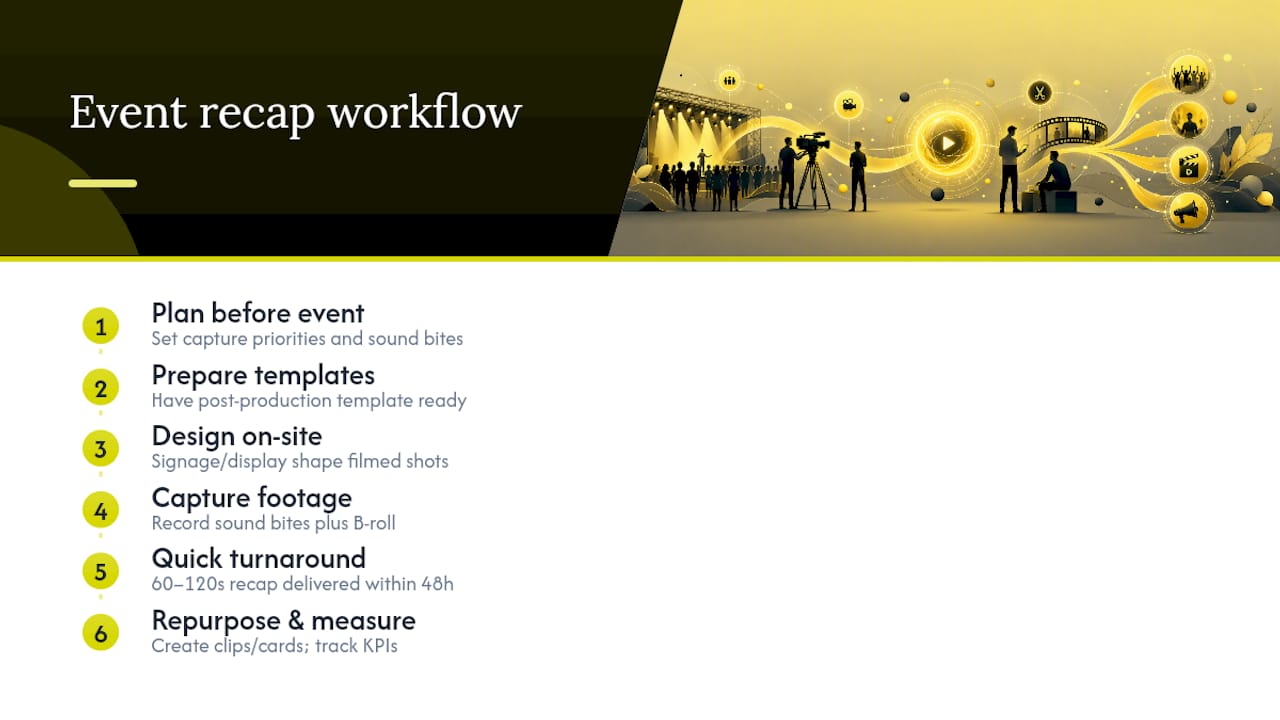
Great recap videos are decided before the event starts, not during editing. Event recap footage requires planning capture priorities, sound bites paired with B-roll, before the event begins, and a post-production template ready to accelerate turnaround. Practical event execution tools, like the display and signage examples from Arrowhead Sign Company, can also shape what you’re filming on-site. Aim for a 60 to 120 second recap within 48 hours, then mine the raw footage for weeks of quote cards and short clips. Track KPIs like watch-through rate and social shares to gauge whether the event story landed.
Social and Short-Form Video
Vertical-first platforms punish cropped landscape footage. Short-form social formats between 15 and 60 seconds earn higher share and engagement rates when they’re shot natively rather than repurposed as an afterthought, so plan the vertical frame at the shoot, not in the edit bay. Build a strong hook in the first three seconds, since that’s where most viewers decide whether to keep watching. The Instagram ad best practices from West Valley Digital offer useful benchmarks for paid short-form performance. For creative starting points, our short-form video ideas guide has ready-to-shoot hooks.
Animated Explainers, FAQ Videos, and Motion Graphics
Animation earns its budget when the subject has no visual form: a software workflow, a financial concept, a regulatory change. It also outperforms live-action for anything requiring frequent updates, since editing a graphic is cheaper than reshooting a scene. Typical timelines run 3 to 6 weeks depending on style complexity, with 2D motion graphics faster than full character animation. Pair these videos with your existing product documentation and FAQ pages so the two reinforce each other instead of duplicating effort.
Vain.'s Pre-Production Checklist Before You Shoot Anything
Every successful shoot we’ve planned starts with the same five questions answered on paper, not assumed in someone’s head:
What is the single objective this video needs to accomplish?
Who is the specific audience watching it, and where will they see it?
What is the one core message a viewer should remember?
What repurposing plan exists before the camera even rolls?
What does the shot list actually require, scene by scene?
The hardest call is deciding what needs bespoke filming versus what stock footage can cover. Practitioner consensus holds that this decision, made early, prevents budget bloat and protects authenticity, especially in culture and people-centric videos where generic stock footage creates an obvious tone mismatch.
Pro Tip: Build the repurposing plan into the shot list itself. Frame wide with extra headroom during your main shoot so you can crop to vertical later without losing the subject, saving you a second shoot entirely.
For deeper technical planning, our complete video production guide walks through each production stage in detail.
What Marketers Should Watch Going Into 2026
The shift we’re watching most closely is repurposing-first planning built into the brief, not bolted on after the shoot. Teams that frame every setup with vertical crops and 15/30/60-second cuts in mind get far more mileage from a single production day than teams treating short-form as an afterthought. Hybrid shoots, combining a scripted brand moment with loose, documentary-style B-roll, are also becoming standard practice for teams that need both a hero asset and a month of social content from one crew day. If you implement one thing this quarter, make it this: require a repurposing plan before you approve any shoot budget, and track watch-through rate first, since it tells you faster than any other metric whether the story is landing.
— Vain.
Ready to Turn These Formats Into Actual Footage?
You can work with a production and consultancy partner who plans the repurposing strategy into the shoot itself, so one day of filming produces your brand film, your social cuts, and your website assets together. Whether you need a single explainer or a full library spanning training, recruitment, and testimonial content, a team scopes the shot list, the format mix, and the delivery timeline before a single camera rolls.
If any of the formats above fit a project you’re planning, from a brand film to a batch of short-form clips, request an estimate through Vain. and tell us what you’re trying to accomplish. We’ll help you map it to the right format before you spend a dollar on production.
Sources
For deeper research behind the guidance above, StudioBinder’s breakdown of corporate video types covers runtime benchmarks in detail, Storyblocks’ guide to corporate video ideas focuses on storytelling and repurposing, and G2’s video marketing statistics track engagement trends across the funnel.
Recommended
Comments