Lock MVB Before Design Starts: Brand Launch Checklist for Founders


A brand launch is an orchestrated operational rollout, not a single announcement moment. Before anything else, assign a launch project manager and a brand guardian, then lock core messaging before design work begins. This brand launch checklist walks through the phases that follow: pre-launch foundation, identity and messaging sign-off, asset production, website protections, internal training, launch week itself, and the measurement work that comes after.
TL;DR:
Building a successful brand launch requires detailed planning across three windows: 90-60 days for strategy and legal groundwork, 60-30 days for content creation, and final month for QA and rehearsals.
Securing trademark, domain, and social handle availability before assets are produced prevents costly legal or logistical delays during launch.
Effective website SEO protection depends on thorough URL mapping, staged redirects, and prelaunch QA to avoid loss of search rankings in the switch.
Internal team alignment is critical, with clear messaging, stakeholder communication, and training to ensure consistency and avoid post-launch confusion.
A well-organized contingency plan with designated decision owners minimizes reputation risk during inevitable technical or messaging issues in launch week.
Table of Contents
Building a Brand Launch Checklist for the Pre-Launch Phase
Work backward from your launch date. The strongest brand launch plans break the runway into three windows: 90 to 60 days out for strategy and legal groundwork, 60 to 30 days for identity and content production, and the final 30 days for QA, rehearsal, and internal briefing. Skipping a window is how teams end up finalizing a logo the week before go-live.
Here’s what needs to happen in the 90-to-60-day window:
Lock positioning and the minimum viable brand (MVB). Decide what “good enough to launch” actually means before anyone opens a design file.
Build the messaging hierarchy. One master narrative, three to five supporting messages, and a sign-off owner.
Assign roles. Name a launch PM to run the calendar, a brand guardian to protect consistency, and workstream owners for design, web, and communications.
Create the central tracker. A shared Notion, Asana, or Sheets file with owners and dependencies prevents the bottlenecks that kill timelines in the final stretch.
Secure the boring essentials. Domains, social handles, trademark filing status, and typography licenses. None of these are glamorous, and all of them can stall a launch if left for week three.
Define master file naming conventions so nobody is hunting for “logo_final_v2_FINAL” three days before press embargo lifts.
What Goes Into Identity and Messaging Before Design Starts
Design should never start on a moving target. The concept of a Minimum Viable Brand exists precisely to prevent that: it’s the smallest coherent set of brand elements you need to launch credibly, with room to expand after you’re live rather than before.
A minimum viable brand typically includes a logo system with primary and secondary marks, a locked color palette in standard color systems, a typography system with proper licensing, a concise master narrative explaining the brand’s purpose, and several key supporting messages.
The messaging hierarchy needs a single approver, usually the brand guardian, working from the founder’s or CMO’s final sign-off. Set “good enough” criteria in writing before the review cycle starts, or you’ll get trapped in endless font tweaks. Governance matters just as much as the assets themselves: version control, a shared asset library, and one person with final say on brand decisions after launch.
Pro Tip: Put your MVB sign-off criteria in a shared doc before the first design review, not after the third one. Teams that skip this step tend to confuse “I don’t love it” with “it’s wrong.”
What Master Files and Formats Does the Agency Need to Deliver?
Handoff quality determines whether your rebrand looks finished or half-built in its first week of public life. Rushing this stage, especially typography licensing and master file preparation, tends to produce compromises that show up in the earliest press coverage and never quite get fixed. A practical export checklist looks like this:
Logo files in vector format (AI, EPS, SVG) plus flattened PNG and JPEG versions
Color specified in Pantone, CMYK, and RGB, not just one system
Typography with licenses confirmed for web embedding and print use
Responsive web assets sized for mobile, tablet, and desktop breakpoints
Print-ready files with bleed and crop marks for physical collateral
Consistent file naming across every deliverable, no ad hoc versioning
Before anything ships, run an accessibility pass: contrast ratios, legibility at small sizes, and how the logo holds up in single color. Then organize the handoff into a real asset library with templates and usage examples, not a folder dump. If you’re producing merchandise alongside digital assets, logo placement on apparel has its own format rules worth checking against your master files early.
How Do You Protect SEO During a Brand Launch?
Your website is where the new brand becomes real to the public, and it’s also the single biggest visibility risk in the entire rollout. A mishandled domain switch or URL restructure can erase months of search ranking in a weekend.
Build a URL map. Match every old URL to its new equivalent before development starts.
Queue 301 redirects for the full map and test them in staging, not live.
Update schema markup, canonical tags, and your sitemap to reflect the new brand’s structure.
Freeze content changes on the old site once the map is final, and write a rollback plan in case the switch fails.
Run prelaunch QA on redirects, page speed, mobile rendering, and metadata across the top 50 pages by traffic.
Careful mapping and staged testing are what actually preserve search visibility during a brand transition. A technical migration checklist or a dedicated ranking-protection guide are worth running side by side with your developer’s own QA process.
Pro Tip: Test your redirect map on a staging URL at least a week before launch. A redirect that works in a spreadsheet doesn’t always work in a browser.
Preparing Your Team Before the Public Launch
Employees are the first brand ambassadors, and they need to hear the story before customers do. Internal alignment failures are one of the most common causes of inconsistent messaging in the first weeks after a rebrand goes public.
Before anything ships externally:
Host an internal launch event with a role-based briefing for sales, support, and marketing.
Distribute the approved asset library, email signatures, and message templates to every team.
Run a live Q&A session so customer-facing staff can ask the questions customers will ask.
Rehearse contingency responses for the handful of tough questions you know are coming.
Assign brand guardians and a clear approval path for any post-launch brand changes.
If your team can’t explain the new positioning in one sentence by launch day, external audiences won’t be able to either.
Running the Launch Week Without Losing Control
Launch week is where all the planning either holds or falls apart. Coordination is the whole job now.
Sequence every channel. Line up the press embargo lift, site switch, social posts, email send, and paid activation so nothing fires early or out of order.
Set up a war room. Name who monitors social mentions, who handles press, and who owns technical issues, with a clear escalation path between them.
Prepare canned responses for the questions and complaints you can predict, so nobody is improvising a brand statement in real time.
Follow a staged publishing calendar with a per-channel checklist so teams aren’t guessing what posts next.
Assign a contingency owner and a rollback plan for anything that breaks, whether that’s a redirect failure or a design asset that renders wrong on mobile.
A staging area, a rollback plan, and a war-room cadence with pre-approved responses limit reputation risk in the first 72 hours, which is when most launch damage actually happens.
Measuring What Happened After the Launch
Set your success metrics before launch day, not after. Awareness, engagement, conversion, and retention each need a baseline and a target, or “how did it go” becomes a matter of opinion instead of data.
Track awareness through search volume, direct traffic, and social mention volume.
Watch engagement metrics across your top three channels for the first two weeks.
Measure conversion against your pre-launch baseline, not against a hopeful guess.
Schedule qualitative debriefs at week 1, week 4, and week 12 to catch what the numbers miss.
A 90-day model that separates pre-launch, launch week, and post-launch optimization gives teams a clear resourcing structure instead of one long undefined “post-launch” phase. Use that window to plan your first quarter of content, run A/B tests against launch-week signals, and adjust messaging based on what actually landed versus what you assumed would. A 90-day analytics playbook can help structure that measurement cadence if you don’t already have one in place.
Planning for What Goes Wrong During Launch
Every launch plan needs a shadow plan for failure, because something will not go the way the calendar predicted. The most common risks fall into a few predictable buckets: a technical failure on the new site, a messaging misstep that draws public criticism, an asset that leaks early, or a competitor move that steals your announcement window.
Build contingency owners into your tracker from the start, not as an afterthought once something breaks. Each risk category needs a named decision maker who can act without waiting for a meeting. For technical failures, that means a rollback plan for the website switch, already tested in staging, so a redirect error doesn’t turn into a multi-day outage. For messaging missteps, that means pre-drafted holding statements the communications lead can deploy within the hour, not draft from scratch under pressure.

Budget contingency time into the calendar itself. If launch week assumes zero slippage, one delayed asset or one legal hold can cascade into a public embarrassment. Build in a 48-hour buffer between “everything is ready” and “everything goes live,” and use it.
The teams that handle a launch-week crisis well aren’t the ones who avoided problems. They’re the ones who decided in advance who owns the decision when a problem shows up, and gave that person the authority to act without a committee vote. That authority has to be established before launch week starts, not negotiated during it.
Reviewing the Competitive Landscape Before You Go Live
A brand launch happens inside a market that hasn’t stood still while you’ve been building. Before final sign-off, run a fresh scan of how direct competitors are positioning themselves, what language they’re using, and whether anything in your messaging now overlaps with a claim someone else has already staked out publicly.
This isn’t about copying anyone. It’s about avoiding an accidental collision. If a competitor just launched a campaign built around “authenticity” and your new brand narrative leans on the same word, you’ll read as derivative even if your work predates theirs. A positioning review two to three weeks before launch gives you time to sharpen language without derailing the timeline.
Look at three things specifically: how competitors describe their core value, what visual territory they occupy (colors, typography style, photography tone), and where the gaps in the market conversation actually sit. Your brand guardian should own this review alongside whoever wrote your original positioning brief, because the person closest to the messaging is best positioned to spot an unintentional overlap.
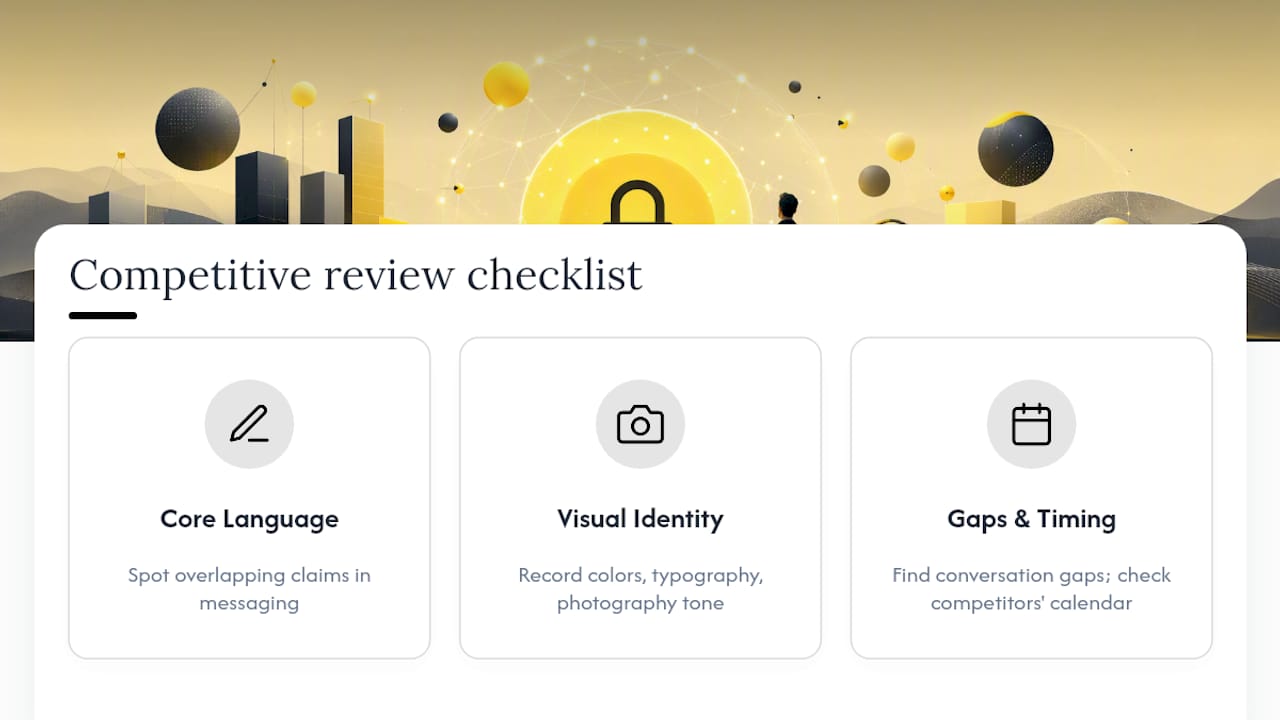
This review also protects your launch narrative from getting buried. If three competitors are all making major announcements the same month, your timing might need to shift, even by a week, to avoid getting lost in a crowded news cycle. Checking the competitive calendar is as much a part of this checklist as checking your own.
Communicating the Launch to Partners, Press, and Influencers
A brand launch touches more people than your internal team. Investors, board members, existing customers, distribution partners, press contacts, and any influencers or creators you work with all need a communication plan scoped specifically to them, not a version of the internal memo forwarded outward.
Build a simple stakeholder map before launch week: who needs to know, how far in advance, and in what format. Investors and board members typically need a briefing document a week or two ahead, framed around business rationale. Press contacts need embargoed materials with a clear lift time, so nobody publishes early by accident. Partners and distributors need enough lead time to update their own materials, packaging, or co-branded assets before the public sees the new identity anywhere.
Influencers and creator partners deserve particular care. Give them the narrative and the visual assets ahead of time, along with clear guidance on what they can and can’t say before the embargo lifts. A rushed, day-of brief to an influencer partner is how off-message posts end up live before your own announcement does.
Keep one master communication calendar that shows every stakeholder group and their specific send time, so your launch PM can see at a glance whether the sequence holds together. A partner hearing about the rebrand from a press article instead of from your team directly is a relationship problem that outlasts the launch itself.
Clearing Legal and Trademark Issues Before You Announce
Nothing in this checklist matters if your new name or mark runs into a trademark conflict after launch. Legal clearance has to happen well before the 60-day mark, not as a final rubber stamp days before go-live, because a conflict discovered late can force a name change after assets are already produced and press is already briefed.
Run a trademark search in your primary market and any additional markets where you plan to operate, covering both the exact name and close variations. This applies to the brand name, any product or service names launching alongside it, and distinctive taglines you intend to use consistently. A search that only checks exact matches misses the conflicts that actually cause problems: a confusingly similar name in an adjacent category.
Confirm domain and social handle availability align with your legal clearance, not just availability. A name can be free to register as a domain while still carrying trademark risk in your industry. Loop in legal counsel early enough that a conflict discovered in week 50 doesn’t force a scramble in week 55.
Document the clearance status in your central tracker alongside every other launch dependency. If filing is still pending at launch, know your fallback position and have your communications lead briefed on what to say if the topic comes up publicly. Silence on a legal question during a press interview reads worse than a straightforward “filing is in progress.”
What Vain. Has Learned From Running Brand Launches
The launches that hold together share a pattern: one decision maker per workstream, a review cadence that doesn’t drift past 48 hours per round, and an asset library that’s organized before anyone asks for a file, not after. Speed without governance produces a fast mess. Governance without speed produces a beautiful launch that misses its window entirely. The teams that get both right treat the checklist itself as a living document, updated as decisions get made, not a static reference nobody opens after week one.
— Vain.
How Vain. Helps You Run This Checklist Without Losing Momentum
Vain. builds brand strategy, creative production, and campaign rollout under one team instead of three separate vendors handing off work between meetings. That matters most in the exact place launches usually stall: the gap between a locked messaging brief and a finished asset library ready for handoff.
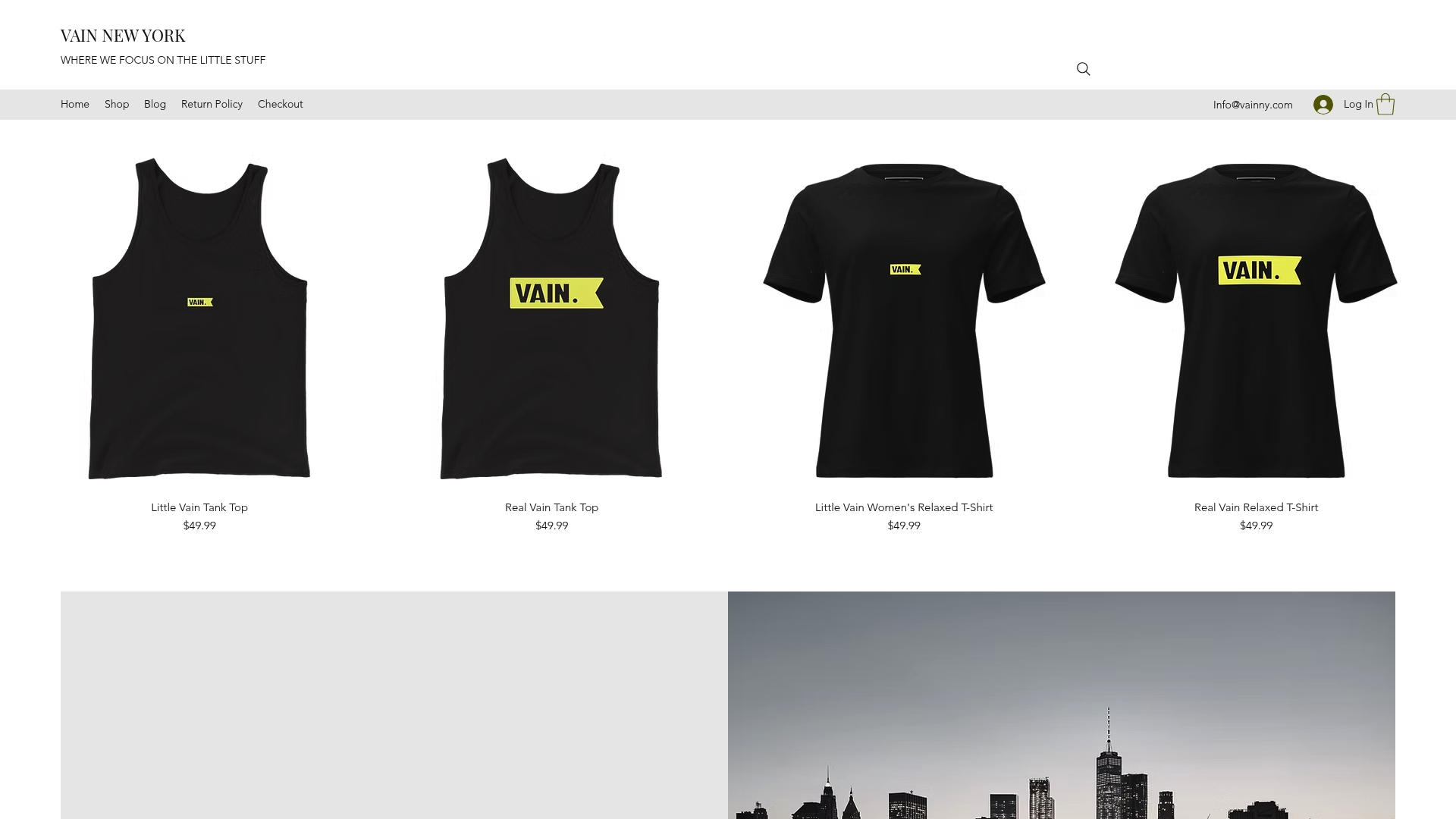
A consultancy can move faster through the identity, asset, and campaign phases of this checklist because the people writing the messaging hierarchy are the same people producing the video, photography, and merchandise that carry it. That coordination is what shortens the 60-to-30-day window without cutting corners on quality control. It doesn’t replace your ownership of the brand, though. Your launch PM still runs the tracker, your leadership still signs off on the MVB, and your team still needs the internal training this checklist calls for. What an agency partner changes is how fast the middle stretch moves once the strategy is locked.
If you’re planning a launch or a rebrand and want a second set of hands on the production side, start a conversation with Vain. about where your timeline currently stands.
Sources
Recommended
Comments