How to Build an Audience Development Strategy That Works


An audience development strategy is a repeatable plan to grow and sustain a targeted, engaged audience, measured through engagement, retention, and revenue or mission outcomes over time. It works only when it’s evidence based and owned by more than the marketing team, according to The Audience Agency’s planning guide. Your first move is smaller than a full strategy document: pick one priority segment and run a three-week test that pairs a short survey with one live experiment, such as a new content format or outreach message.
That test gives you real signal before you commit budget to a full rollout. Newsletter operators who treat growth as a series of fast tests rather than one big campaign consistently outperform those who wait for a perfect plan, a pattern beehiiv’s audience growth research backs up repeatedly.
Choose one segment. Not three. Not “everyone who might like us.”
Run a three-week evidence sprint: one short survey, one live experiment.
Set a single success metric before you start, not after you see the results.
Pro Tip: If you can’t name the one metric that would make you call the test a win before you launch it, you’re not ready to launch it.
Key Takeaways
An effective audience development strategy combines evidence-based segmentation, a coordinated discovery-to-ownership channel loop, and a north-star metric reviewed on a fixed cadence.
Point | Details |
Start with one segment | Validate size, reachability, and alignment before building content for it. |
Separate discovery from ownership | Use short-form and paid channels to reach people; use newsletters and community to keep them. |
Pick one north-star metric | Tie it to revenue or mission outcomes and review leading indicators weekly. |
Test weekly, not quarterly | Use a five-part experiment template with a preset kill threshold. |
Build with Vainnewyork | Pair creative production and audience strategy under one team to execute your 90-day roadmap. |
Table of Contents
What Is an Audience Development Strategy Built On?
Every durable audience development plan rests on four practical levers The Audience Agency’s audience development playbook calls the 4 Cs: community, connections, collaborations, and caring. They’re not abstractions. Community means giving people a reason to show up more than once. Connections means mapping who already trusts your brand and who they influence. Collaborations means partnering with adjacent organizations to reach people you can’t reach alone. Caring means designing experiences that make people feel seen, not just sold to.
Here’s where most teams go wrong: they treat audience growth as a marketing department problem. It isn’t. An audience development plan that only lives in one team’s dashboard dies the moment that team’s priorities shift. The Audience Agency’s own guidance frames audience development as a route-map for organization-wide change, not a campaign with a start and end date. That means your programming decisions, your customer service scripts, and your product roadmap all need to answer to the same audience objectives your marketing team is chasing.
The practical fix is translating vague ambitions into SMART(er) objectives that survive contact with a budget meeting.
Vague: “Grow our audience.” Better: “Increase newsletter open rate among the 25 to 34 segment from 22% to 28% within two quarters.”
Vague: “Build community.” Better: “Get 15% of new subscribers to reply to at least one email within their first 30 days.”
Vague: “Improve retention.” Better: “Reduce 90-day churn among first-time buyers by five percentage points.”
When objectives look like that, every department can see exactly what success means and whether their work moved the number.
How Do You Research and Segment Your Audience?
Good segmentation starts with evidence you gather yourself, not assumptions borrowed from a competitor’s press release. Four first-party methods do most of the work.
Surveys. Keep them under five questions and send them right after a meaningful interaction, like a purchase or a newsletter click, when memory is fresh.
One-on-one interviews. Fifteen minutes with eight to ten people surfaces more nuance than a thousand survey responses ever will.
On-site behavior data. Scroll depth, click paths, and time-on-page tell you what people actually do, which often contradicts what they say they want.
CRM history. Purchase frequency, support tickets, and email engagement reveal your highest-value segments without asking them a single question.
Frameworks like Audience Spectrum or similar segmentation models group people by behavior and need first, then layer in demographics second. That order matters. The audience development playbook’s own guidance is explicit that segments should map to distinct offers and conversion paths, not just tidy labels on a slide. A segment called “young professionals” is useless if it doesn’t tell you what content, price point, or channel actually moves them.
Before you commit resources to a segment, run it through a quick feasibility check.
Feasibility Criteria | Question to Answer |
Size | Is this segment large enough to justify dedicated content or budget? |
Reachability | Do you have a channel that already reaches this group, or will you need a new one? |
Alignment | Does serving this segment support your mission or revenue goals, not just vanity growth? |
Distinctness | Does this segment need a different offer than your other segments, or is it a duplicate? |
If a segment fails two or more of these, park it. Trying to serve every plausible audience segment at once is how strategies collapse under their own ambition.
Which Channels Actually Grow an Engaged Audience?
Discovery channels and ownership channels do different jobs, and confusing the two is the single most common tactical mistake in audience growth work. Shopify’s audience growth guide puts it plainly: discovery platforms drive reach, owned channels convert and retain, and the two need to work in a coordinated loop rather than as separate strategies.
Discovery tactics get you in front of people who don’t know you yet.
Short-form video works fastest for visual or personality-driven brands and rewards volume over polish.
SEO content compounds slowly but keeps working long after you stop actively promoting a piece.
Paid search and social buy you speed when you need proof of concept before investing in organic reach.
Owned channels turn that first glance into a relationship you control. A newsletter is the clearest example. Beehiiv’s growth research makes the case that email lists survive platform algorithm changes that wipe out organic reach overnight, which is precisely why converting social followers into subscribers should be a standing goal, not an afterthought. A short onboarding sequence, three to five emails that deliver a quick win before asking for anything, does more to lock in a new subscriber than any single piece of content.
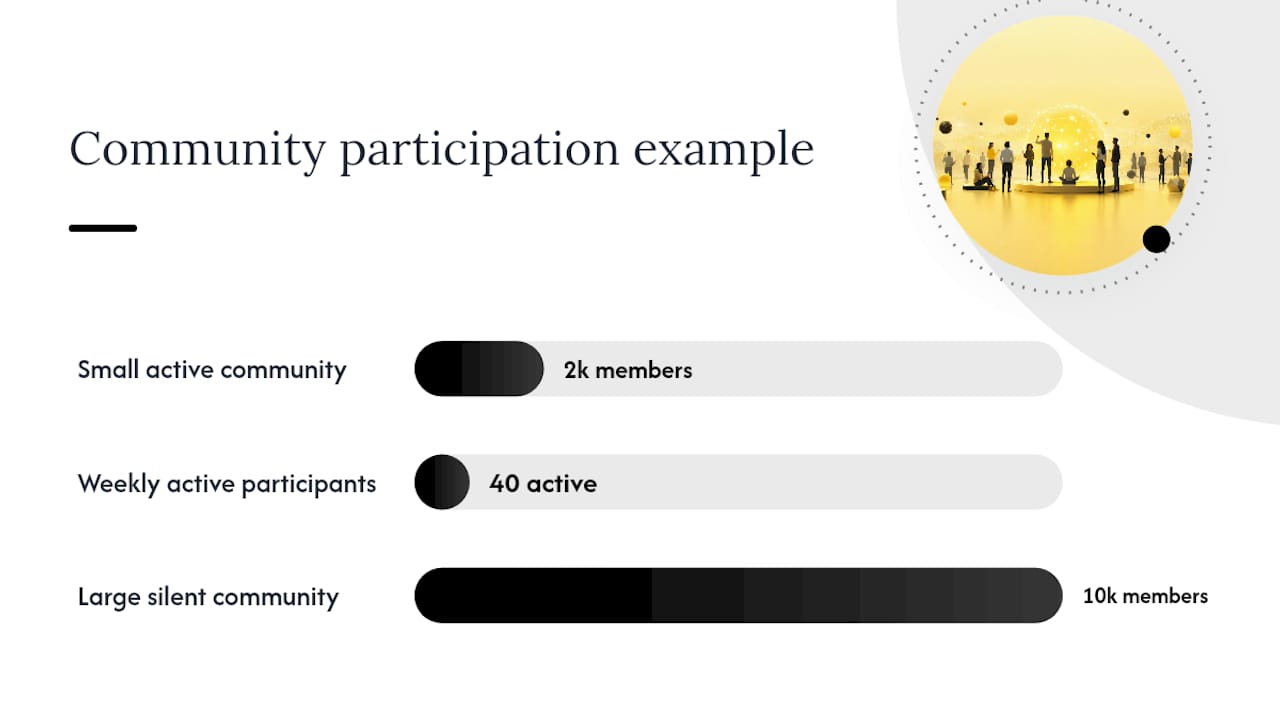
Community and partnerships extend both. A Discord server, a members-only newsletter tier, or a co-hosted event with a complementary brand each ask something different of your team, but they share one measurement expectation: track participation rate, not just headcount. A community of 2,000 with 40 active weekly participants beats a silent group of 10,000.
Map each channel to a role: discovery, conversion, or retention.
Build one conversion path from your top discovery channel into your newsletter or community.
Set a partnership co-marketing template so new collaborations don’t start from scratch each time.
For a deeper look at converting passive followers into people who actually pay attention, Vainnewyork’s guide to building an audience walks through the mechanics in more detail.
How Should You Structure Content to Keep Growing?
Pick one topical lane and own it before you diversify. A creator or brand covering five unrelated topics confuses the algorithm and the audience at the same time. Narrow focus, at least at first, is what makes repurposing efficient rather than exhausting.
A simple repurposing matrix stretches one piece of original work across your whole channel mix: a long-form video becomes three short clips, a newsletter recap, and a discussion prompt for your community space. That one-to-many workflow is what separates teams that publish constantly from teams that burn out their content calendar by week six.
Lead magnets do the conversion work discovery content can’t do on its own. A specific, narrow resource, a checklist, a template, a short guide, converts far better than a generic “join our newsletter” ask, because it solves one problem immediately rather than promising vague future value.
Match your format to your platform’s native behavior rather than forcing the same asset everywhere.
Build your repurposing matrix once, then reuse it for every new content piece.
Test one new lead magnet per quarter rather than redesigning your entire funnel at once.
Pro Tip: Write your lead magnet’s headline before you write the content. If the headline doesn’t promise a specific, immediate fix, the content underneath won’t convert no matter how good it is.
What Metrics Actually Tell You the Strategy Is Working?
Pick one north-star metric that ties directly to your business or mission outcome, not a vanity number that looks good in a slide deck. A media outlet might choose newsletter open rate as its north star because it predicts ad revenue. A nonprofit might choose repeat-visit frequency because it predicts donor retention. The metric should be one you’d defend in a budget meeting.
Underneath that north star, track leading indicators that move before the big number does.
Email open and reply rates, which signal relationship depth before churn shows up.
Frequency of return visits, which flags disengagement weeks before a subscriber unsubscribes.
Community participation rate, which predicts long-term loyalty better than raw follower counts.
Review these on a fixed cadence, weekly for leading indicators, monthly for the north star, and set a decision threshold in advance: if an experiment doesn’t move the needle by a set percentage within its timebox, kill it rather than let it linger. The Audience Answers planning guide frames this kind of evidence-based checkpoint as central to keeping a strategy alive past its first quarter. Vainnewyork’s own customer engagement playbook covers how to map these indicators to specific retention actions.
How Do You Turn Experiments Into a 90-Day Plan?
Every experiment needs the same five-part template: a hypothesis, the metric it moves, the cohort it targets, a timebox, and a clear success or fail line set before you start. Practitioner guidance on audience growth backs a weekly cadence for this kind of testing, since running short experiments on a fixed schedule surfaces winning tactics faster than quarterly reviews ever could.
Prioritize your experiment backlog with a simple impact-by-ease matrix, and weigh risk as a tiebreaker when two ideas score the same.
Rank each idea by potential impact on your north-star metric.
Rank each idea by ease of execution with current resources.
Run high-impact, low-effort ideas first; save high-impact, high-effort ideas for a dedicated sprint.
Weeks | Focus | Milestone Review |
1 to 3 | Baseline research and segment validation | Confirm one priority segment with feasibility data |
4 | Weekly experiments across two channels | Mid-point review of leading indicators |
9 | Scale winning tactics, retire losers | Full review against north-star metric |
How Vainnewyork Approaches Audience Growth in Practice
We build audience development work the same way we build a production schedule: with evidence first, then craft. Combining creative production with strategy means the content we make and the growth plan behind it are never separated into two disconnected workstreams.
Audience growth that lasts comes from treating every piece of content as both a creative product and a data point. When those two disciplines report to the same plan, the segment you’re trying to reach actually notices.
Explore Vainnewyork’s content strategy framework for aligning content decisions with audience objectives.
See how testing and iteration fit into a full content marketing strategy.
How Much Should You Budget for Audience Development?
Budget allocation should follow the discovery-to-ownership loop, not an even split across every channel you can name. A workable starting ratio puts roughly a third of budget into discovery (paid social, short-form production), a third into owned-channel infrastructure (email tools, community platforms, content production), and a third held in reserve for scaling whatever your experiments prove out.

That reserve matters more than teams usually admit. Locking 100% of budget into a plan built on quarter-old assumptions leaves nothing to fund the tactic that actually works once your 90-day roadmap surfaces it. Smaller teams and solo operators often skip paid discovery entirely in favor of organic short-form and partnership trades, redirecting that budget toward better lead magnets and onboarding sequences instead, a tradeoff that partner resources like Popjam cover in more depth teams weighing where research spend belongs.
Resist the instinct to front-load the budget on flashy discovery content while starving the owned-channel infrastructure that actually retains the people discovery brings in. A newsletter platform subscription and a well-built onboarding sequence cost far less than most paid ad campaigns and tend to outlast them.
Who Needs to Own Audience Development on Your Team?
Audience development fails fastest when it’s treated as one person’s side project. The minimum viable structure needs three functions covered, even if one person wears two hats at a small organization: a strategist who owns the north-star metric and experiment backlog, a content producer who executes the channel tactics, and a data owner who keeps the dashboards honest.
Larger teams add a community manager once participation-based channels like Discord or membership tiers reach a size where daily moderation and engagement become a full-time need. Partnerships work, co-marketing, guest content, joint events, often sits with whoever owns external relationships already, marketing or business development, rather than requiring a new hire.
The structural detail that matters most: whoever owns the north-star metric needs authority across departments, not just within marketing. If your strategist can’t influence programming or product decisions when the data says a segment needs something different, the 4 Cs framework collapses into a marketing-only initiative that other departments quietly ignore.
What Do Successful Audience Development Strategies Look Like?
The organizations that get this right share a pattern more than a playbook. They pick one segment, test fast, and let evidence override institutional habit. A newsletter operator following beehiiv’s growth model treats every issue as a small experiment: subject line variants, send-time tests, and referral prompts tracked weekly rather than reviewed once a quarter.
Cultural and arts organizations using The Audience Agency’s playbook approach segmentation with the same discipline, mapping specific audience segments to specific programming choices rather than assuming one exhibition or event appeals equally to everyone on their list. That’s the through-line: specificity beats breadth every time evidence gets checked against ambition.
Small businesses following partnership-driven growth models, the kind detailed in PeerFounder’s audience building guide, often skip large ad budgets entirely in favor of co-marketing with adjacent brands serving the same segment. The lesson across every successful case is consistent: pick a lane, validate it with real evidence, and scale only what the data confirms is working.
What This Guide Gets Right That Most Advice Misses
Most audience growth advice treats channels as the strategy. Post more, post better, chase the algorithm. That’s tactics dressed up as strategy, and it’s why so many teams burn out chasing short-form virality that never converts into anything durable.
The evidence points somewhere more boring and more useful: audience development works when it’s structural. Segmentation before tactics. A north-star metric before a content calendar. A 90-day roadmap with kill criteria before a big campaign launch. The teams that treat this as organization-wide infrastructure, not a marketing sprint, are the ones still growing a year later.
Where conventional advice falls short is in its obsession with discovery. Reach without an ownership channel to catch it is wasted effort, which is why the newsletter and community pieces of this plan deserve more budget than most teams give them. If you take one thing from this guide, prioritize the segment feasibility check before you build a single piece of content. Everything downstream, your channel mix, your metrics, your 90-day roadmap, only works if that first segment choice was right.
— Vain.
Let Vainnewyork Build the Growth Engine Behind Your Content
Running a segment feasibility check and a 90-day experiment roadmap takes real production capacity, not just a spreadsheet. Vainnewyork pairs creative production with the strategy work this guide walks through, so the content you’re testing and the plan behind it come from the same team instead of two disconnected vendors.
That matters most for brands, artists, and organizations who need video, newsletter design, or campaign assets built at the pace weekly experiments demand, without waiting on a separate agency for every asset a test requires. If you’re ready to turn one prioritized segment into a working 90-day plan, start a project with Vainnewyork and tell us which segment you’re testing first.
Sources
Recommended
Comments