48 Hour Synthesis: Vote-Based Brand Discovery Workshop for Leaders

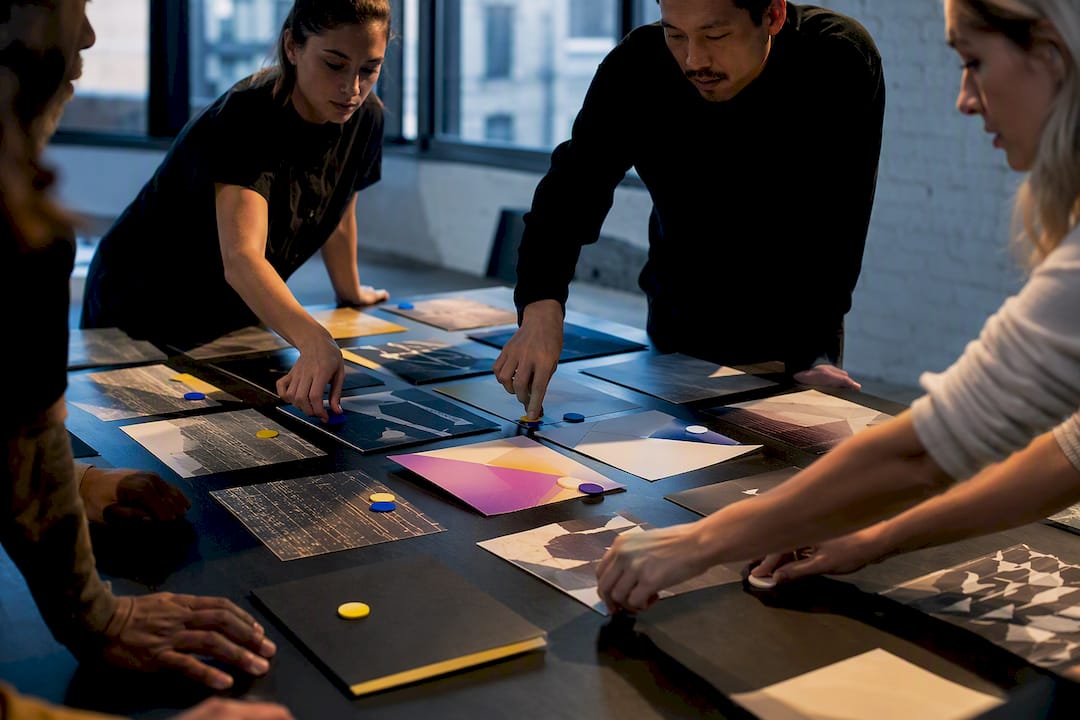
A brand discovery workshop is a structured, facilitated session, typically 3 to 8 hours, run with 5 to 7 participants, that turns scattered opinions about a brand into a decision-ready strategic brief. The primary deliverable is that one-page brief, backed by a positioning map, personas, and a decision log. It replaces guesswork with recorded, voted choices your creative team can actually build from.
TL;DR:
A well-run discovery session surfaces and records disagreements early, preventing costly revisions during design or branding phases.
Sending a detailed questionnaire and completing a competitor audit beforehand ensures genuine opinions and clear strategic direction.
Voting at each module and documenting decisions in real-time produces a decision log that guides downstream brand development.
Limiting attendance to five to seven stakeholders maintains focus and speeds consensus, especially when involving decision-makers and external voices.
Delivering a live, concise brief and a full synthesis report within 48 hours ensures that the session’s insights are fresh and actionable.
Table of Contents
What Makes a Brand Discovery Workshop Different From a Brainstorm
Brainstorming generates ideas. A brand discovery workshop makes decisions. That distinction shapes everything about how the session runs, because a room full of good ideas with no agreed direction leaves your design and content teams guessing, which is exactly what discovery is meant to prevent.
Design or logo sessions come later, after the strategic groundwork is set. Discovery happens first, usually at the start of a rebrand, a new product launch, or a moment when internal teams describe the brand three different ways in three different meetings.
A well-facilitated session produces a specific set of outputs, not vague alignment:
A one-page strategic brief stating positioning, audience, and voice
One or two personas built from stakeholder input, not assumptions
A positioning map plotting the brand against direct competitors
A decision log recording every choice and who voted for it
A synthesis report that expands the brief with supporting evidence
Mapping brand strategy through a concise, evidence-driven framework produces sharper strategic choices than the broad attribute lists most workshops default to. Schedule discovery before naming, identity design, or website work starts, not alongside it.
Why Skipping Discovery Costs More Than Running It
Every rebrand that skips discovery pays for it later, usually in the form of a logo concept killed in round three because nobody agreed on positioning in round one. A properly run discovery session is diagnostic work: it surfaces disagreement early, when it’s cheap to resolve, instead of during identity design, when it’s expensive. Practitioner guidance on discovery facilitation treats this as the highest-leverage activity in the entire brand development process, precisely because it happens before real money gets spent on execution.
Most failed workshops share the same three problems:
Tick-box facilitation. The agenda gets followed, but nobody actually decides anything.
Consensus averaging. Disagreement gets smoothed into a bland compromise nobody loves.
Unclear deliverables. The room leaves energized but with nothing written down.
The fix for the second problem is counterintuitive: don’t chase agreement, chase clarity about why people disagree. Split opinions on tone or audience usually mean two stakeholders are picturing two different customers, and that gap is worth surfacing, not averaging away.
Pro Tip: When a vote splits evenly, don’t force a tiebreaker in the room. Log both positions, then resolve it with market evidence, like the competitor audit, within 48 hours.
Who Belongs in the Room and Who Doesn’t
Discovery works best with 5 to 7 participants. Smaller groups produce decisive outcomes; larger groups dilute focus and stretch decisions across multiple meetings instead of closing them in the room.
Build the guest list around these roles:
The final decision-maker (founder, CMO, or brand lead) who can approve direction on the spot
Two or three cross-functional contributors from sales, product, or customer support
One external voice, a customer, partner, or advisor, to counter internal groupthink
The facilitator, who should not be a stakeholder with a vote
Decision-makers vote and approve. Contributors provide evidence and challenge assumptions. Mixing up those two roles is how sessions stall.
How to Prepare Before the Workshop Even Starts
The workshop succeeds or fails largely on what happens in the ten days before it. A branding questionnaire sent 7 to 10 days ahead primes participants to think before they walk in, instead of forming opinions live under time pressure.
Follow this sequence:
Draft a 12 to 40 question questionnaire covering audience, competitors, tone, values, and business goals.
Send it individually to every attendee, not as a group document, so answers stay independent.
Read every response before the session and flag contradictions to raise directly in the room.
Complete a five-competitor audit covering positioning, tone, and visual language.
Build a simple two-axis positioning map from that audit to bring into the session.
The questionnaire should include sections on:
Target audience and buyer objections
Three words competitors would use to describe you
What the brand should never sound like
One thing customers consistently misunderstand
Independent answers, collected before anyone talks to anyone else, are what reveal genuine disagreement instead of groupthink dressed up as consensus.
A Six-Module Agenda You Can Copy Into Your Own Plan
A single-day workshop runs 6 to 8 hours across six modules, each closing with a vote instead of an open-ended discussion. Complex organizations with more stakeholders often split this into two half-days instead, which gives people overnight to reflect between the audience work and the positioning work.
Discovery and context (45 minutes). Review the questionnaire findings and name the contradictions out loud.
Audience deep dive (75 minutes). Build one or two personas from real stakeholder input rather than assumed demographics. Personas translate stakeholder assumptions into testable profiles your marketing team can design against later.
Competitive positioning (75 minutes). Plot the brand on the positioning map built during prep and vote on where it should sit.
Values hierarchy (60 minutes). Rank values independently, then compare and force a top three.
Voice and personality (60 minutes). Define how the brand sounds using contrast pairs, not adjectives.
Strategic brief capture (90 minutes). Draft the one-page brief live, in the room, with the group watching it get written.
This model roughly mirrors the structure of one-day brand workshops that move from discovery through positioning to a final brief, adapted here with explicit voting at each stage so decisions get recorded, not just discussed.
Exercises That Force Real Decisions, Not Just Discussion
Generic discussion produces generic outputs. These four exercises are built specifically to surface a choice, not just a conversation.
Values voting. Each participant ranks ten values independently first, then the group compares lists and negotiates a top three out loud.
Obituary or funeral exercise. Ask what the brand would be remembered for if it disappeared tomorrow. This surfaces what actually matters versus what people say matters.
Kill the company, or superpower. Ask how a competitor would destroy you, then flip it: what’s the one thing no competitor can copy? That answer becomes your differentiation.
“This, not that.” Build a two-column list of visual and verbal contrasts (bold, not loud; direct, not blunt) that becomes literal guardrail language in the brief.
Timebox every exercise to 15 to 20 minutes. The moment you run past that window, the exercise turns into debate rather than decision, and debate is what the vote is there to end.
Turning the Room’s Decisions Into a Delivered Document
The one-page strategic brief gets drafted live, in the room, before anyone leaves. That’s non-negotiable: a brief written from memory two days later loses the specific language that came out of the votes.
The full synthesis report follows within 48 hours. Delivering synthesis inside a 48-hour window preserves the context and energy of the session before stakeholders move on to the next fire.
That report should include:
The finalized personas and positioning map
Three to five voice examples showing the brand’s tone in action
A decision log listing every vote, the outcome, and who was in the room
The decision log deserves special attention, documenting choices to help content creators build consistent scripts and captions later. Recording each module’s outcome in a log rather than a fuzzy summary prevents the scope drift that shows up three months later, when someone asks “wait, did we actually agree on that?” and nobody can answer with confidence. These deliverables then feed directly into naming exercises, identity design, website copy, and campaign briefs, giving every downstream team the same source document instead of five different memories of the same meeting.
Keeping the Facilitator in Control of the Room
The facilitator’s job is neutrality, not participation. They challenge assumptions, hold the group to the agenda, and never cast a vote.
Voting mechanics matter more than most facilitators realize:
Collect votes independently first, before any group discussion, to avoid anchoring everyone to the loudest opinion.
Rank rather than pick one, since ranking reveals second choices that often matter later.
When a vote ties, break it with the competitor audit or persona data, not seniority.
Independent voting paired with market-evidence tiebreakers produces more defensible outcomes than letting the most senior person in the room, the classic HiPPO, decide by default.
Remote sessions need adjustment: shorten each module by roughly a third, run votes on a digital whiteboard, and push more of the questionnaire work into asynchronous pre-reads so live time stays focused on debate and decisions.
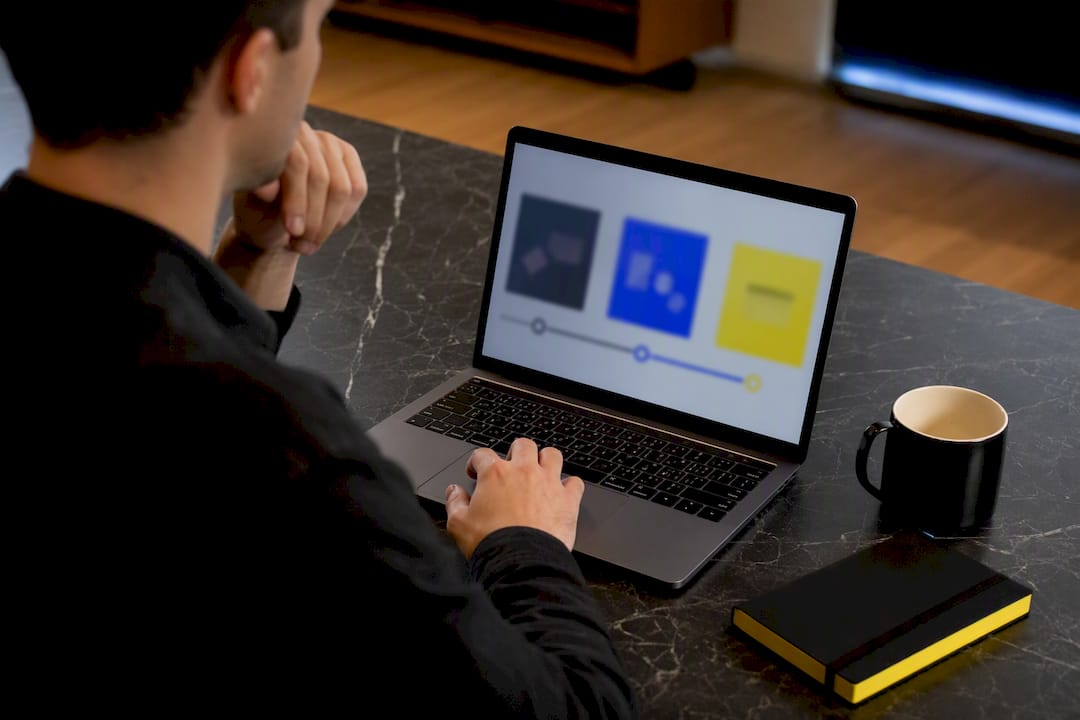
Pro Tip: If your most senior stakeholder tends to dominate discussion, have them vote last and reveal their choice after everyone else’s is already locked in.
Building the 90-Day Plan From What You Decided
Every voted decision needs an owner, a deadline, and a metric before the team disbands. Convert the brief’s priorities into a 90-day action plan the same week, while the reasoning behind each vote is still fresh.
Assign each brief section (positioning, voice, audience) to one owner with a deadline.
Track two metrics: speed of stakeholder approvals and how many revision rounds each deliverable needs.
Schedule a short check-in at 30 days to catch drift early.
Plan a focused brand sprint or discovery refresh annually, or sooner after a major market shift.
Tools like the 90-day roadmap framework give teams a structure for turning workshop priorities into a short-term execution plan with clear checkpoints.
Why Vain. Treats Discovery as Diagnostic Work, Not Theater
We built Vain. around the belief that a discovery session is only as good as its facilitator’s willingness to surface real disagreement instead of papering over it. Our team runs sessions with independent votes, a live brief, and delivers a synthesis report promptly, because clients deserve documents they can act on immediately, not a deck that gets filed away.
Our approach to monetizing content and audience strategy reflects the same discipline: ask sharper questions before the room ever debates a single visual direction.
— Vain.
Ready to Run Your Own Session? Here’s a Faster Path
Running discovery internally works when someone on your team has facilitated sessions before and can stay neutral in the room. When that’s not the case, they facilitate the entire process, from questionnaire design through the six-module agenda to a prompt synthesis report, so your team leaves with a strategic brief instead of a half-finished whiteboard.
Hiring a facilitator who has run this exact structure before saves you the two or three sessions most internal teams burn just figuring out how to run one. The facilitator builds the positioning map, drafts the personas, and delivers the decision log as part of the engagement, so your team spends the session deciding, not documenting. Once the brief is locked, the same collaborative process carries into identity and visual direction, so nothing gets lost between strategy and execution. If you’re ready to book a session or want a scope conversation first, visit Vainnewyork’s services page to get started.
Sources
FAQ
What Is a Discovery Workshop?
A discovery workshop is a facilitated session that gathers stakeholders to make and record strategic decisions about a brand’s positioning, audience, and voice, producing a strategic brief as its main output.
What Is the 3-7-27 Rule in Branding?
The 3-7-27 rule refers to how quickly people form impressions: roughly 3 seconds for a first visual read and 7 seconds for a snap judgment on trust. It’s used as a rationale for why positioning and voice decisions need to be deliberate, not accidental.
What Are the 7 Pillars of Branding?
Definitions vary across agencies, but most versions include purpose, positioning, audience, personality, voice, visual identity, and consistency. A brand discovery workshop is typically where the first five of those get decided before visual identity work begins.
How Many People Should Attend a Brand Discovery Workshop?
Five to seven participants is the ideal range. Larger groups tend to dilute focus and stretch decisions across multiple follow-up meetings instead of resolving them in the room.
How Long Should a Brand Discovery Workshop Last?
Most sessions run 3 to 8 hours, either as a single intensive day or split across two half-days for organizations with more complex stakeholder input to work through.
Recommended
Comments