What Is Direct to Garment Printing? A 2026 Guide
- Vain.

- Jul 1
- 8 min read
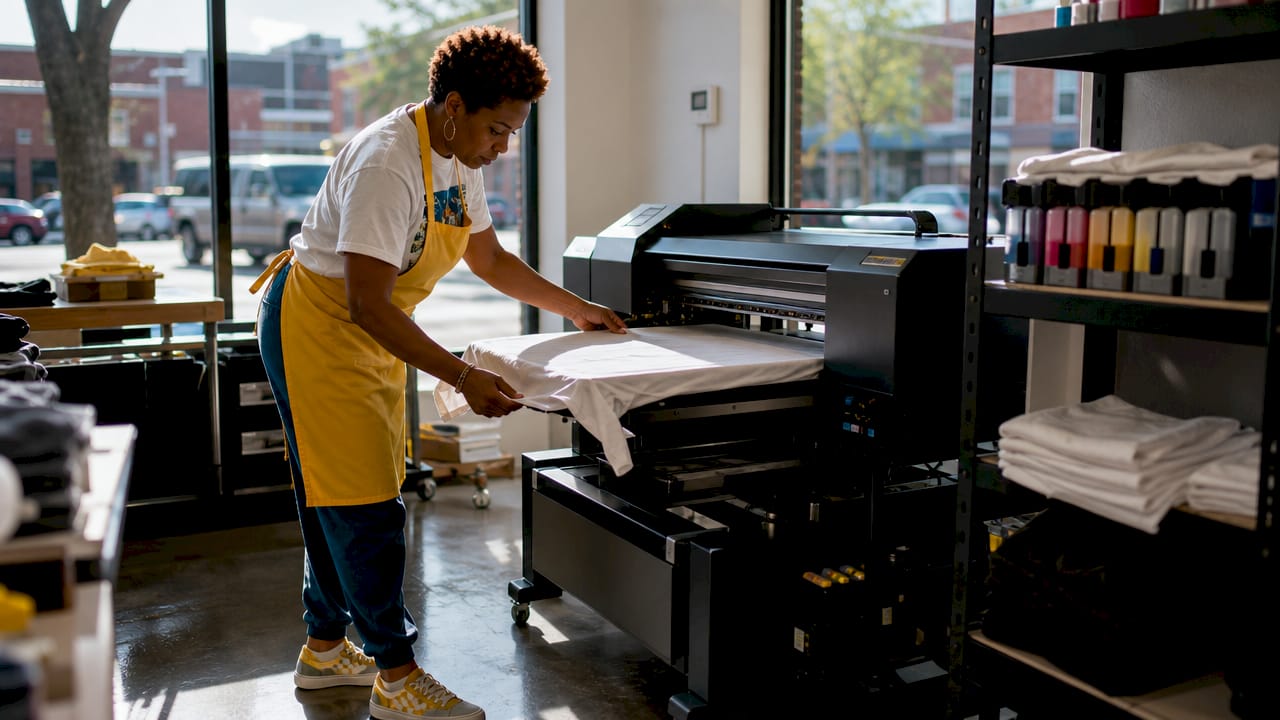
Direct to garment printing, known in the industry as DTG printing, is a digital inkjet process that applies water-based pigment inks directly into fabric fibers, requiring no screens, film, or color separation. That single fact changes everything about how custom apparel gets made. DTG printing makes single-unit orders cost-effective, opens the door to full-color photographic designs, and gives both independent creators and growing brands the ability to produce personalized garments without committing to large runs. If you want to understand how this technology works, what it can and cannot do, and how to use it well, this guide covers all of it.
What is direct to garment printing and how does the process work?
DTG printing follows three core stages: pre-treatment, printing, and curing. Each stage directly affects the quality of the finished garment, and skipping or rushing any one of them shows up immediately in the final print.
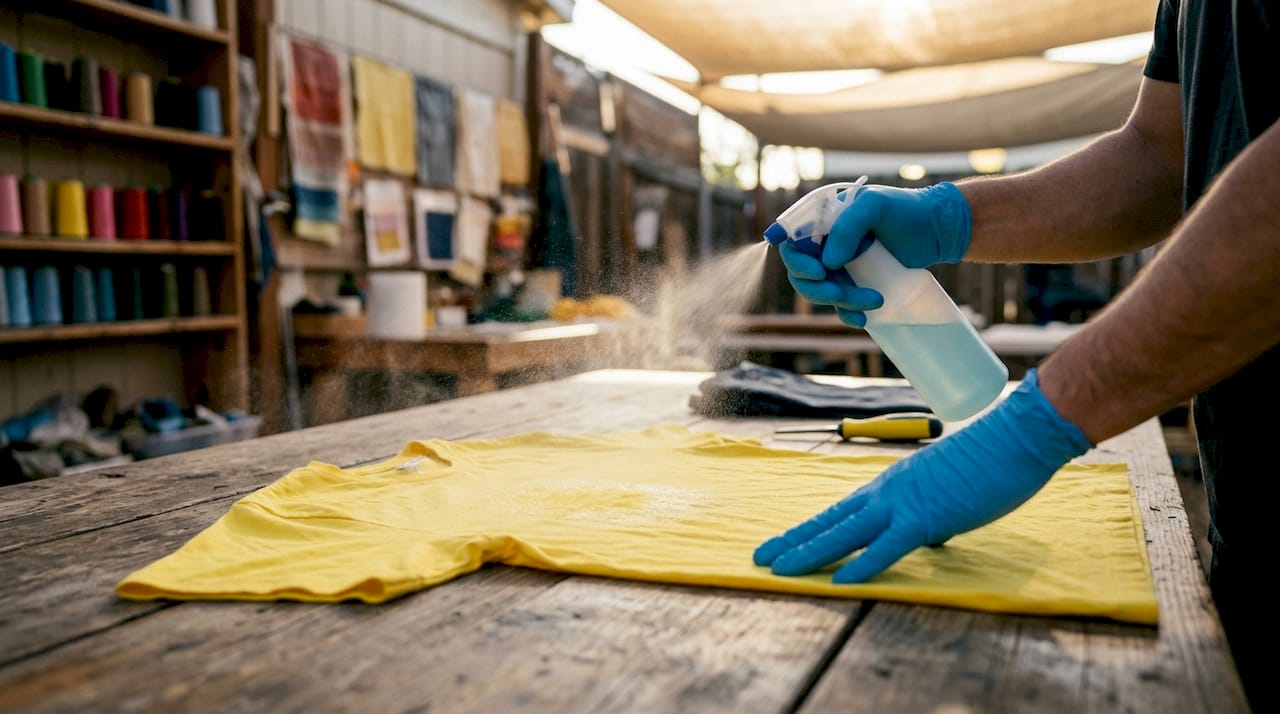
Pre-treatment is the foundation of every successful DTG print. A bonding agent, typically a water-based pre-treatment solution, gets applied to the garment before printing. This agent helps water-based pigment inks bond to the fabric fibers rather than sitting on the surface. On dark garments, pre-treatment also creates a white underbase that makes colors appear vivid and accurate. Automated pre-treatment machines are preferred in professional settings because inconsistent manual application leads to patchy underbases and poor print sharpness.
Printing happens when the treated garment is loaded flat onto the printer platen. The DTG printer reads a digital design file and deposits ink through inkjet heads in precise layers. The process mirrors how a desktop inkjet printer works on paper, but the ink chemistry and fabric tension management are far more complex. The printer builds up color using CMYK channels, and for dark fabrics, a white ink layer prints first as the underbase.
Curing locks the ink into the fabric permanently. Curing times run 90–180 seconds using either a heat press or a conveyor dryer at manufacturer-specified temperatures. That window matters. Too much heat scorches light fibers, while too little heat causes the ink to crack and fade after just a few washes.
Apply pre-treatment solution evenly across the print area.
Load the garment flat and taut onto the printer platen.
Send the digital design file to the DTG printer.
Print the white underbase layer first on dark fabrics.
Print the full-color CMYK layer over the underbase.
Cure the garment in a heat press or conveyor dryer for 90–180 seconds.
Allow the garment to cool before handling or packaging.
Pro Tip: Always test your curing temperature on a sample garment before running a full batch. Fabric weight and fiber content change how heat transfers, and a 10-degree difference can mean the gap between a durable print and a scorched shirt.
Which fabrics work best for DTG printing?
Cotton is the gold standard for DTG printing. Water-based inks absorb most effectively into natural fibers like cotton, bamboo, hemp, and linen, which is why these materials dominate the DTG substrate market. The absorption happens at the fiber level, creating prints with a soft hand feel that becomes part of the fabric rather than sitting on top of it.
The contrast with synthetic fabrics is stark. 100% polyester and synthetic blends do not absorb water-based pigment inks effectively, leading to dull colors, poor adhesion, and prints that wash out quickly. Polyester garments require alternative methods like dye sublimation, which uses heat to transfer dye into the synthetic fiber structure. This is one of the most common misconceptions newcomers bring to DTG production.
The sweet spot for most DTG work is a fabric with at least 80% cotton content. Higher cotton percentages produce more vibrant, durable prints. Blended fabrics with significant polyester content can still work, but the color output will be noticeably less saturated compared to a 100% cotton garment.
100% cotton: Best absorption, most vibrant colors, softest hand feel.
Cotton/polyester blends (80/20 or 90/10): Good results with slight reduction in color saturation.
Tri-blends (cotton, polyester, rayon): Acceptable for vintage-style prints where a slightly faded look is intentional.
100% polyester: Not compatible with standard DTG inks. Use dye sublimation instead.
Bamboo and linen: Excellent natural fiber alternatives with good ink absorption.
Pro Tip: Pre-wash new garments before DTG printing. Fabric sizing agents applied during manufacturing can interfere with ink adhesion and pre-treatment bonding, leading to prints that peel or fade prematurely.
What are the advantages and limitations of DTG printing?
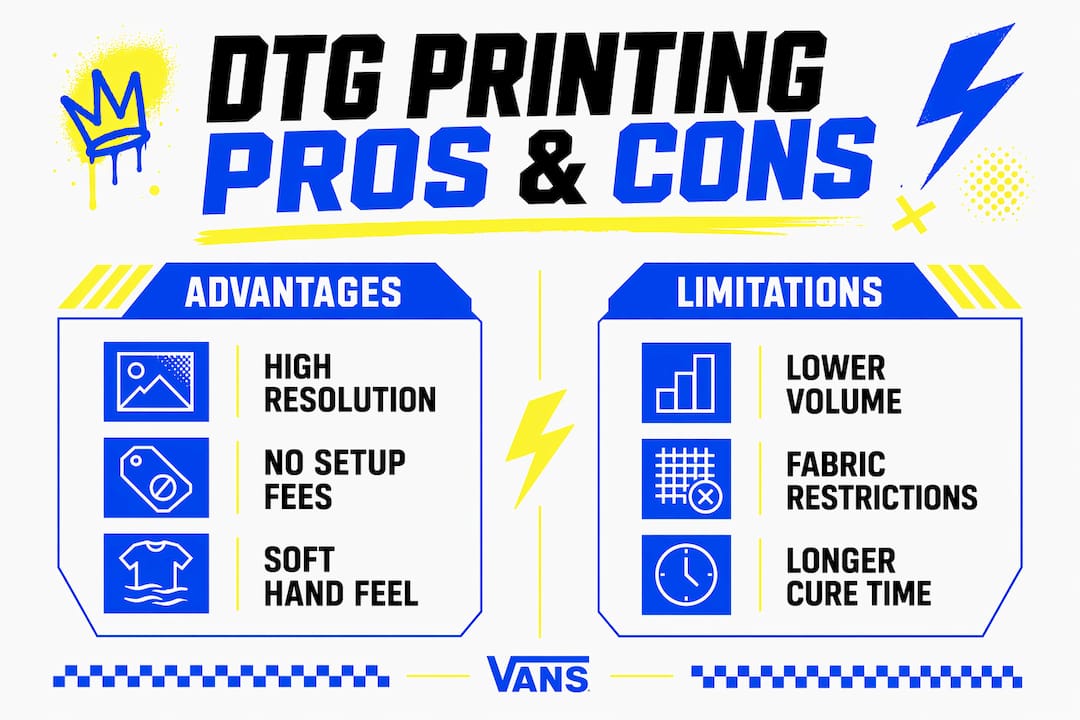
DTG printing’s greatest strength is its ability to produce high-resolution, full-color prints with no setup fees and no minimum order quantities. That combination is genuinely rare in apparel production. Screen printing, the dominant method for high-volume runs, requires screen fabrication and color separation for every design, which makes small orders economically impractical.
The soft hand feel of DTG prints is another real advantage. Because water-based pigment inks absorb into the fabric rather than sitting on top of it, the print does not add the stiff, plastic texture that plastisol screen prints often create. Photographic images, gradients, and designs with dozens of colors reproduce accurately without any additional cost per color.
The limitations are equally real. DTG is not a total replacement for screen printing at high volumes. Screen printing produces more consistent results at scale and typically costs less per unit when order quantities exceed 50–100 pieces. DTG also requires careful environmental control. High humidity causes ink bleeding, while dry air clogs printheads, both of which compromise print quality and increase waste.
Factor | DTG printing | Screen printing |
Setup cost | No setup fees | Screen fabrication required per color |
Minimum order | Single unit | Typically 12–24 pieces minimum |
Color complexity | Unlimited colors, no added cost | Each color adds cost |
Best volume | 1–50 pieces | 50+ pieces |
Hand feel | Soft, fabric-integrated | Can feel stiff with plastisol inks |
Fabric compatibility | Natural fibers preferred | Works on most fabrics |
How do businesses and individuals apply DTG printing in apparel production?
Print-on-demand e-commerce is where DTG printing has had its most visible impact. Brands and independent creators can list custom designs online, accept orders, and print each garment only after a sale is made. This eliminates inventory risk entirely. For custom apparel that differentiates brands, DTG makes it possible to offer dozens of designs without pre-producing a single unit.
Design file preparation is where many first-time users make costly mistakes. Digital files need to be 300 DPI or higher with transparent backgrounds to reproduce gradients and fine details accurately. A low-resolution file that looks sharp on a screen will print with visible pixelation on fabric. Transparent backgrounds prevent unwanted white boxes from appearing around design elements on dark garments.
Pre-treatment quality control separates professional DTG operations from amateur ones. Automated pre-treatment machines deliver consistent coverage across the print area, which is critical for color vibrancy and adhesion on dark fabrics. Manual spraying introduces human error, and even small inconsistencies in coverage create visible patches in the finished print.
Practical workflow considerations for DTG production:
Use 300 DPI PNG files with transparent backgrounds for all designs.
Pre-treat dark garments and allow the solution to dry fully before printing.
Calibrate the printer platen height for each garment thickness.
Run a test print on a sample garment before committing to a full production run.
Follow manufacturer curing guidelines precisely, adjusting for fabric weight.
Store pre-treated garments in a humidity-controlled environment if not printing immediately.
Understanding logo placement on apparel also shapes how you set up your DTG files. Chest prints, full-back designs, and sleeve graphics each require different file dimensions and platen configurations.
Key Takeaways
DTG printing is the most practical method for producing high-resolution, full-color custom apparel in small quantities, with no setup fees and no minimum order requirements.
Point | Details |
Three-stage process | Pre-treatment, printing, and curing each directly affect final print quality and durability. |
Cotton is the best substrate | Natural fibers absorb water-based inks most effectively; 100% polyester requires dye sublimation instead. |
No setup fees | DTG has no screen fabrication costs, making single-unit and small-batch orders economically viable. |
File quality determines output | Use 300 DPI files with transparent backgrounds to reproduce gradients and fine details accurately. |
Complements screen printing | DTG excels at low-volume, high-detail work; screen printing remains more cost-effective above 50 units. |
DTG printing’s real place in the custom apparel world
I have watched a lot of people come into DTG printing expecting it to replace every other method on the market. It does not, and that expectation sets them up for frustration. What DTG printing actually does is fill a gap that screen printing was never designed to fill: the single-unit, full-color, no-minimum order.
The technical challenges are consistently underestimated. Environmental control is the one that catches people off guard most often. A production space that runs too humid in summer and too dry in winter will produce inconsistent results no matter how good the printer is. Temperature and humidity management are not optional extras. They are part of the process.
The future of DTG printing sits in niche personalization and online apparel markets. As e-commerce continues to grow and consumers expect more personalized products, the ability to print one garment at a time with photographic quality becomes genuinely valuable. DTG is not competing with mass production. It is serving a different need entirely, and that is where its real strength lies.
For anyone serious about producing quality DTG work, I would say this: invest in automated pre-treatment equipment before you invest in a second printer. Consistency in pre-treatment is the single biggest variable between professional results and amateur ones. The printer itself matters less than the preparation.
— Neville
Vainnewyork and the craft of custom apparel
At Vainnewyork, we believe that great apparel starts with great process. DTG printing sits at the center of how we approach custom garment production, giving us the ability to bring detailed, full-color designs to life without the constraints of large minimum orders or setup costs.
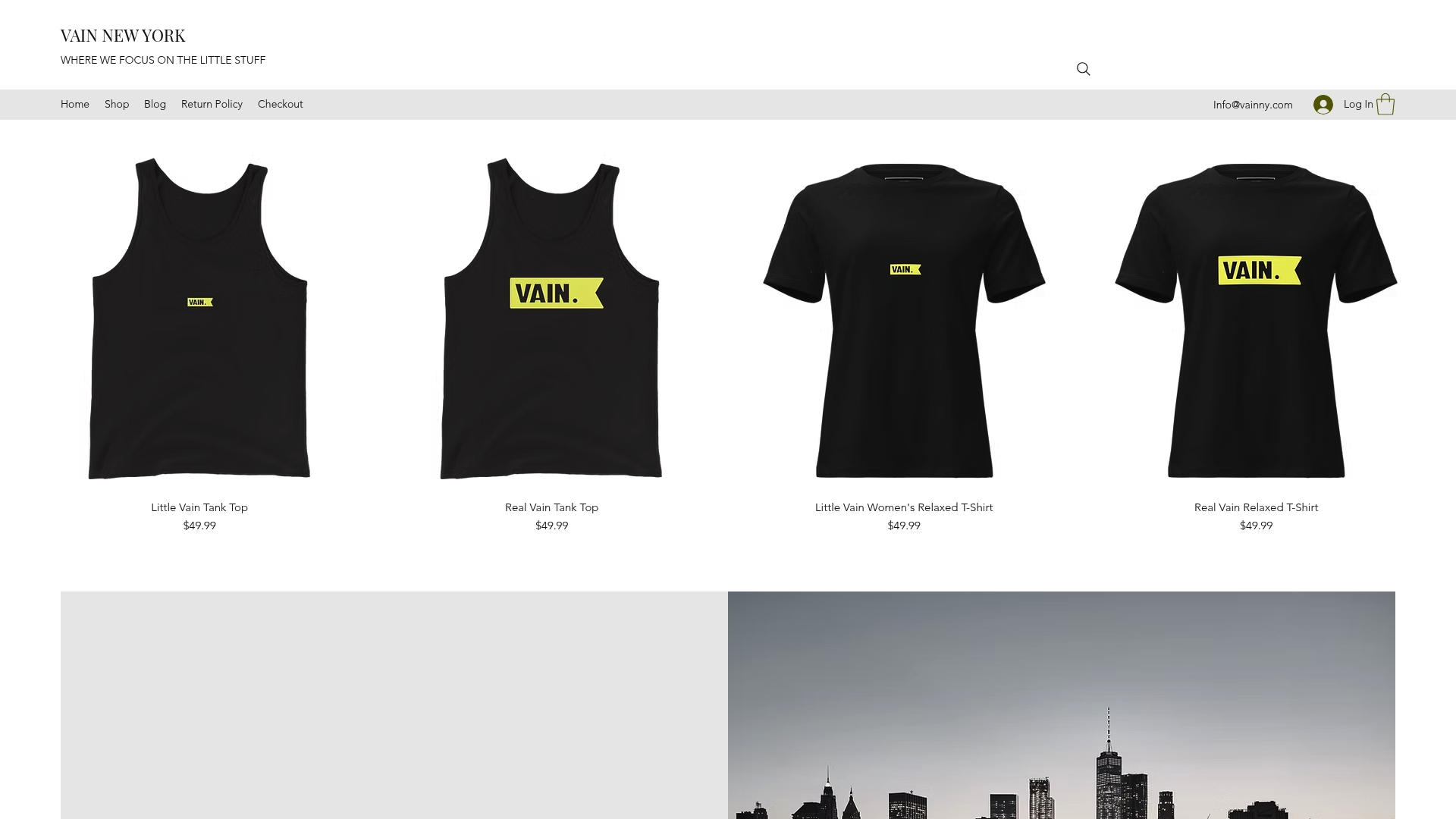
Our custom apparel collection reflects exactly what DTG printing does best: intricate designs, rich color, and a soft hand feel that wears as good as it looks. Whether you are looking for a single statement piece or a small-batch run for your brand, we produce each garment with the same attention to pre-treatment, print quality, and curing precision that professional DTG work demands. Browse the shop and see what the process looks like when it is done right.
FAQ
What is DTG printing in simple terms?
DTG printing is a digital process that prints water-based pigment inks directly onto fabric fibers using an inkjet printer, with no screens or film required. It works like a desktop printer but is designed specifically for garments.
How durable are DTG prints after washing?
DTG prints are durable when properly cured at the correct temperature for 90–180 seconds. Prints that are under-cured will crack and fade after a small number of washes.
What fabrics are best for DTG printing?
Cotton and other natural fibers like bamboo and linen absorb water-based inks most effectively, making them the best substrates for DTG. Fabrics with at least 80% cotton content produce the most vibrant and long-lasting results.
How does DTG printing compare to screen printing for cost?
DTG has no setup fees and works for single-unit orders, while screen printing requires screen fabrication per color and becomes cost-effective only at volumes of 50 or more pieces. For small batches and complex designs, DTG is the more economical choice.
What file format and resolution does DTG printing require?
DTG printing requires digital design files at 300 DPI or higher with transparent backgrounds. This resolution level ensures that gradients, fine lines, and photographic details reproduce accurately on fabric.
Recommended
Comments