DTF vs. Screen Printing: How to Choose for Your Apparel


Choose DTF (direct to film) when you want full-color or photographic artwork in small-to-medium runs, on dark garments or on mixed fabrics. Choose screen printing when you are printing a bold design with few colors in larger quantities and want the lowest cost per piece. Neither method is better in every case. The right call depends on how many pieces you need, how complex the art is, and what the garment is made of.
We work with brands, artists and organizations on merchandise every day, so we see this decision from the first sketch to the finished tee. Below, we walk through how each method works, where each one shines, and how to match the method to your project.
TL;DR
DTF prints a full-color design onto film, then heat-presses it onto the garment. It needs no per-color setup, so it suits small and medium runs and detailed art.
Screen printing pushes ink through a mesh stencil, one screen per color. Setup is spread across the order, so it wins on cost for large, simple, repeated designs.
Screen printing sits in the fabric and feels smoother. DTF sits on top as a thin, flexible layer.
Wash life depends on how the print is made and how you care for it, so quoted wash counts are guidance, not guarantees.
DTG and embroidery fill different gaps: DTG for detailed art on cotton, embroidery for logos on polos, caps and jackets.
Table of Contents
How each method works
Screen printing
Screen printing pushes ink through a mesh stencil onto the fabric. Each color in the design needs its own screen, and the ink is then cured with heat, at roughly 320°F according to one apparel decorator’s guide. Think of it as building the image in layers, one color at a time.
That per-color setup explains almost everything about the method. It rewards designs with a handful of solid colors and punishes designs with many.
DTF (direct to film)
DTF prints the full-color design onto a special film with water-based inks. Then an adhesive powder is applied to the wet ink, the film is cured, and the finished transfer is heat-pressed face-down onto the garment. One guide puts the press at about 310°F for 12 to 15 seconds. Because the design lives on film until the last step, the same process works on cotton, polyester, blends and many other fabrics.

There are no screens to build, so a single piece costs about the same to set up as a hundred.
DTG, briefly
Direct to garment (DTG) uses an inkjet-style printer to put water-based ink straight into the fabric, and dark garments need a pretreatment first. If you want the full process, we explain it in our guide to direct to garment printing.
Embroidery, briefly
Embroidery is stitching, not printing. A machine sews thread through the fabric and a backing stabilizer, which gives a raised, textured finish. It is a natural fit for small logos, lettering, caps, polos and jackets.
DTF vs. screen printing at a glance
Factor | DTF | Screen printing |
Best order size | Small to medium runs | Medium to very large runs |
Setup | No per-color screens | One screen per color |
Colors | Full color, gradients, photos | Best with limited solid colors |
Feel | Thin, flexible layer on top | Smooth ink layer absorbed into the fabric |
Fabrics | Cotton, polyester, blends and more | Cotton, polyester and blends with the right inks |
Cost curve | Roughly steady per piece | Drops sharply as quantity grows |
Artwork | Raster or vector, high resolution | Usually vector with spot-color separations |
The order-size and cost comparison matches what a FESPA contributor describes: screen printing as best for large runs, DTF as suited to small-to-medium runs. FESPA frames the choice as a three-way decision between order size, design complexity and material, not a contest with one winner.
Order size and cost
Screen printing carries a fixed cost before the first shirt is printed: burning a screen for every color. Spread that across 24 shirts and each piece carries a lot of it. Spread it across 2,000 and it nearly disappears. That is why screen printing becomes inefficient for small orders but lowers unit cost at scale.
DTF flips the equation. With no screens, it works for a run of one or a run of a few hundred, and the per-piece price stays fairly level. At very high volume, though, screen printing usually takes back the lead on cost.
There is no magic crossover number. The break-even shifts with garment price, number of colors, print size, number of print locations and supplier pricing. If you are close to the line, ask for a quote on both methods and compare the totals, not the per-piece figures alone.
A simple way to think about it:
Under about 50 pieces: DTF is usually the practical choice, especially with more than two or three colors.
50 to a few hundred pieces: it depends on the art. A one- or two-color logo may already favor screen printing, while a multi-color illustration still favors DTF.
Hundreds to thousands of pieces: screen printing with a simple design is typically the most economical path.
These are planning ranges drawn from how the methods behave, not quotes. Always confirm with your production partner.
Design complexity and color
If your artwork has gradients, soft shadows, photographic detail or a dozen colors, DTF handles it without extra cost per color. Screen printing can reproduce complex art, but each added color means another screen, more alignment work and a higher price.

If your artwork is a bold wordmark, a two-color graphic or a solid block of color, screen printing is where it looks its best. Screen printing can also deliver specialty effects and true neon or spot colors that digital methods struggle to match.
Color choice matters beyond the print method too. Our guide to color psychology in apparel design covers how palette decisions shape the way a collection reads. For lettering-heavy designs, typography in apparel design is worth a look before you finalize files.
Feel and look on the garment
This is where many buyers make up their minds. A screen print is absorbed into the fabric’s surface, so it tends to feel smooth and part of the shirt. DTF is a film layer bonded to the garment, which gives a soft, flexible finish on most designs but can feel like it sits on top, especially in large solid areas.
The practical advice follows from that:
For a large chest graphic you want to feel like part of the shirt, lean toward screen printing.
For small-to-medium art, detailed illustrations or multi-color pieces, DTF’s thin layer usually feels comfortable and looks sharp.
For a vintage, broken-in look, screen printing is hard to beat.
Placement changes the feel too. A small left-chest mark is almost unnoticeable in either method, while an oversized back print shows every difference. Our overview of logo placement types for apparel helps you think through size and position before choosing.
Durability: how long do DTF and screen prints last?
The honest answer is that both can last a long time when they are made and washed properly. Published figures give a rough sense of scale. One guide reports about 40 to 50 washes for well-pressed DTF and 50 to 100 or more for screen printing, and it warns that poor DTF application can lead to peeling or flaking.
Treat those numbers as guidance. Durability depends on temperature, pressure, time and curing during production, plus how the garment is washed afterward. Different tests use different methods, so wash counts from different sources are not directly comparable.
Whatever method you choose, these habits protect the print:
Turn the garment inside out before washing.
Use cool or warm water and a gentle cycle.
Skip bleach and harsh detergents.
Tumble dry low or hang dry, and never iron directly on the print.
For embroidery, the thread is stitched into the fabric, which is why it is generally described as resistant to wear.
Where DTG and embroidery fit
Most people searching for DTF vs. screen printing end up comparing three or four methods, so here is how the others slot in.
DTG vs. DTF. DTG is a strong choice for photographic or highly detailed art on 100% cotton or cotton-rich garments, particularly one-offs and very small runs. As the owner of one DTG shop put it, the process is attractive when printing on 100% cotton because the print breathes and has a soft hand. DTF extends full-color printing to more fabric types, including polyester and blends, which is where it pulls ahead.
DTG vs. screen printing. DTG wins on detail and tiny runs, and screen printing wins on volume and simple graphics. Screen printing also works across a wider range of fabrics when the right inks are used.
Embroidery vs. screen printing. Embroidery creates a raised, dimensional, high-end look that suits logos, monograms and lettering on polos, caps, jackets and thicker materials. Screen printing is smooth and bold, and it is the better fit for tees, hoodies, tote bags and large full-front graphics. Embroidery cost scales with stitch count, so it is a positioning choice more than a savings choice.
Which method fits your project?
Your situation | Likely best fit |
A test drop of 25 tees with a detailed illustration | DTF |
1,000 tees with a two-color logo | Screen printing |
Photographic art on cotton, in tiny quantities | DTG |
Polyester or blended performance wear with full-color art | DTF |
Caps, polos or jackets with a small logo | Embroidery |
Personalized names or numbers on each piece | DTF |
Neon or specialty-ink effects | Screen printing |
If you are planning a full collection rather than a single shirt, you may use more than one method. A hero graphic tee might be screen printed in volume while limited-edition pieces use DTF. Our walkthrough on designing your graphic tee collection shows how to sequence those decisions, and merchandise design best practices for brand managers covers the brand side.
Artists and music creators face the same trade-offs when they plan tour or release drops. If that is you, this look at selling merchandise in music pairs well with the method choice above. Start with a small run, learn what your audience wants, then scale the winners.
A short checklist before you order
Count the pieces. Know your realistic first run and your likely reorder.
Count the colors. Under four solid colors points toward screen printing at volume. Gradients and photos point toward DTF or DTG.
Check the fabric. Cotton, blends, polyester and performance fabrics each favor different methods.
Decide on the feel. Handle samples if you can, and pay attention to large solid areas.
Prepare the art. Vector files with clean color separations suit screen printing, while high-resolution files suit DTF and DTG.
Plan the care label. Tell customers how to wash the garment to protect the print.
Quote both. When both methods fit, compare the total cost, not only the unit price.
Perspective
We see print method as a creative decision first and a production decision second. The same artwork can feel bold and graphic in one process and soft and illustrative in another, and the right choice is the one that serves the idea and the people who will wear it. Our approach to merchandise grows out of how we work on creative projects: intentionally, collaboratively and with a curated network of collaborators. Our apparel is made to order with precision and care, so every piece is made with a purpose rather than sitting on a shelf. That mindset is the best advice we can give anyone choosing between DTF and screen printing. Start from the story you want the garment to tell, then let quantity, color and fabric point you to the method. A printed piece that feels intentional will always outlast a trend. Vain.
See our merch in the real world
We are a creative media and technology company in New York City, and merchandise is part of how we help ideas travel. Our shop carries made-to-order pieces such as the Studio T-Shirt at $59.99, the Long Sleeve Studio Shirt at $69.99 and the Studio Hoodie at $99.99, so you can see how our approach looks and feels in your hands.
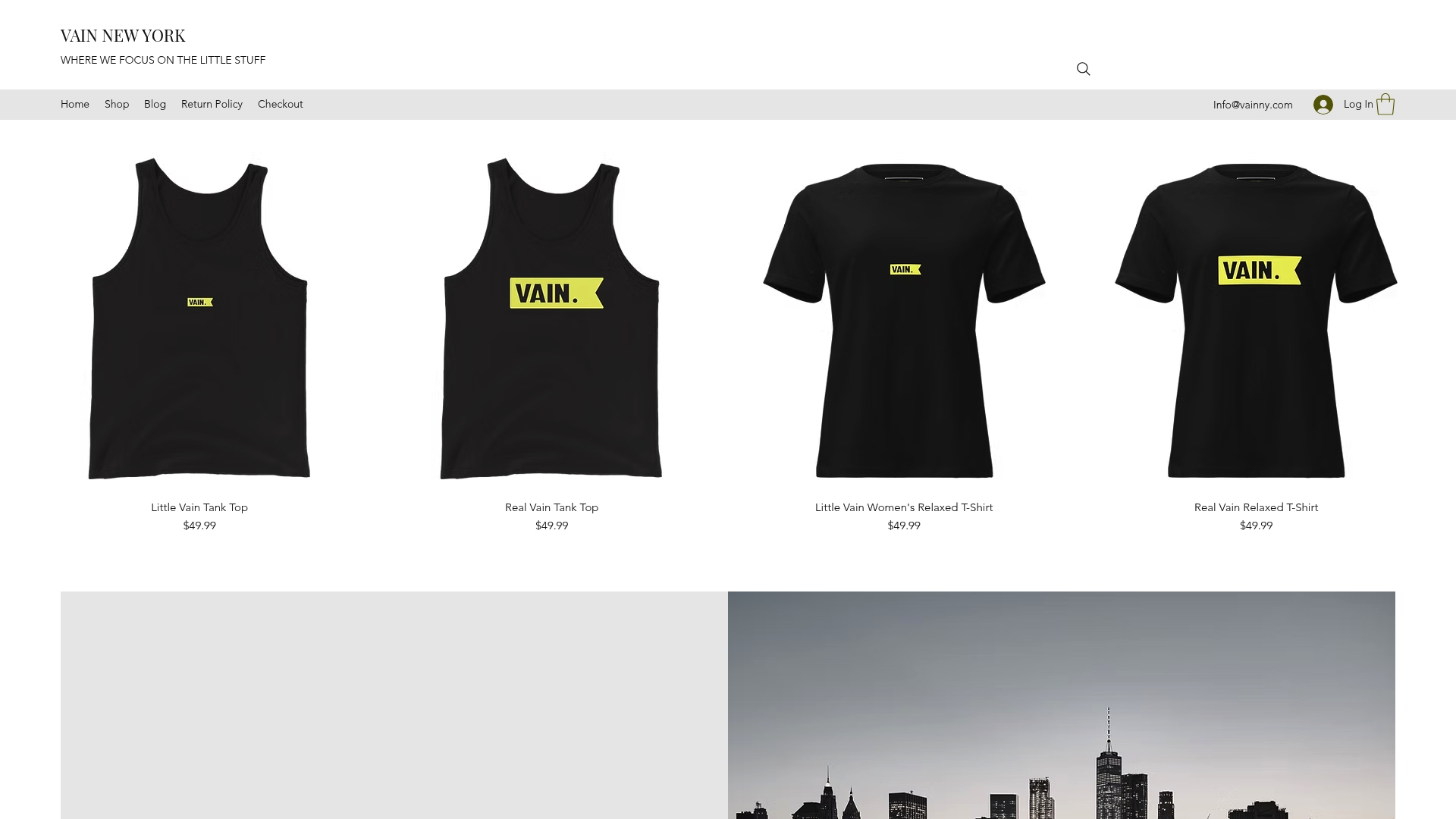
If you are a brand, artist or organization planning apparel, video, audio, animation or strategy, explore what we offer and tell us what you have in mind. You can also read how we think about building a brand through merchandise in NYC or partnering with NYC apparel manufacturers.
FAQ
What are the disadvantages of DTF?
DTF can feel like a thin film on the surface, especially across large solid areas. It adds film, adhesive and pressing steps, so careful application matters to avoid edge peeling. It is also usually pricier per piece than screen printing at very high volume.
How long does DTF last compared with screen printing?
Published guides generally place well-made DTF in the tens of washes and screen printing somewhat higher, but the numbers vary by test. Pressing quality, curing and washing habits shape the real result more than the method name does.
Is DTF better than screen printing for small orders?
Usually, yes. DTF has no per-color screens, so a run of a few dozen pieces does not carry heavy setup costs. Screen printing typically becomes more economical as quantities and repeat orders grow.
Can I use DTF on polyester and dark garments?
Yes. DTF transfers are applied with heat and work across cotton, polyester and blends, and the design prints with its own color layer, so dark garments are not a problem for the method.
Should I choose embroidery instead of screen printing?
Choose embroidery for small logos and lettering on polos, caps and jackets, where a raised, premium look matters. Choose screen printing for large, bold graphics on tees, hoodies and totes.
Sources
Recommended
Comments