Oversized vs Boxy Fit: What Sets Them Apart


Boxy fit and oversized fit both sit loose on the body, but they are not the same cut. A boxy tee is wide and relatively short, with straight sides that give it a squared-off shape. An oversized tee adds volume in every direction: wider, longer, with a lower shoulder and deeper sleeves. If you remember one thing, remember this: boxy trades length for width, while oversized keeps adding both.
We spend our days around people who care about how things are cut, framed and finished, so we love a good silhouette question. Below, we break down what each fit means, how to read a size chart, how to pick a size, and how to style the result.
TL;DR
Boxy fit is wide through the chest, straight through the sides, and short, with the hem landing around the waist or hip. Think of a square.
Oversized fit is roomier everywhere and usually longer, with a dropped shoulder and longer sleeves. Think of full drape.
A drop shoulder is a seam position, not a fit. Both cuts can have one, so check width and length too.
Fit names are marketing. Compare the real measurements: body width, body length, shoulder position and sleeve length.
Balance volume on top with a more streamlined bottom, whichever cut you choose.
Table of Contents
What boxy fit actually means
A boxy fit is a deliberate silhouette, and it comes from the pattern. Retailers describe it in remarkably consistent terms. American Eagle, for example, defines its boxy fit as wider and slightly shorter than its Standard fit. A fashion label describing its own boxy shape calls it short and wide, hanging gently off the body, often reaching around the natural hip.
Put those descriptions together and you get the usual checklist for a boxy tee:
A wider body. The chest is cut generously, and the garment does not taper at the waist.
Straight side seams. They drop from the underarm to the hem, so the width at the chest is close to the width at the bottom.
A shorter hem. It lands at the waistband or around the hip rather than over the seat.
Often a slightly dropped shoulder. Usually only a small drop, enough to relax the line without taking over the shirt.
The result hangs like a block of fabric rather than following your torso. That is the point. The silhouette reads as architectural: clean lines, squared corners, and a deliberate relationship between width and length.
The quickest way to see it is to compare body width and body length on a flat garment. In a boxy tee the two numbers are close, so the shape is nearly a square. In a long, narrow tee there is a big gap between them.
What oversized fit means
Oversized is a broader idea. Where boxy is a specific shape, oversized describes scale: the whole garment is cut bigger than a regular fit. Chest, body length, shoulder width and sleeves all grow, and the shoulder seam usually sits well down the upper arm. The sleeves run longer, and the hem often falls past the hip.
That is why oversized tends to feel draped rather than structured. The fabric has room to move, fall and fold. It is relaxed, breathable and expressive, and it works as an intentional statement piece or as comfortable everyday wear.

An oversized tee is also not simply a regular tee in a bigger size. A well-made oversized pattern is graded wider on purpose, so the proportions stay balanced instead of looking sloppy. Likewise, a true boxy cut is not just “a size up”: it is engineered with a shorter body, a wider chest and armholes, and a squared shoulder for structure. Buying two sizes up in a regular tee changes the length and other proportions in ways that may never produce a boxy shape.
Oversized vs boxy fit, side by side
Feature | Boxy fit | Oversized fit |
Overall idea | Width up, length down | Volume up everywhere |
Silhouette | Square or short rectangle | Draped, loose, often longer |
Chest | Wide | Wide |
Body length | Shorter, at the waist or hip | Longer, often past the hip |
Shoulder seam | Straight to slightly dropped | Noticeably dropped |
Sleeves | Mid-length, often wide | Longer and deeper |
Side seams | Straight down, no taper | Loose and relaxed |
Best for | Structured, clean streetwear look | Maximum comfort and drape |
Treat the table as a guide to typical cuts, not a rule. Brands label the same shape in different ways, which is why the section on measurements below matters.
Drop shoulder is a seam, not a fit
This is where many shoppers get confused. A drop shoulder simply means the shoulder seam sits below your natural shoulder point, partway down the upper arm. It does not tell you how wide or how long the body is.
That is why you can find a boxy tee with a drop shoulder and an oversized tee with a drop shoulder. The seam placement is one ingredient, and the proportions of the body are the other. If you want a quick explanation of seam placement versus body proportions in a different garment, this piece on how drop shoulder describes seam placement while boxy and oversized describe proportions is a handy companion, especially for hoodies.
So when you shop, read the three signals together:
Shoulder position: barely dropped, or clearly dropped?
Body width: how much room is there across the chest?
Body length: where does the hem land compared with your hip?
Is boxy fit short? Is relaxed the same as oversized?
Two of the questions people ask most often have short answers.
Is boxy fit short in length? Generally, yes. A boxy tee is cut with a shorter body, so the hem tends to land around the waistband or just below it. Some boxy tees sit a little lower for a heavier streetwear feel, but a good rule is that the hem should land around the hip and not cover so much of your shorts that your legs look shortened.
Is relaxed fit the same as oversized? No. Relaxed sits between regular and oversized. It gives you more room than a standard cut without the dramatic volume, the deep shoulder drop or the extra length. If a regular tee feels slightly snug and an oversized tee feels like a lot, relaxed is the middle ground.
There is also a hybrid. Some cuts are sold as “boxy oversized”: wide and square like a boxy tee, but with more length and a lower shoulder. These work well in hot weather because the air circulates, and they sit between the two pure types.
How to choose your size
Sizing is where a good fit becomes a great one. Because the cut is intentionally loose, the tag size matters less than the measurements.
Start with your usual size if you want the full effect. For an oversized look, most brands that build in the volume suggest staying with your normal size. If you want the same silhouette with less volume, size down one. One streetwear label’s size guide puts it plainly: sizing up gives a fuller drape, while sizing down keeps the silhouette but pulls it in slightly.
Measure a shirt you already love. Lay it flat. For width, measure from underarm seam to underarm seam, a couple of centimeters below the armhole. For length, measure from the highest point of the shoulder seam to the hem. Double the flat chest measurement if you want the full circumference. A simple walkthrough on measuring a t-shirt for online fit shows how to compare a garment’s real proportions with what the label promises.

Compare against the spec chart. Look at body width, body length, shoulder position, sleeve length and sleeve opening. Those five points tell you more than the words “boxy” or “oversized” ever will, because fit names are marketing terms and different brands use them differently.
Check the hem first. If it lands around the hip, the tee is usually easier to style. If it drops past the seat, you will probably want wider pants or a more deliberate outfit.
A worked example: say your favorite tee measures 21 inches across the chest and 28 inches long. A boxy version in your size might be wider than that and noticeably shorter than 28 inches, so the width and length are nearly equal. An oversized version might be wider still and longer than 28 inches. Same person, same size tag, two completely different shapes. That gap between width and length is your fastest read of a silhouette.
How each fit looks and feels when worn
Boxy feels structured. The straight sides and shorter hem create a clean block shape, and the shorter body keeps the shirt from swallowing your frame. It tends to look sharper and more intentional, especially when the fabric is heavy enough to hold the shape. Heavier fabric helps a boxy cut keep its square lines instead of collapsing into drape.
Oversized feels soft and unhurried. The longer body and dropped shoulders create movement, and the extra sleeve length adds to the slouch. It is the cut for comfort, layering, and a lived-in feel.
Neither is better. They are two different tools: boxy is a frame, oversized is a drape.
Styling each fit
The golden rule for both is proportion. If the top is wide, make the bottom more streamlined. The reverse works too: a fitted top sits well over wide trousers.
Styling a boxy tee
Pair it with fitted or straight-leg bottoms to balance the volume up top with structure below.
Try a front tuck, a few inches into the waistband. It keeps the boxy shape visible while defining your waist.
Let the short hem do the work: a boxy tee over high-rise jeans creates a long leg line without any extra effort.
Styling an oversized tee
Go fitted on the bottom: leggings, slim jeans or bike shorts keep the proportions intentional.
Use a tuck or a knot at the hem to control the silhouette when the length gets too much.
Layer it open over a fitted tank or under a jacket for a relaxed, lived-in look.
If you wear denim often, this guide to pairing graphic tees with jeans has useful ideas for balancing proportions in everyday outfits.
Which fit should you choose?
Pick boxy if you want a defined, architectural look, if you are shorter or want to emphasize your legs, or if you like a shirt that looks relaxed but still has structure. It is also easier to wear with a wide range of bottoms.
Pick oversized if comfort is your priority, if you like layering, if you want the long, draped silhouette of classic streetwear, or if you are building an outfit around a deliberate slouch.
Pick relaxed if you want a little more room than a regular tee without committing to either dramatic shape.
If you are still unsure, start with the one that matches the clothes you already reach for. If your favorite tee is the one you steal from a friend, you probably want oversized. If it is the one that always looks put together, try boxy.
Why the cut matters when you design your own apparel
If you are building a merch line or a brand wardrobe, the fit is part of the story before anyone reads the graphic. A boxy canvas makes a chest print feel centered and bold. An oversized canvas gives a back graphic room to breathe. We cover how to plan the full drop in our process for designing a graphic tee collection, and how the lettering on top of the cut works in our guide to typography in apparel design. The way a design is printed matters just as much, which we explore in DTF vs. screen printing.
Our perspective
We believe a garment is a piece of design, not just a surface for a logo. The cut, the weight, the hem and the way a print sits on the body all shape how people feel when they wear it. That is why we talk about silhouettes the same way we talk about a frame in a film: every proportion is a choice. When we make apparel, we make it to order, with precision and care, because we think a considered piece should arrive that way. We would rather you choose a fit with intention than guess from a label. Read the measurements, think about how you want the shirt to move, and decide whether you want the clean geometry of a square or the easy drape of a looser line. The same thinking drives our creative work for brands and artists. Whether the project is a video, a sound design, an animation or a brand strategy, we work with a curated network of collaborators to make the ordinary feel extraordinary. A shirt is a small canvas for that idea, and a good one starts with knowing what you want it to say. Vain.
Shop the studio pieces
If you want to see how we approach apparel, browse our Studio collection. The Studio T-Shirt and the Relaxed Women’s Studio T-Shirt are each $59.99, the Crop Studio Hoodie is $79.99, and the Studio Hoodie is $99.99. Each piece is made to order. Our Little Vain Crop Studio Hoodie is a good place to start if you like a shorter body.
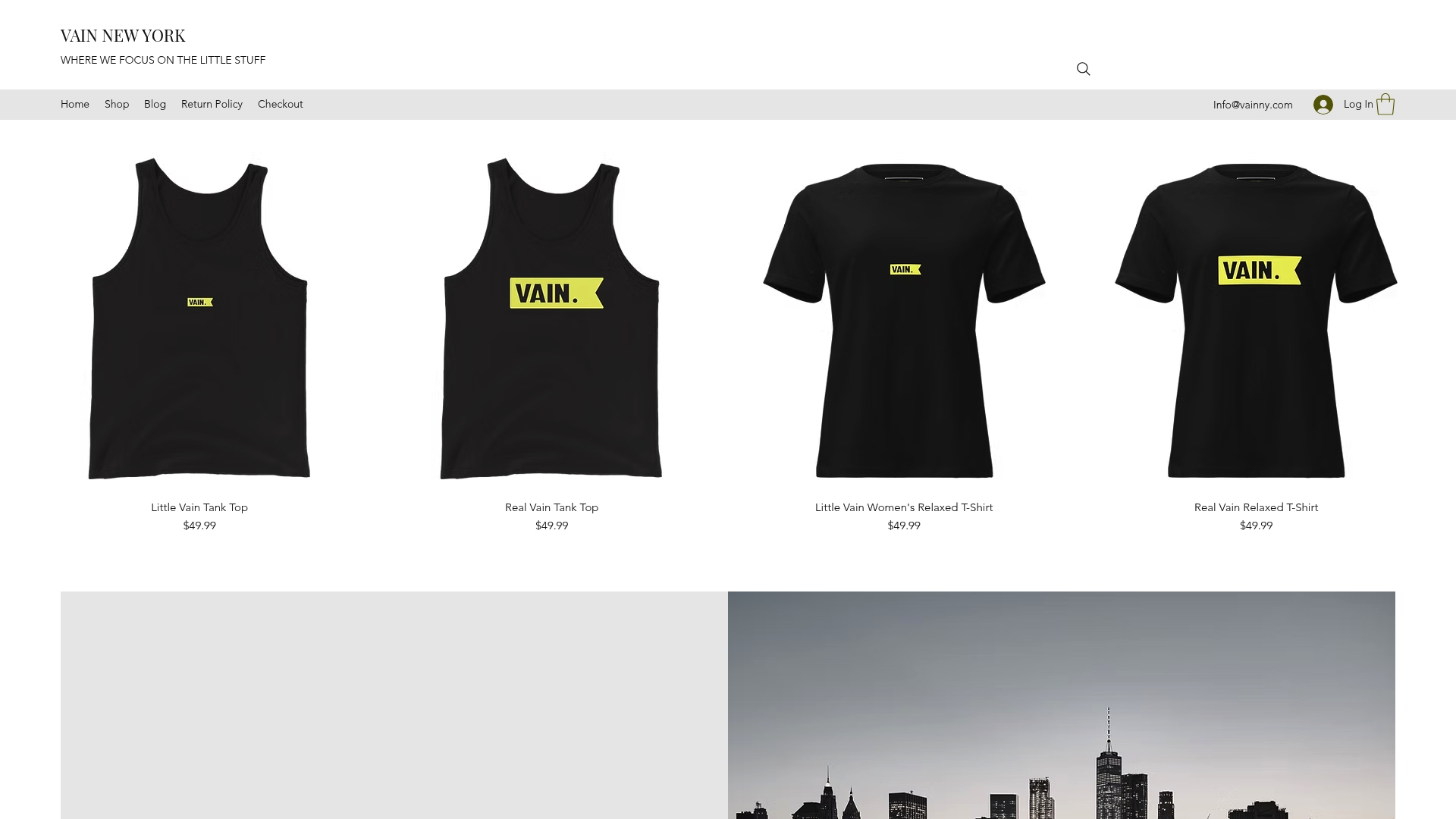
Building something bigger, like a merch drop, a campaign or a brand film? Our team handles video, audio, animation and strategy for brands, artists and organizations. See everything we offer at Vain New York.
FAQ
Do oversized shirts look good?
Yes, when the proportions are balanced. Oversized shirts look best when you pair them with more streamlined bottoms, such as slim jeans or leggings, and control the hem with a tuck or knot if needed. The look is intentional rather than sloppy when the shoulder, sleeve and body length work together.
Is boxy fit short in length?
Usually, yes. A boxy tee is cut wider and shorter than a standard tee, so the hem lands around the waistband or hip. That shorter body is what gives it the squared silhouette, so it is the main way to tell it apart from an oversized tee.
What size is an oversized t-shirt?
There is no universal size, because brands define the fit differently. Many oversized tees are designed to be worn in your usual size, and sizing down gives a similar shape with less volume. Check the spec chart for body width, length, shoulder position and sleeve length, and compare them with a shirt you already own.
Is relaxed fit the same as oversized?
No. Relaxed gives you extra room compared with a regular fit, but with less volume, less shoulder drop and less length than oversized. It is the middle option between a standard cut and a fully oversized one.
What does boxy fit mean?
Boxy fit means a top cut wide and straight through the body with a shorter length, so it hangs like a square instead of following your torso. Look for a wider body, straight side seams, a slight shoulder drop and a hem that stops around the hip.
Sources
Recommended
Comments