48–72hr 3-Step NYC Film Permit Process for Production Coordinators

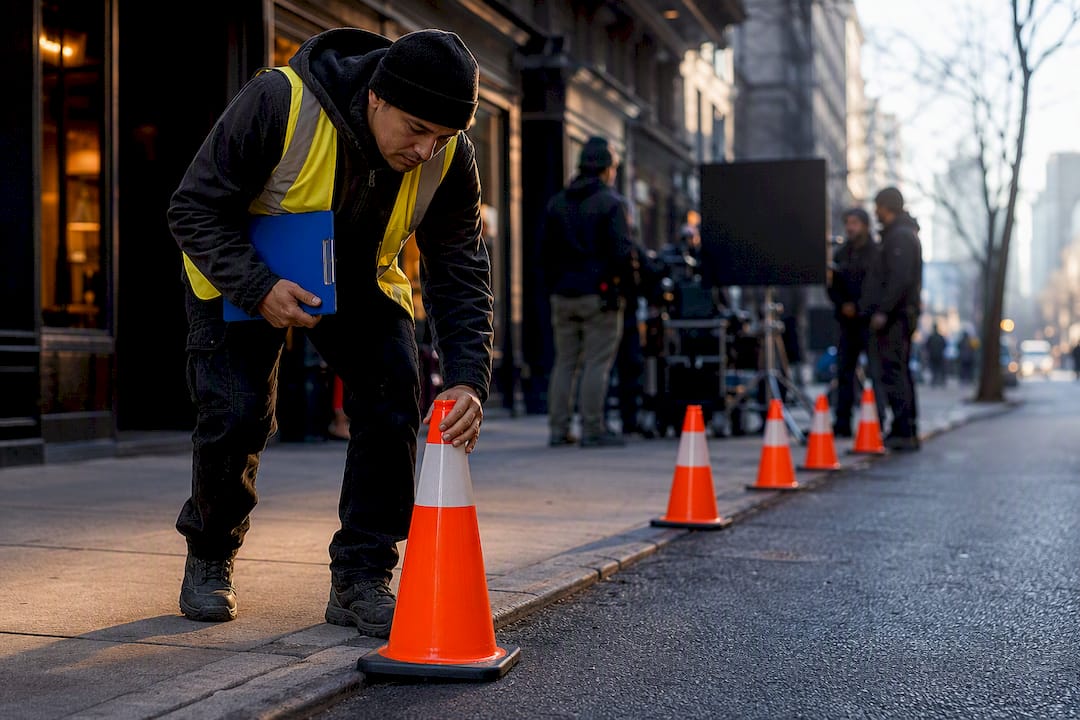
Most shoots in New York City need a film permit if they use more than a handheld camera, request parking privileges, or need any assistance from the NYPD or FDNY. The Mayor’s Office of Media and Entertainment (MOME) issues that permit through its e-apply portal, and the immediate next step is simple: create a project in MOME E-Apply before you lock your shoot date.
TL;DR:
Film permits are required in NYC when using equipment beyond handheld cameras, requesting parking, or involving city property closures or police assistance.
The application process is streamlined through MOME’s e-apply portal, requiring early insurance submission, detailed project info, and timely fee payment of $500 per 14-day period.
Locations like parks, transit systems, federal sites, and drone operations need separate approvals beyond the MOME permit, often requiring parallel applications.
Community notification through neighborhood boards and signage is essential for smooth shoot operations and avoiding delays.
Careful planning, early location approvals, and thorough application details help prevent common permit errors and keep schedules on track.
Table of Contents
NYC Film Permit Guide: The Three-Step Workflow
Every production coordinator we’ve worked with eventually settles on the same rhythm, whether the shoot is a two-person B-roll run or a full unit day with police assistance. Getting an NYC film permit boils down to three moves, done in order.
Determine need. Ask whether you’re using gear beyond a tripod, blocking a sidewalk, or requesting parking. If yes, you need a permit.
Apply through MOME. Build your project in the E-Apply system, attach your insurance, and submit at least 48 to 72 business hours before your shoot day. Times Square shoots need seven business days.
Notify your neighbors. Reach out to the local community board and post signage where your crew will be working.
Budget $500 per 14-day period for the base fee, and remember the Letter in Lieu option exists for shoots that fall just short of triggering a full permit.
When Do You Actually Need a Film Permit in NYC?
The rules sound broad until you break them into concrete triggers. According to MOME, a permit is required when your production does any of the following:
Uses equipment beyond handheld cameras or a tripod (dollies, lighting rigs, grip trucks)
Requests parking privileges for production vehicles
Asserts exclusive use of city property, like closing off a sidewalk or park bench
Involves prop weapons or vehicles
Puts actors in police uniforms
Stages stunts
Requires NYPD or FDNY assistance
A two-person crew shooting handheld footage of a street corner without blocking pedestrian flow is generally exempt. The moment you add a base camp, a generator, or a request to hold parking spots, you’ve crossed into permit territory. It’s worth remembering that a film permit covers exterior public property and parking privileges only. It does not substitute for an interior location agreement with a private building owner, nor will it cover agency-specific approvals for city, transit, or federal property. If your exterior activity sits in a gray area, the Letter in Lieu of Permit gives you documented proof that MOME reviewed the activity and found it exempt, which is worth having on hand if anyone on set asks.
How to Apply for an NYC Film Permit Through MOME E-Apply
MOME’s e-apply system is structured in three layers: account, project, and permit. You create one account, build a project for your production, and then file individual daily permits underneath that project. Experienced production managers keep every shoot day under a single project container rather than opening a new one for each date. That single move prevents duplicate fees and reduces the odds of a rejected submission when dates shift.
Here’s the sequence that keeps applications moving:
Set up your project first. Name it clearly and confirm your end date covers your full shoot window, since dates extending past that window require a new project.
Secure insurance early. MOME requires your broker to email the certificate of insurance at least 48 business hours before you apply, and the production company name on the certificate has to match your project exactly.
Calculate your fee. The nonrefundable fee is $500 for each consecutive 14-day period, effective since January 2024. A three-week shoot spans multiple fee periods, so budget accordingly. A fee-waiver path exists for qualifying productions, and it’s worth checking eligibility before you submit.
Fill in every field, not just the obvious ones. Scene description, vehicle tab, parking specifics, and any police assistance request all need detail. Vague entries are the fastest route to a follow-up email that delays your permit.
Submit on time. Standard review takes 48 to 72 business hours. Times Square needs seven business days minimum, and holiday closures can quietly eat into your window, so check the calendar before you promise a date to your line producer.
Pro Tip: Enter your vehicle types the moment you build the permit, even before you have final plates. The system lets you add plate numbers later, but they must be updated by your first shoot day to keep parking privileges intact.
Do You Need Extra Permits for Parks, Transit, or Federal Sites?
A MOME permit covers a lot of ground, but it doesn’t cover everything. Certain locations layer on their own approval process, and getting the sequence wrong is one of the most common reasons a shoot date slips.
NYC Parks Department: any shoot inside a park needs Parks approval before you even submit to the Film Office. Apply here first.
DCAS: interior scenes inside certain city buildings fall under the Department of Citywide Administrative Services, which charges its own administrative fee, an administrative fee such as $3,200, on top of your MOME permit.
MTA and Port Authority: subway platforms, bridges, tunnels, and airports each run separate permit processes outside MOME’s jurisdiction.
Federal property: National Park Service sites and other federal land require their own commercial filming permits entirely.
Drones: flying a drone adds an NYPD and Department of Transportation review layered on top of a distinct drone permit application.
Start these parallel requests as soon as you know your location list. Waiting until your MOME permit is approved to even ask about park or transit access is how a confirmed shoot date turns into a scramble.
How Do You Notify Neighbors About Filming in NYC?
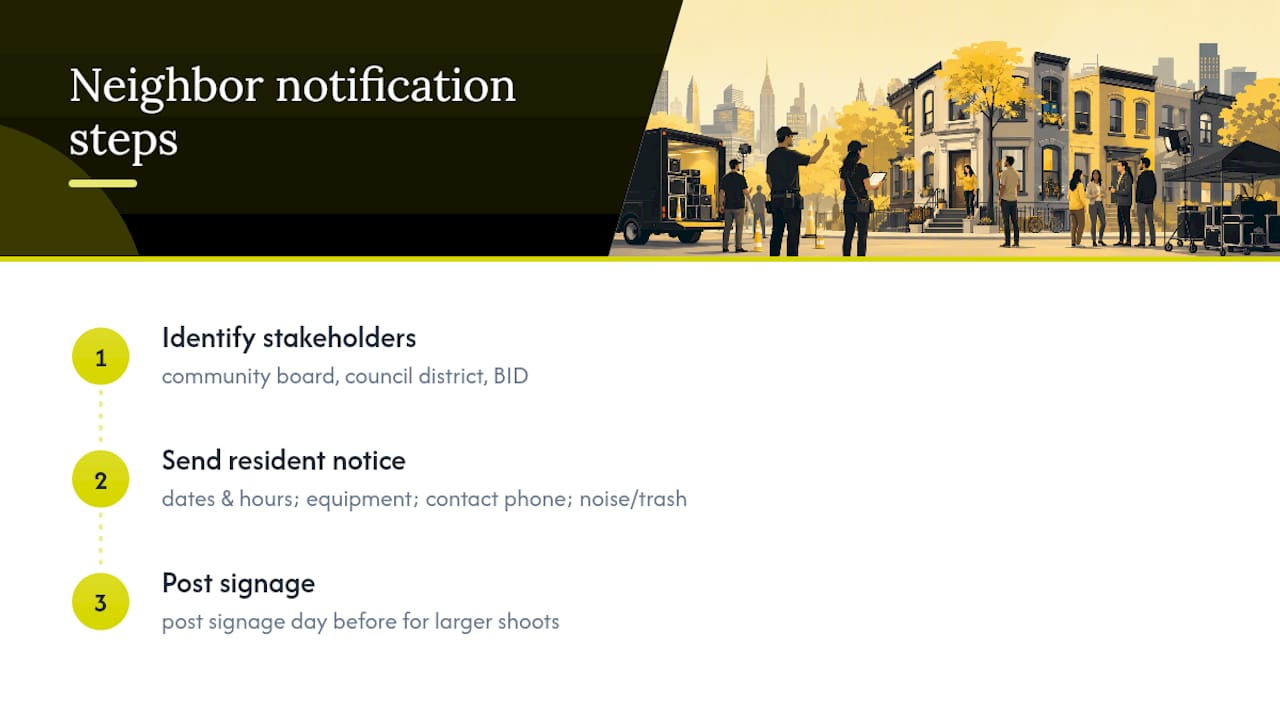
Good community relations aren’t just good manners. They’re often what keeps a production running smoothly when a crew shows up at 6 a.m. with trucks and lighting rigs. Start by identifying your community board, city council district, and any business improvement district covering your block, then send notice with enough lead time for residents to plan around you.
MOME maintains a sample resident letter template that covers the basics: shoot dates and hours, what equipment will be visible, a direct contact phone number, and your plan for noise and trash mitigation. Posting signage on the block the day before filming is standard practice for anything beyond a quiet handheld shoot, and it heads off the confused phone calls to 311 that can slow down your next application.
What Do Experienced Productions Do Differently on NYC Permits?
The gap between a smooth permit approval and a scramble usually comes down to a handful of avoidable mistakes. Coordinators who’ve filed dozens of these applications tend to build the same habits.
The most common error is treating the project and permit fields as interchangeable, which creates duplicate fee charges or an application that gets bounced back for clarification. File for high-traffic locations like Times Square or major parks as early as your production calendar allows, since seven-day minimums have a way of arriving faster than expected. Write scene descriptions that answer the follow-up question before MOME asks it: what’s the block, what’s blocked, and what’s the crew size. If you’re requesting police assistance, specify exactly what you need them for, whether that’s traffic control or crowd management, rather than a vague request for “support.”
For shoots that sit near the exemption line, the Letter in Lieu is worth pursuing rather than defaulting to a full permit you may not need. MOME’s own guidance encourages scheduling a pre-production coordination meeting two to three weeks before larger shoots, and that meeting is where most of these issues surface before they become expensive.
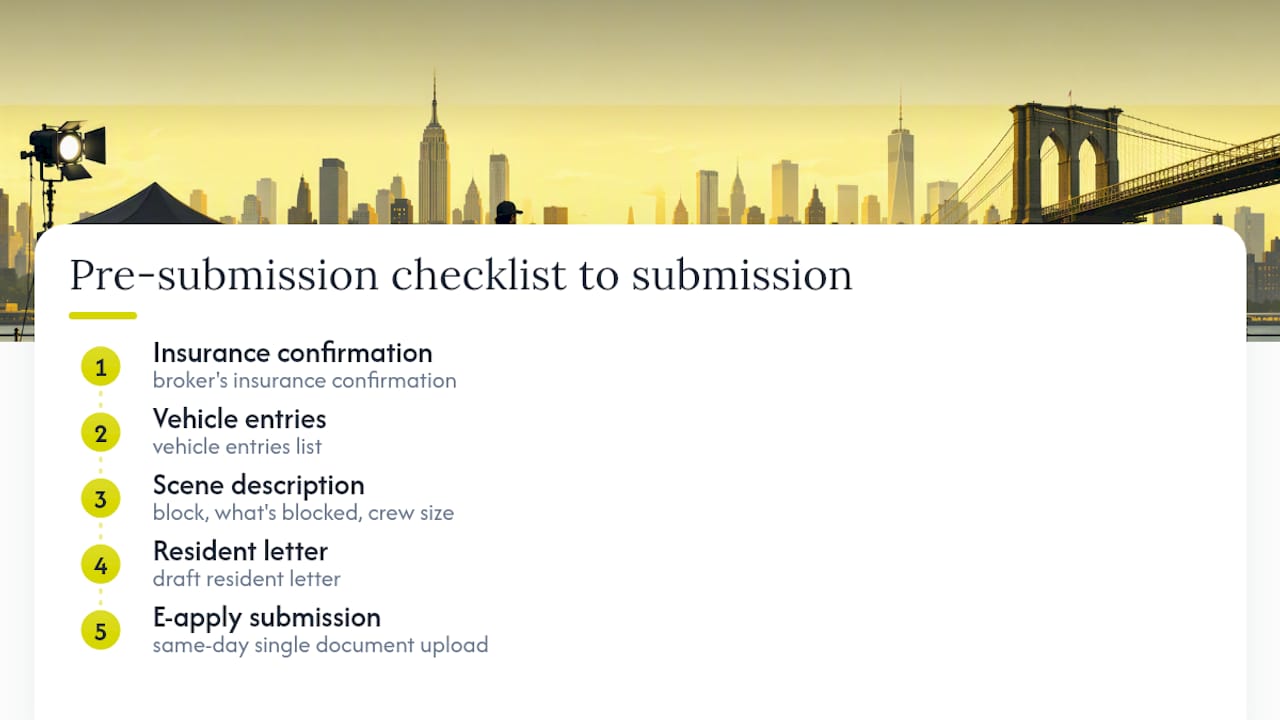
Pro Tip: Build a pre-submission checklist with your broker’s insurance confirmation, vehicle entries, scene description, and draft resident letter all sitting in one document before you open the e-apply portal. It turns a multi-day back-and-forth into a same-day submission.
How Vain. Approaches NYC Permit Logistics
Coordinating an NYC film permit is rarely just one form. It’s insurance timing, park approvals, community board outreach, and a vehicle list that changes twice before the first shoot day. Permit liaison work is best handled by sequencing it early, assigning clear ownership, and confirming nothing depends on a single point of failure. On past location work, that has meant running the MOME application and a Parks Department request in parallel rather than waiting on one to clear the other.
If you’re building out your own pre-production checklist, our guide to location management and our stage-by-stage film production guide cover the surrounding logistics in more depth.
— Vain.
Need Help Coordinating Your NYC Shoot?
Filing your own MOME permit is straightforward once you’ve done it a few times, but the surrounding coordination, insurance timing, park approvals, community notification, and vehicle logistics, is where most schedules get squeezed. Some companies work alongside production teams as a liaison for that kind of logistics, handling the pieces around the permit so your crew isn’t chasing a broker’s email the night before a shoot.
If your next shoot needs more than a permit filed on time, whether that’s location scouting, agency coordination, or a full pre-production checklist, reach out to Vain. to talk through what your production needs and get a plan in place before your dates lock. For quick-turn shoot ideas that might not even need a full permit, our partners at Nathaniel Connors put together a solid list worth a look.
Sources
Recommended
Comments