Made to Order Merch: How It Works and Why It Works


Made to order merch is produced only after someone buys it. Nothing sits on a shelf waiting for a customer. The order comes in, the garment is cut, printed, sewn and finished, and it ships straight to the buyer. That one change in timing shapes everything else: how much a brand risks, how many designs it can offer, and how long you wait for a package.
We make our apparel this way at Vain., so we think about this model every day. Below we walk through the process step by step, compare it with keeping stock, explain what to plan for on timing and cost, and cover the legal basics of selling merch in the United States.
TL;DR
Made to order means production starts after a confirmed order, so there is no pile of unsold stock and no guessing at sizes in advance.
The path is order, production, quality check, then direct shipping. Plan for production time as well as transit time.
Many brands blend both models: stocked basics plus made-to-order variants, drops and limited runs.
Selling merch in New York generally means a sales tax registration, and anything carrying someone else’s logo or artwork needs permission.
Our own Studio line is made to order, from a $49.99 tank top to a $99.99 hoodie.
Table of Contents
What made to order actually means
Made to order (often shortened to MTO, and also called make to order or build to order) is a production approach where items are manufactured only in response to confirmed customer orders. Investopedia describes the flow as customer order, bill of sale, work order, manufacturing, delivery, with no inventory built in advance.

Operations teachers call this a pull system: work is pulled through the process when demand is present. Business LibreTexts explains that inventory stays lower than in a typical make-to-stock business, with no obsolete stock to dispose of. For merch, that translates into a simple promise: the shirt you receive was made because you ordered it.
Made to order, print on demand and just in time
Three phrases get mixed up, so here is how we use them.
Made to order describes the production model: a unit is made after an order exists.
Just in time (JIT) is a way of timing materials and work so that little finished stock builds up. Uphance clarifies that JIT is an approach rather than a production model, and it can sit alongside either make-to-stock or make-to-order.
Drop shipping is a fulfillment method, independent of how the product was made.
In clothing, JIT means producing apparel on demand rather than making larger batches to match a forecast. When people search for just-in-time merchandise, made-to-order apparel is usually what they are describing.
How made-to-order apparel is produced, step by step
Every maker has its own workflow, but the shape is consistent. NetSuite’s overview of on-demand apparel manufacturing lays out the sequence, and we have added what each stage means for you as a buyer.
Order placed. You check out on a website or app. The order details travel digitally to production.
Order verified. The maker confirms the item, size, color and that materials are on hand.
Production begins. Fabric is cut, often with digital or laser-guided machines. Designs are applied with methods such as direct-to-garment or dye-sublimation printing, then the piece is sewn.
Finishing. Trimming, pressing, any embroidery and folding.
Quality inspection. Each piece is checked before it leaves.
Packing and shipping. The garment goes directly to you, bypassing a warehouse stop.
That last point matters more than it seems. Skipping the warehouse means the garment you open is fresh from production, not a unit that has waited months in a bin.
What to expect on timing
Because production starts after you order, the clock has two parts: making and moving. Published figures from other makers show the range. One US fashion retailer’s FAQ says made-to-order items typically take 2 to 6 weeks to produce plus 1 to 10 days to ship, and that production can run longer in peak months. An apparel software company breaks a full MTO lead time into order-to-production, production, quality check and shipping stages that total 4 to 12 weeks.
Those are other companies’ numbers, not ours, and they vary with garment complexity and season. The practical lesson is the same everywhere: order early for anything with a deadline, such as a release party, a tour date or a holiday gift. For our current production and shipping timing, check the product page before you buy.

Made to order vs. inventory: how the two models compare
Neither model is universally better. They solve different problems, and the right choice depends on what you are selling and how predictable demand is.
Factor | Made to order | Made to stock |
When production starts | After a confirmed order | Before orders, based on a forecast |
Unsold inventory | Minimal, no obsolete stock | Forecast errors can leave excess stock |
Upfront capital | Lower | Higher, since goods are paid for in advance |
Customization | Easy, down to size and design | Limited to what was produced |
Order-to-delivery time | Includes production time | Short, since goods already exist |
Unit cost | Smaller batches, so often higher per unit | Larger runs can lower unit cost |
The table draws on Business LibreTexts’ comparison of the two models and McKinsey’s analysis of on-demand fashion, which notes that on-demand production needs lower capital investment and brings smaller inventories and more flexibility.
Why the waste argument matters
Overproduction is the quiet cost of the fashion industry. NetSuite cites an estimate that as many as 40% of garments made each year are never sold. Linking production to real orders is one direct way to avoid adding to that pile. It also means a brand can say yes to a niche design, a small collaboration or a one-off colorway without betting its budget on a forecast.
Hybrid models are common
Many small businesses stock a few steady sellers and make everything else to order. Cornell’s distribution course material notes exactly this combination. The pattern fits merch well: a core tee on hand, then special pieces, seasonal drops and limited editions produced against orders. If you plan drops, our guide to why drop culture merchandise works shows how timing and scarcity support each other.
Where made to order fits best
The model suits premium, small-batch and design-led brands especially well. When each piece carries a point of view, a buyer cares about quality and fit more than a next-day shipping badge. A few situations where we see it shine:
Artists and musicians testing which designs fans actually want before committing to a full run. If you also sell recordings, the principles in this guide to selling music directly to fans pair naturally with a merch line that is made after the order lands.
Brand collaborations where several designs launch together and nobody can predict the winner. See our brand collaborator merch drop strategy.
Creators opening their first store who want a wide catalog without a storage closet full of boxes. Our walkthrough on building a merch store for creators covers the setup.
Studios and organizations that want branded apparel for a team, with sizes confirmed before anything is cut.
One point on design: because a made-to-order piece is built for a specific buyer, the artwork and construction deserve extra care. Our merchandise design best practices cover file prep, placement and fabric choices that hold up in production.
What made-to-order merch costs
Price depends on garment, fabric, decoration method and quantity. One ecommerce operations blog puts the per-unit premium for made-to-order production at roughly 10% to 20% over bulk minimum-order pricing, and McKinsey notes that smaller batches generally raise production costs. In return you avoid minimums, storage and unsold stock.
For reference, here is what our own made-to-order Studio line costs, as published on our site:
Piece | Price |
Studio Tank Top | $49.99 |
Studio T-Shirt | $59.99 |
Relaxed Women’s Studio T-Shirt | $59.99 |
One-Piece Swimsuit | $59.99 |
Long Sleeve Studio Shirt | $69.99 |
Crop Studio Hoodie | $79.99 |
String Bikini | $79.99 |
Premium Studio Sweatshirt | $89.99 |
Studio Hoodie | $99.99 |
If you are planning a custom run for a brand, band or event, the cost conversation starts with the creative scope: design, sampling, quantities and any supporting content. That is a project we scope with you directly.
Legal basics before you sell merch in the US
Readers often ask whether you need a license to sell merchandise. There is no single federal merch license, but two things come up almost every time.
Sales tax registration. A seller’s permit is a state-issued registration that lets a business collect sales tax. Most states require one before you sell taxable goods online or in person, and you may need one in each state where you have sales tax nexus. In New York, the Tax Department says you must register and obtain a Certificate of Authority if you make sales that are subject to sales tax. Check your own state’s tax agency for the current process, and talk to an accountant about your specific setup.
Rights to the artwork. Your own original designs are yours to print. Logos, characters, song titles or artwork that belong to someone else require the rights holder’s permission, usually through a written license. If you are unsure whether a design is cleared, ask an intellectual property attorney before you print.
Perspective: why we make to order
We started making apparel to order because we think merch should feel like an extension of the creative work, not an afterthought stacked in a warehouse. When a piece is produced after someone chooses it, we can give it the attention a finished garment deserves. Our positioning is simple: we want to turn the ordinary into something extraordinary, and that applies to a tee as much as to a film or a brand campaign. Every Studio piece is made to order with precision and care. There is a craft story here too. The shirt is a small collaboration between designers, makers and the person who wears it. A curated network of collaborators is how we approach our production and consultancy work, and the same spirit shapes what we put on the rack. Our advice to artists and brands is to treat merch as part of your story, not a side hustle. Pair a made-to-order line with the right content, release timing and audience, and each piece becomes a reason for people to come back. For more on how we think about this, read why artist merchandise differs from retail. Vain.
Shop our made-to-order Studio line or build your own
If you want to experience made to order as a customer, our Studio line is the place to start. Try the Studio Hoodie at $99.99 or the Studio T-Shirt at $59.99, each made to order with care.
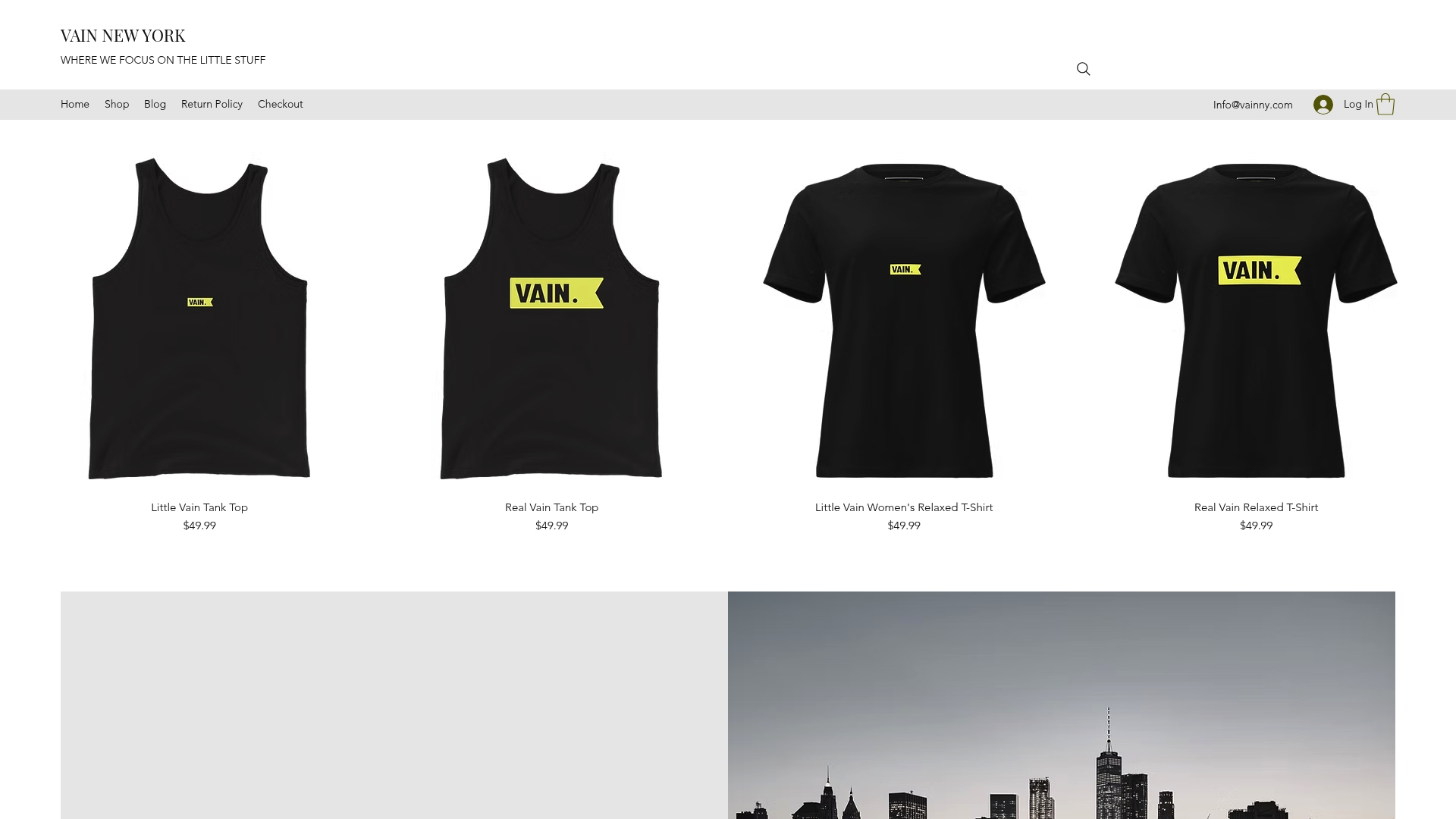
If you are a brand, artist or organization thinking about your own merch, we also offer video, audio, animation and strategy as creative services. We can help you shape the launch around the product. Explore what we do at Vain. and tell us about your project.
FAQ
What is made to order?
Made to order means an item is produced only after a customer places a confirmed order. There is no finished stock waiting in advance. The maker confirms details, produces the item, inspects it and ships it directly to the buyer.
What is the difference between made to order and print on demand?
Made to order describes when production starts: after the order. Print on demand usually refers to a specific type of made-to-order apparel where a design is printed onto a blank garment once someone buys it. Print on demand is one form of made to order, while made-to-order apparel can also involve cutting and sewing a garment from scratch.
Is made to order slower than buying in-stock merch?
Usually yes, because production time is added to shipping time. Other makers publish production windows of a few weeks, as in the Azazie FAQ, so order ahead of any date that matters. The trade-off is a piece made for you rather than pulled from a bin.
Do I need a license to sell merch?
There is no single merch license, but you generally need a sales tax registration in the states where you sell taxable goods, and permission for any logo or artwork you do not own. In New York, register with the Tax Department for a Certificate of Authority. An accountant and an IP attorney can confirm your exact obligations.
Can a brand mix made to order with stocked items?
Yes, and many do. Common practice is to keep core items on hand and make variants, collaborations and limited drops to order. This gives fast delivery on basics and room for creative risk elsewhere.
Sources
Recommended
Comments