Entrepreneurship: What It Is and How to Build It
- Vain.
- 1 minute ago
- 16 min read

Entrepreneurship is the process of recognizing an opportunity, assuming the risk of building something new around it, and creating value where none existed before. Stanford Online frames it as a learnable mindset, not a fixed personality trait, which means the path is open to anyone willing to do the work. Here at Vainnewyork, we believe that creative vision and disciplined execution are two sides of the same coin, and this guide brings both together.
Value creation: Entrepreneurs solve real problems for real people, generating economic and social returns in the process.
Innovation: New products, services, and business models push markets forward and raise the bar for everyone.
Risk management: Calculated risk, not reckless gambling, separates sustainable ventures from short-lived experiments.
Venture-building: Turning an idea into a functioning organization requires strategy, resources, and relentless iteration.
Key Takeaways
Entrepreneurship is a learnable, structured process that rewards early validation, disciplined metrics, and audience-first thinking over premature production spend.
Point | Details |
Start with validation | Talk to ten potential customers before spending on product, legal setup, or marketing. |
Know your runway weekly | Divide cash on hand by monthly burn; treat six months or less as a planning trigger. |
Match funding to stage | Bootstrap early, use SBA loans for working capital, and pursue angel or VC only when scale demands it. |
Track five core KPIs | Runway, burn rate, CAC, LTV, and churn give you the full picture without a data team. |
Vainnewyork accelerates execution | Creative production, brand strategy, and audience growth support for founders ready to move from idea to market. |
Table of Contents
What does the entrepreneurial process look like from idea to exit?
What funding options are available, and when should you use each?
What are the biggest risks founders face, and how do you reduce them?
How do you start a business in the U.S.? A step-by-step checklist
Vainnewyork helps founders get to market with clarity and craft
What does entrepreneurship actually mean? Key terms defined
Getting the vocabulary right matters. These terms appear constantly in founder conversations, investor decks, and business school syllabi, and they are not interchangeable.
Entrepreneur: A person who identifies a market gap, assembles resources, and accepts personal financial or reputational risk to build a venture around it.
Entrepreneurship: The broader activity of designing, launching, and managing new ventures, combining opportunity recognition, innovation, and risk-taking.
Startup: A young company built to grow fast, typically around a scalable product or platform. Think of a two-person software team testing a subscription app before they have a single paying customer.
Venture: Any organized business undertaking, whether a solo consulting practice or a funded tech company. The word signals intentionality and structure.
Intrapreneur: An employee who applies entrepreneurial thinking inside an existing organization, launching new products or divisions without leaving the company. Stanford Online notes that cultivating intrapreneurial thinking inside organizations can serve as a training ground for independent ventures.
Business model: The mechanism by which a company creates, delivers, and captures value. A bakery’s business model is straightforward: bake goods, sell them retail. A food-delivery platform’s model is more complex, connecting multiple customer groups and taking a margin on each transaction.
MVP (minimum viable product): The simplest version of a product that lets you test a core assumption with real users. A landing page that collects email sign-ups before a product is built is a classic MVP.
“The entrepreneur always searches for change, responds to it, and exploits it as an opportunity.” This framing, widely attributed to management thinker Peter Drucker, captures why opportunity recognition sits at the center of every working definition of entrepreneurship.
Why entrepreneurship matters for the U.S. economy
Entrepreneurship drives innovation, job creation, and market improvement at a scale that few other forces can match. New businesses are the primary engine of net job growth in the United States, and the U.S. Small Business Administration documents the breadth of that impact through its counseling networks and research programs. Small businesses account for the majority of U.S. employer firms, and startup activity in particular tends to concentrate in sectors where technological change is fastest.
The economic case is compelling on its own, but the social dimension is equally significant:
Job creation: New ventures hire locally, often in communities that larger corporations overlook.
Competition: Startups pressure incumbents to improve quality and lower prices, benefiting consumers across the board.
Innovation diffusion: Technologies developed by startups, from mobile payments to telemedicine, eventually reach mainstream markets and change daily life.
Social entrepreneurship: Mission-driven ventures tackle problems that neither government nor traditional business addresses well, from affordable housing to environmental remediation. These founders measure success in outcomes, not just revenue.
The Kauffman Foundation, one of the most respected research bodies on U.S. startup activity, consistently finds that new-firm formation is a leading indicator of broader economic health. When founding rates rise, employment and productivity tend to follow.
What are the main types of entrepreneurship?
Not every founder is chasing the same goal, and choosing the wrong model for your ambitions is one of the most common early mistakes. Northeastern University’s D’Amore-McKim School of Business frames entrepreneurship as an experience-driven process, which means the type you choose shapes every decision that follows.
Small business entrepreneurship: A local restaurant, independent retailer, or solo consultancy. The goal is sustainable profit and personal independence, not hyper-growth. Control and lifestyle flexibility matter more than scale.
Scalable startup entrepreneurship: A tech company or platform built to grow exponentially, typically with outside funding. The founder’s goal is market dominance or a significant exit, and they accept dilution in exchange for capital.
Social entrepreneurship: A nonprofit, benefit corporation, or hybrid model organized around a social or environmental mission. Revenue serves the mission rather than the other way around.
Creative entrepreneurship: Monetizing intellectual or creative capital, whether through music, design, film, writing, or digital content. As Wikipedia’s entry on creative entrepreneurship explains, creative founders often act as investors in their own talent, treating their skills and catalog as appreciating assets.
Corporate entrepreneurship (intrapreneurship): Building new products or business units inside an established company. The risk profile is lower, but so is the upside.
When to pursue each type:
Choose small business when you want control, local impact, and a business that funds your life without requiring venture capital.
Choose scalable startup when your idea has a large addressable market and you are willing to trade equity for the capital needed to move fast.
Choose social enterprise when the problem you are solving has a clear community benefit and you can build a revenue model that sustains the mission.
Choose creative entrepreneurship when your primary asset is a skill, a voice, or a body of work, and your goal is to monetize that creative capital without surrendering creative control.
Choose intrapreneurship when you want to test entrepreneurial instincts with a safety net, or when your best opportunity sits inside an organization you already know well.
What skills and mindset does an entrepreneur actually need?
The mindset matters as much as technical skills, and in the early stages it often matters more. A founder with deep financial modeling skills but no tolerance for uncertainty will freeze at the first pivot. Resilience, curiosity, and a bias toward ownership are the traits that keep ventures alive long enough for skills to catch up.
That said, skills are not optional. Here is what founders need to build or hire for:
Financial literacy: Cash flow management, basic P&L reading, and runway calculation. You do not need an accounting degree, but you need to know your numbers every week.
Customer discovery: The ability to ask good questions, listen without defending your idea, and translate what you hear into product decisions.
Go-to-market thinking: Understanding how to reach your first customers, what channels fit your audience, and how to test messaging before spending heavily.
Product or service delivery: The operational knowledge to deliver what you promise, consistently and at a quality that earns repeat business.
Legal basics: Entity structure, contracts, intellectual property, and compliance. Founders who skip this early often pay far more to fix it later.
People and communication: Hiring, managing, and motivating a small team while keeping everyone aligned on a moving target.
Pro Tip: Run structured customer interviews before writing a single line of code or spending on production. Prepare five open-ended questions about the problem, not the solution, and talk to at least ten potential customers. The patterns you hear in those conversations are worth more than any market-size spreadsheet.
What does the entrepreneurial process look like from idea to exit?
The entrepreneurial process moves through six recognizable stages: idea, validation, MVP, launch, growth and scale, and exit. Each stage has a different primary objective, a different cost profile, and a different definition of success.
Stage | Core Objective | Common Deliverables | Typical Cost Range |
Idea | Identify and articulate the opportunity | Problem statement, initial research | Minimal (under $1,000) |
Validation | Confirm real demand before building | Customer interviews, landing page, pre-orders | Low (under $10,000) |
MVP | Build the simplest testable version | Working prototype or beta product | Moderate (under $100,000) |
Launch | Acquire first paying customers | Marketing campaigns, sales process, PR | Moderate to high (over $10,000) |
Growth/Scale | Expand customer base and revenue | Hiring, systems, channel expansion | High (varies widely) |
Exit | Realize value through sale, merger, or IPO | Due diligence, deal structure, transition | Depends on deal size |
Timeline expectations vary sharply by type. A solo creative business can move from idea to first revenue in weeks. A hardware startup may spend two years reaching a shippable product. Most founders underestimate the validation stage and rush to build, which is where wasted spend concentrates.
A few principles hold across every stage:
Spend the minimum necessary to answer the next most important question.
Treat each stage as a gate: only advance when the evidence justifies it.
Keep legal and financial hygiene current from day one, because fixing it retroactively is expensive.
What funding options are available, and when should you use each?
Pick your funding source based on your stage and how much control you want to keep. Early-stage founders who raise venture capital before validating demand often find themselves building for investors rather than customers. The SBA’s 10-step guide and Usa both point to local counseling resources that can help you map funding options to your specific situation.
Bootstrapping: Self-funding from savings or early revenue. Preserves full control and forces capital efficiency. Best for founders with low startup costs and a clear path to early revenue.
Friends and family: Informal early capital, often at favorable terms. Carries relationship risk if the venture struggles. Suitable for very early stages when the idea is still unproven.
SBA loans: Government-backed loans through participating lenders, typically at lower rates than conventional small business loans. Best for established businesses with some revenue history and collateral. The SBA also connects founders to SBDCs and SCORE for free counseling.
Angel investors: High-net-worth individuals who invest personal capital in early-stage companies, usually in exchange for equity. Angels often bring networks and mentorship alongside money.
Venture capital: Institutional funds that invest in high-growth startups in exchange for significant equity. VC is appropriate only when you have a large addressable market, a scalable model, and the willingness to prioritize growth over profitability for years.
Crowdfunding: Platforms like Kickstarter or Indiegogo let you pre-sell products or raise small amounts from many backers. Works well for consumer products with a clear story and a built-in community.
Grants: Non-dilutive funding from government agencies, foundations, or corporations. Competitive and often slow, but free money. The USA.gov start page lists federal grant programs relevant to small businesses.
When-to-use summary:
Bootstrapping when your costs are low and you want to stay in control.
SBA loans when you have some operating history and need working capital or equipment.
Angel funding when you need $50,000–$500,000 to reach a meaningful milestone and want a mentor alongside the money.
VC when your model requires tens of millions to reach scale and you are prepared for the governance that comes with it.
Crowdfunding when your product has visual appeal and a story that travels well online.
Grants when you are in a sector (clean energy, health tech, social impact) where grant programs are active and you have the patience for the application process.
What are the biggest risks founders face, and how do you reduce them?
The four risks that kill most early ventures are cash flow failure, poor market fit, team breakdown, and legal or compliance exposure. Knowing they are coming does not make them easy to avoid, but it does make them manageable.
Cash flow failure: More startups die from running out of money than from bad ideas. Track your runway weekly (cash on hand divided by monthly burn), and always know how many months you have left. Build a 13-week cash flow forecast and update it every Friday.
Market fit failure: Building something nobody wants is the most expensive mistake in entrepreneurship. The U.S. Chamber of Commerce’s startup guide warns explicitly that mistaking a passion project for a sustainable business model is a common pitfall, and recommends staged testing before major investment.
Team breakdown: A founding team that splits over equity, roles, or vision can destroy a venture faster than any market problem. Use a vesting schedule from day one, document roles clearly, and have the hard conversations about decision-making authority before they become crises.
Legal and compliance exposure: Operating without the right structure, licenses, or contracts creates liability that can end a business or drain its cash. Get a basic legal review early, even if it is just a few hours with a startup attorney.
Pro Tip: Before spending on product development, run a “staged launch” with a small, real audience. Offer the product or service to ten customers at a discounted rate in exchange for honest feedback. The revenue is secondary; the signal is everything.
Pro Tip: Build an advisory board of two or three people with complementary expertise (finance, industry, legal) in your first year. Advisors who are invested in your success, even informally, catch blind spots that founders miss when they are too close to the work.
How do you start a business in the U.S.? A step-by-step checklist
The single most important first step is not filing paperwork. It is validating that someone will pay for what you plan to build. Once you have that signal, the legal and administrative steps follow a clear sequence. The IRS starting checklist and the SBA’s 10-step guide together cover the compliance and operational requirements in detail.
Validate the idea. Talk to at least ten potential customers. Confirm they have the problem, that they are actively looking for a solution, and that they would pay for yours.
Write a simple business plan. A one-page plan covering your value proposition, target customer, revenue model, and cost structure is enough to start. The SBA’s business plan guide offers free templates.
Choose a legal structure. Sole proprietorship, LLC, S-Corp, or C-Corp each carry different tax and liability implications. Most early-stage founders start with an LLC for its simplicity and liability protection.
Register your business. File with your state’s Secretary of State office. Most states process LLC registrations online in a few days.
Obtain an Employer Identification Number (EIN). Apply free at IRS.gov. You need this to open a business bank account and hire employees.
Open a dedicated business bank account. Mixing personal and business finances creates accounting and tax headaches that compound quickly.
Set up basic accounting. Use software like QuickBooks or Wave from day one. Track every dollar in and out.
Secure required licenses and permits. Requirements vary by state, city, and industry. The Usa has a license-finder tool by location and business type.
Understand your tax obligations. Self-employment tax, quarterly estimated payments, and sales tax (where applicable) are the most common early obligations. The IRS checklist covers each one.
Launch with a minimum viable offer. Sell before you scale. Your first ten customers will teach you more than any market research report.
For small business marketing after launch, focus on one or two channels where your customers already spend time rather than spreading thin across every platform.
Which metrics should you track in an early-stage venture?
The five to seven metrics below give you a real-time picture of your venture’s health without requiring a data team. Track them weekly in a simple spreadsheet before investing in dashboards.
Metric | Definition | Formula | When It Matters |
Runway | Months of operating cash remaining | Cash on hand ÷ Monthly burn rate | Always — know this number every week |
Burn rate | Monthly net cash outflow | Total monthly expenses minus revenue | Pre-revenue and early revenue stages |
CAC (Customer Acquisition Cost) | Cost to acquire one new customer | Total marketing + sales spend ÷ New customers acquired | Once you are running paid acquisition |
LTV (Lifetime Value) | Total revenue expected from one customer | Avg. purchase value × Avg. purchase frequency × Customer lifespan | When you have at least 3 months of retention data |
Churn rate | Percentage of customers lost per period | Customers lost ÷ Customers at start of period × 100 | For subscription or recurring-revenue models |
Gross margin | Revenue remaining after direct costs | (Revenue minus COGS) ÷ Revenue × 100 | From first sale onward |
LTV:CAC ratio | Return on customer acquisition spend | LTV ÷ CAC | A ratio above 3:1 is generally healthy for early-stage companies |
A few practical notes on using these numbers:
Runway below three months is a crisis signal. Start fundraising or cutting costs the moment you cross below six months.
A CAC that exceeds LTV means you are paying more to acquire customers than they will ever return. Fix the model before scaling spend.
Gross margin below 40% in a software or service business usually signals a pricing or cost structure problem worth addressing early.
For a deeper framework on measuring content and marketing ROI alongside these financial metrics, the content strategy guide from Vainnewyork covers measurement approaches that translate directly to early-stage ventures.
What can real entrepreneurial paths teach you?
Abstract advice lands differently when you can see it playing out in a specific situation. These four anonymized mini-cases each illustrate a single, transferable lesson.

The creative founder who tested before spending
A graphic designer wanted to launch a premium brand identity service for independent restaurants. Before building a website or creating a portfolio deck, she emailed fifteen restaurant owners she had never met, described the service in two sentences, and asked if they would pay $1,500 for it. Three said yes immediately. She booked those three projects, delivered them, refined her process, and then built the website. Total pre-launch spend: under $200.
The local business founder who skipped delegation
A personal trainer opened a small gym and handled every function himself: scheduling, billing, social media, equipment maintenance, and coaching. Revenue grew, but he hit a ceiling at around fifteen clients because he had no hours left to sell. He eventually hired a part-time operations coordinator, and his client roster doubled within four months.
The scalable startup that ran out of runway
A two-person SaaS team built a project management tool for construction firms. The product was genuinely good, but they spent fourteen months in development before showing it to a paying customer. By the time they launched, they had six weeks of runway left and no time to iterate on the feedback they received. They shut down not because the idea was wrong, but because they ran out of time to learn.
The social enterprise that found its model late
A nonprofit founder spent two years running free financial literacy workshops before realizing that local credit unions would pay to sponsor the sessions as a community outreach program. That single insight turned an unsustainable grant-dependent operation into a self-funding model. The mission did not change; the revenue structure did.
Practical exercises to build your entrepreneurial mindset
Practice beats passive learning. Reading about customer discovery is useful; running a customer interview is transformative. These exercises are designed to be done, not just read.
Run a five-question customer interview. Identify five people who fit your target customer profile. Ask them: What is the hardest part of [problem area] for you? How do you currently handle it? What have you already tried? What would a perfect solution look like? What would make you switch? Take notes, do not pitch, and look for patterns across conversations.
Run a “minimum spend” mock launch. Before building anything, create a simple offer (a landing page, a social post, or a direct email) and see if anyone responds. Set a budget of $50 or less. The goal is not revenue; it is a signal that someone cares enough to click, reply, or share.
Complete a value proposition template. Fill in this structure: “For [specific customer], who struggles with [specific problem], [your product/service] provides [specific benefit], unlike [current alternative], because [your key differentiator].” If you cannot complete every blank with specifics, you have more discovery work to do.
Map your assumptions. List every assumption your business model depends on (customers will pay $X, the sales cycle will be Y weeks, churn will be below Z%). Rank them by importance and uncertainty. The assumptions that are both high-importance and high-uncertainty are your first experiments.
Design a 30-day experiment. Pick your single riskiest assumption. Design the smallest possible test that would give you a meaningful answer within 30 days. Define success before you start. Run it, measure it, and write down what you learned, whether the result confirms or refutes the assumption.
Build a “day in the life” empathy map. Spend one hour writing out what your target customer does, thinks, feels, and hears on a typical day. Where does your problem show up in their day? How much mental space does it occupy? This exercise consistently surfaces insights that surveys miss.
Pro Tip: When you run a low-cost experiment, define your success threshold before you launch it. “We will consider this validated if five out of twenty people click the buy button” is a decision rule. “Let’s see what happens” is not. Pre-committed thresholds prevent you from rationalizing weak results as good enough.
The creator economy playbook from Vainnewyork offers additional frameworks for creative founders who want to test audience-first launch strategies before committing to full production.
How creative consultancies think about venture-building
We have worked with enough founders at Vainnewyork to know that the most common mistake is not a bad idea. It is spending on production before building an audience. A beautifully produced brand film, a polished website, a full merchandise line — none of it generates returns if no one is watching. The founders who move fastest are the ones who treat audience-building as the first product, not an afterthought. Build the community before you build the catalog. Earn attention before you ask for money. That sequencing is not just a marketing principle; it is a capital efficiency principle, and it applies whether you are launching a creative studio, a product line, or a service practice.
The single takeaway: prioritize audience-building before major production spend, and treat every piece of early content as a test of what your audience actually responds to, not a permanent statement of your brand.
Vainnewyork helps founders get to market with clarity and craft
Founders who know what they want to build but struggle to communicate it, produce it, or distribute it are exactly who Vainnewyork works with. We offer creative production and go-to-market support that covers the gap between a strong idea and a market-ready execution: brand strategy, video and audio production, animation, content creation, and audience growth programs built for entrepreneurs who cannot afford to waste time or money on work that does not convert.
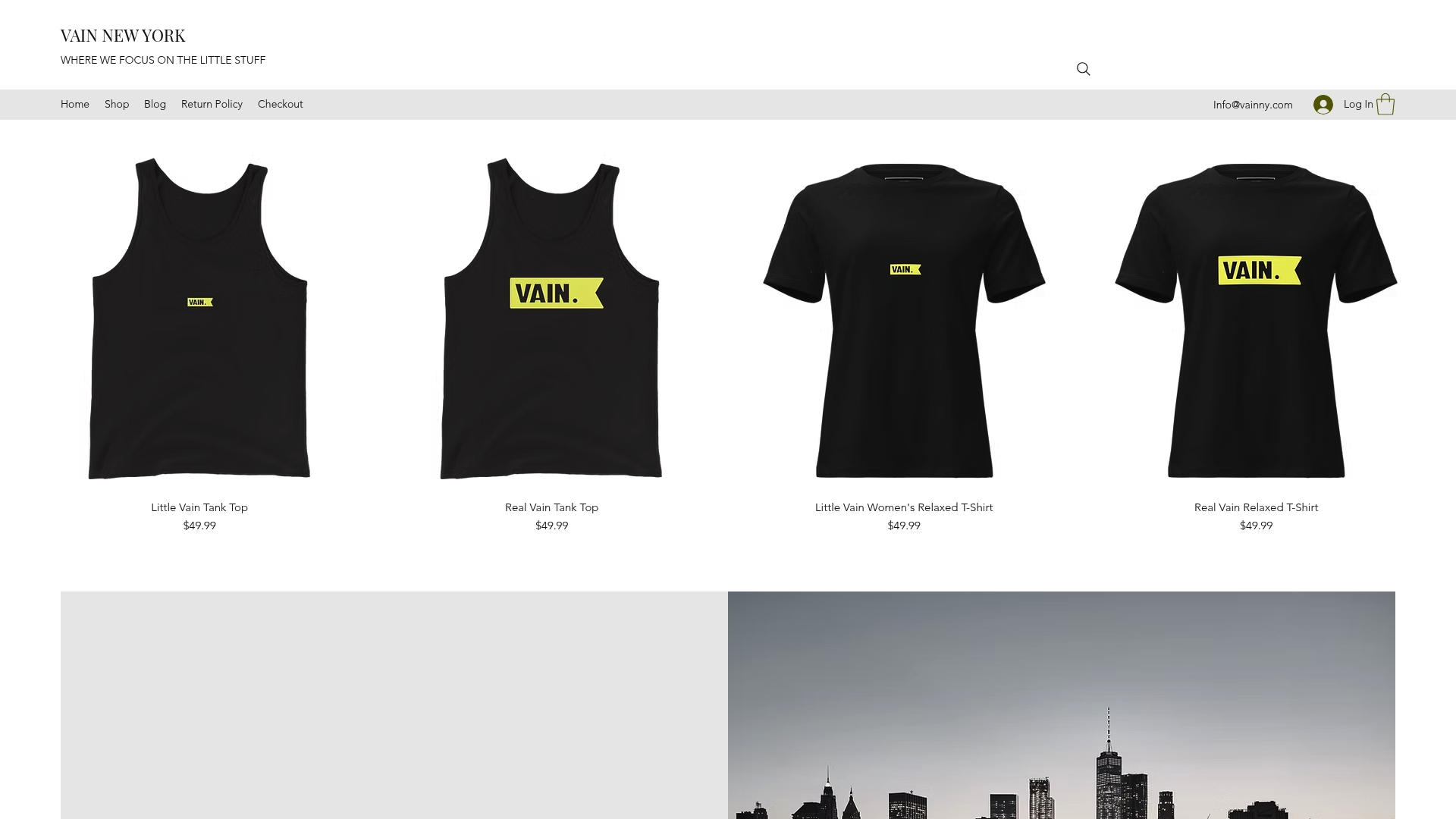
The services most relevant to early-stage founders include brand identity development, launch content production, social media strategy, and ongoing content programs that build audience before and after a product goes live. We work on a project basis, which means no long-term retainer commitment and no agency overhead baked into every invoice.
If you are ready to move from idea to execution, start a conversation with Vainnewyork and tell us where you are in the process. We will tell you honestly what we can help with and what you should handle first on your own.
Useful resources for U.S. founders
These are the highest-value, lowest-cost starting points for practical guidance, legal compliance, and founder support in the United States.
U.S. Small Business Administration (SBA): The definitive 10-step guide to planning, registering, and launching a U.S. business, plus connections to SBDCs and SCORE for free local counseling.
SCORE and SBDCs: Free and low-cost mentoring, workshops, and local business development resources available in every U.S. state through the SBA network.
IRS Starting a Business Checklist: Official federal guidance on EIN registration, business structure selection, tax responsibilities, and payroll compliance.
Stanford Online — What Is Entrepreneurship?: A concise, practitioner-oriented overview of the entrepreneurial mindset and the core concepts behind venture-building.
Northeastern University D’Amore-McKim School of Business: University-level resources on entrepreneurship concepts, strategies, and mentorship programs including the Venture Mentoring Network.
Shopify’s Creative Entrepreneurship Guide: Practical tips for makers and creatives on finding your why, choosing platforms, building a digital presence, and launching without perfectionism.
U.S. Chamber of Commerce — Guide to Starting a Business: Founder-facing guidance on avoiding common pitfalls, including the critical importance of market testing before major investment.
Vainnewyork — Media and Entertainment Industry Trends: Context on how creativity and innovation are reshaping industry growth, useful for creative founders mapping their opportunity.
Sources
Recommended