Creative Trends 2026: What Brands and Makers Should Act On


The creative story of 2026 is that abundance has made craft valuable again. Generative tools can produce assets in seconds, so what sets work apart is the thinking, taste and human texture behind it. For brands, artists and organizations in New York and beyond, the trends below across branding, design, content and media all point the same way: use new tools freely, and put your budget and attention where people can feel the care.
We work at the meeting point of video, audio, animation, strategy and made-to-order merchandise, so we read these trends as a production question as much as a forecast. What follows is what the data says, what it means for the work, and how to choose which trends deserve your next project.
TL;DR
AI is now standard in marketing, but it does not decide quality: D&AD’s 2026 findings say originality, craft and human judgment separate the stronger work.
Handmade texture, imperfection and physical-world moments are the visual direction of the year, from felt-animal films to scratch-and-sniff posters on New York streets.
Branding is moving from literal to conceptual, and the scarce skill is editing: choosing what to keep from an ocean of generated options.
Video is judged by how people watch, not the device, and creator partnerships have dedicated, growing budgets at most marketers.
Pick two or three trends that fit your story and your audience, and execute them with real craft instead of chasing every one.
Table of Contents
The Big Picture: Craft Is the Differentiator
Every major 2026 forecast circles one idea. Ad Age asked 100 executives for their predictions and organized them into eight themes, spanning AI worlds, real-world experiences, culture and craft. The range is wide, but the tension is consistent: more technology on one side, more appetite for the human and the handmade on the other.
The D&AD Trend Report 2026 comes at it from the work itself, drawing on patterns across 50,000 submitted entries and jury-room discussions. When that many pieces of work are read side by side, what rises is not a single look but a way of working: clear concepts, deliberate execution, and a point of view.
For a brand deciding where to invest, this is a relief. You do not need to chase every aesthetic. You need a sharp idea and a team that can carry it through.
AI Trends: Everyone Uses It, Few Use It Well
AI is no longer a differentiator because nearly everyone has it. Nielsen’s 2026 Annual Marketing Report says nearly 90% of marketers use AI. The same report finds that 55% of marketers trust AI recommendations but require human review. The pattern is clear: AI drafts, people decide.

The awards data backs this up. In D&AD’s 2026 AI and Creativity analysis, 27.6% of entries declared AI use, more than double the previous year. Generative AI appeared in 56.2% of the AI-declaring entries overall, but in a smaller 44.7% of the AI-declaring work that won Pencils. In other words, leaning hardest on generative tools did not predict the best work.
What this means for your projects
Use AI where the story needs it. Speculative worlds, unusual scale and hard-to-shoot settings are natural fits. A tool used because it is new rarely adds meaning.
Keep a human editor in every loop. Review is where taste enters the work.
Protect the parts audiences can feel. Performance, voice, sound design and hand-built texture still read as human, and that is what people remember.
Branding Trends: Conceptual, Edited, Flexible
When assets can be generated instantly, an identity built on surface polish is easy to copy. D&AD brand identity jury president Cat How argues that brand design is becoming more conceptual and less literal, because strategic insight, emotional truth and differentiation matter more when execution is cheap. She also describes the craft shifting toward editing and discernment: deciding what to reject and finding meaning in abundant output.
Put plainly, taste is the scarce resource. A strong brand in 2026 tends to share a few traits:
A single clear idea that can be explained in a sentence and shown in a frame.
A flexible system that holds together across a short video, a podcast ident, a packaged product and a social post, without every piece looking identical.
Emotional truth over cleverness. The brand says something a real person would recognize.
Restraint. Fewer elements, chosen on purpose.
If you are building or refreshing an identity, our guide to visual branding strategy for marketers walks through how to turn those traits into a working system.
Design Trends: Handmade, Imperfect, Tactile
The clearest visual signal of the year is a return to the handmade. The Drum’s January 2026 expert analysis points to Apple’s felt-animal holiday film and the puppet-like rigs behind Framestore’s Prehistoric Planet: Ice Age as examples of craft that audiences can sense. Texture, physical performance and visible process are doing the work that glossy perfection used to do.
This matters well beyond big-budget film. The same instinct shows up in several places:
Animation that mixes stop-motion, cut-paper or hand-drawn frames with digital finishing.
Audio with real room sound, Foley and performance rather than only synthetic beds.
Photography and video that keep grain, movement and small imperfections instead of smoothing everything out.
Physical products where fabric, print and finish carry the brand as much as the logo.
The point is not nostalgia. When feeds fill with frictionless, generated imagery, a visible human hand becomes a signal of care. A brand can use that signal at almost any budget, provided the idea underneath is strong.
Content Trends: Video Is TV, Whatever the Screen
Content strategy in 2026 starts from how people actually watch. Nielsen reports that 41% of consumers view video content as TV regardless of platform. A short film made for a phone and a spot made for a living-room screen are, in the viewer’s mind, the same kind of thing. Planners should define television by viewing behavior rather than by device.
Two practical consequences follow:
Build once, adapt thoughtfully. One strong shoot can yield a hero film, cutdowns, audio-led versions and stills, as long as each is edited for how it will be seen. Our overview of nine corporate video types and how to repurpose each shows how that works in practice.
Treat quality as a baseline. If audiences treat all video as TV, they judge it by the same standards of story, sound and picture.
For the planning side, see our 2026 framework for content strategy and our practical guide to content creation.
Media Trends: Creators, Culture and Real-World Moments
Creator partnerships have real budgets
Nielsen’s survey found that 58% of marketers have dedicated and growing budgets for creator partnerships. Creators are no longer an experiment line item. They are part of how stories reach audiences, and the people building those audiences are increasingly thinking about how the creator economy lets experts monetise their work. For brands, the lesson is to choose partners for fit and craft, not follower counts. Our creator economy playbook for brands lays out a pilot approach.
Cultural fluency beats copying a format
The Drum’s experts argue that memes have moved from late-stage social add-ons into early campaign strategy, especially for reaching Gen Z, and that fluency in the culture matters more than imitating a format. Nielsen’s research on Black audiences shows the stakes: 67% pay more attention to ads in media that reflects their culture, and 52% are more likely to purchase when brands partner with creators tied to their interests, compared with 45% overall. Authentic representation is both a creative and a commercial decision, and it works best when people from the community help author the story.
The physical world is part of media
The Drum also cites Billie’s scratch-and-sniff posters in New York as an interactive brand moment, where user-generated videos carried the experience into social media. A physical touchpoint becomes a content engine when it gives people something worth filming. For a broader view of where the industry is heading, read our look at media and entertainment industry trends in 2026.
How to Choose Which Trends to Use
Trends are raw material, not a brief. A useful filter has five questions:
Does it fit the story? If the trend would be dropped on top of your message instead of growing from it, skip it.
Will your audience recognize it? Handmade texture suits a brand whose customers value care. Surreal experiments suit a brand with a playful audience.
Can you execute it with craft? A half-finished trend looks worse than a clean, simple idea.
Does it travel? Check that it works across video, audio, stills and any physical product.
Will it age well? Prefer principles (clarity, texture, cultural truth) over one-season aesthetics.
To see how this fits a wider plan, our digital marketing strategies guide and social media marketing strategies show where creative work meets distribution.
A quick worked example
Imagine a New York apparel label launching a fall capsule. The idea: clothes made with care for people who make things. Applying the filter, the label picks three trends. It shoots a short film with real studio sound and visible process (handmade texture). It invites two local creators to co-author the story (cultural authenticity). It cuts the film into a hero version, an audio-led version and stills (video as TV on every screen). AI helps with rough storyboards and edit versions, and a human editor makes every final choice. Three trends, one idea, nothing chased for its own sake.
Perspective
We see 2026 as the year ordinary projects get a second chance to become extraordinary. When anyone can generate a passable asset, the difference lives in the process: an intentional idea, a team that collaborates well, and a finish that shows care. That is why we build each project around a curated network of collaborators instead of a single template. A video, a sound design, an animation and a strategy all work better when the people behind them are chosen for the story at hand. Tools help us move faster. Taste, judgment and craft are what we bring to the room. The same belief shapes our merchandise. Our apparel is made to order with precision and care, because a shirt or hoodie is a piece of the brand that someone chooses to wear. It deserves the same attention as a film frame. If a trend serves your story, we will help you make it real. If it does not, we will say so and find the idea that does. Vain.
Bringing These Trends to Life With Vain.
If you are a brand, artist or organization planning a project, we offer video, audio, animation and strategy as a single creative conversation, so the idea, the sound, the motion and the plan are developed together. Our work spans content creation, marketing strategy, brand development and audience growth, drawing on a growing network of collaborators.
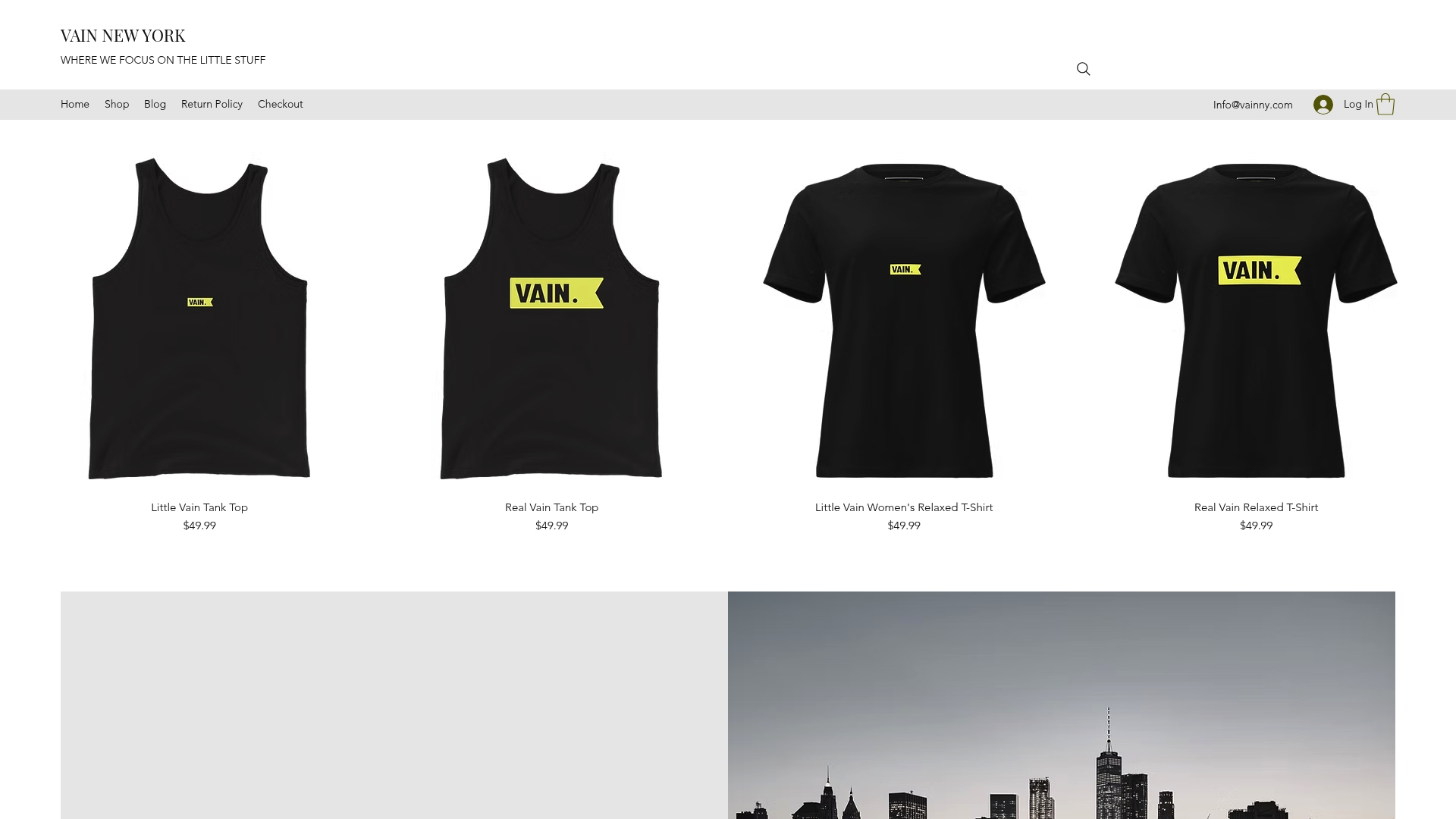
For brands that want the idea to live in the physical world too, our merchandise is made to order. The current lineup includes the Studio Tank Top at $49.99, the Studio T-Shirt and Relaxed Women’s Studio T-Shirt at $59.99 each, the Long Sleeve Studio Shirt at $69.99, the Crop Studio Hoodie at $79.99, the Premium Studio Sweatshirt at $89.99 and the Studio Hoodie at $99.99. Swimwear is available as well, with the String Bikini at $79.99 and the One-Piece Swimsuit at $59.99. Start at vainnewyork.com.
FAQ
What are the biggest creative trends in 2026?
The strongest themes are human craft alongside AI, handmade and imperfect visuals, conceptual branding, creator partnerships and physical-world brand moments. Ad Age’s 100-executive forecast groups the wider landscape into eight themes, including AI worlds, experiences, culture and craft.
Is AI replacing creative work in 2026?
AI is widely used, with nearly 90% of marketers using it, but human judgment stays central. D&AD’s findings say AI use alone does not predict excellence, and originality and craft are what distinguish stronger work.
What are the main branding trends for 2026?
Brand design is becoming more conceptual and less literal, with strategic insight and emotional truth valued above fast asset production. Flexible systems that work across video, audio, social and physical products are the practical expression of that shift.
How should brands approach content and video in 2026?
Plan around viewing behavior, since 41% of consumers see video as TV regardless of platform. Invest in one strong production, then adapt it carefully for each format, and consider creator partnerships as part of the plan.
Sources
Recommended
Comments