AR Filters for Brands: Plan, Launch and Measure


A branded AR filter works when it gives people something they want to play with and post, and when the brand has decided in advance what should happen after the play. The filter is the visible 10 seconds. The strategy, the animated assets, the sound and the launch content around it decide whether anyone shares it. We work on exactly those layers, so this guide walks through the full picture: what branded AR filters are, what they can do for a brand, how real campaigns used them, and how to plan, publish and measure one.
TL;DR
A branded AR filter is a camera effect that overlays your logo, characters, props or game mechanic on a user’s photo or video, so people create content that carries your brand.
Snapchat’s Sponsored AR Filters are applied after capture, while Sponsored Lenses are applied before capture. Choose based on the moment you want to own.
Start from one business goal (awareness, engagement or conversion), then design the effect, the call to action and the promotion plan around it.
Measure as a sequence: delivery, play, play time, shares, clicks, conversion. Impressions alone do not tell you whether the campaign worked.
The strongest filters feel like entertainment first. Strategy, animation, sound and launch video are what make that happen.
Table of Contents
What a branded AR filter is
An AR (augmented reality) filter is a digital effect layered on top of what a phone camera sees: a face effect, a 3D object in the room, a game, an overlay of text and graphics. A branded AR filter is one built for a company, so the effect carries its look, characters, product or message.
The two terms people mix up are worth separating, because they change your creative brief. Snapchat launched Sponsored AR Filters as overlays added after capture, while Sponsored AR Lenses are applied before capture. A lens is something you play with while the camera is live. A filter is something you add to a Snap you already took, usually a frame, a sticker-like graphic, a location overlay or a themed treatment.
That difference matters for design:
Pre-capture lenses need motion, interaction and a reason to perform: a face transformation, a game, a product you can “try on.”
Post-capture filters need to make an existing photo or video look better or more meaningful: a branded frame, a countdown, a location mark, a quiz result.
Snapchat describes pairing the two as a way to own the camera experience from end to end, with a lens before capture and a filter after it. Whether you need both depends on your goal and budget.
Why brands use AR filters
Brands use filters because they turn an audience from viewers into participants. Researchers who study this describe a shift in digital branding from persuasion to participation: filters create a playful space where users, especially Gen Z on Instagram and TikTok, co-create self-expressive content. The same research notes that intrusive branding and obvious advertising can reduce the positive effects, which is a design instruction as much as a finding. The brand should be present, but the user should be the star.
What makes a filter worth opening? A peer-reviewed study in the Journal of Marketing Research and Psychology found that perceived entertainment is the main driver of a filter’s playability, with perceived interactivity also playing a role. In plain terms: if people do not find it fun, they do not play, and if they do not play, they do not share.
On the advertiser side, Snapchat says Sponsored AR Filters let brands integrate calls to action to capture mid-funnel signals and guide users toward a conversion action. So a filter can sit at several points in the customer journey:
Goal | What the filter does | What to design in |
Awareness | Puts your look in front of friends of the people who use it | A distinctive visual, an easy-to-share result |
Engagement | Gives people a reason to play for longer | A game, a challenge, a surprise |
Conversion | Moves people from play to purchase | A clear call to action, a coupon or product link |
Community | Rewards people for posting | A campaign hashtag, a cause, a collaboration |
Pick one primary goal. A filter that tries to do all four usually does none of them well.
Branded AR filter campaigns and what they let people do
The most useful examples show a mechanic, not just a logo.
Diageo’s Balance Challenge. Instagram users matched on-screen poses while balancing a virtual water container, then shared their pictures, and could donate to WaterAid through Instagram’s donate sticker. The play was a physical, funny challenge, and the brand message came through a cause rather than a pitch.
Trident’s #ChewTunes. Users made their own beats with an Instagram AR filter unlocked by scanning a QR code in specially marked gum packs, and were encouraged to post videos with campaign hashtags. This is a smart link between a physical product and a digital experience, and the sound design was the heart of it.

Jimmy Dean’s Egg Hack. Users scanned an egg with a Snapchat lens to unlock a sausage coupon. According to the case study published by Amazon Ads, the experience generated more than 75,000 coupon-store views and over 400 redemptions, and campaign sales grew 28.7% versus the same period in 2019. Note that these are the campaign’s own reported results, but the structure is instructive: a playful trigger, a clear reward, and a trackable conversion.
What these three share:
A single idea. Balance, make beats, scan an egg. Each can be explained in a few words.
A reason to share. The result is funny, musical or useful enough to post.
A path after the play. A donation, a hashtag, a coupon.
If you want to see how campaigns beyond AR have been built on the same foundations, our creative campaign case studies and cultural marketing examples break down the lessons into reusable briefs.
How to plan a branded AR filter campaign
Here is the sequence we would follow, and where each step usually goes wrong.
1. Define the objective and the audience
Marketing commentators writing for the Forbes Communications Council advise defining the filter’s objective (awareness, engagement or conversions), the audience persona, tone, call to action and promotion strategy before anyone builds anything. The common failure is starting from the technology (“we need a filter”) instead of the outcome (“we need 2,000 people to try the new colorway and 5% of them to visit the product page”).
Write the objective in one sentence with a number attached. If you cannot, the filter is not ready to be briefed.
2. Find the one idea
The idea should survive being said out loud in five seconds. Test it against three questions:
Would someone do this with friends in the room?
Does the result look good in a Story or a short video, with the sound off and with it on?
Does it feel like the brand without shouting the brand?
The research on branded filters points the same way: entertainment drives play, and obvious advertising can dampen the effect. A logo in the corner is not an idea.
3. Design the assets
This is where a filter becomes a piece of craft. Every effect depends on:
Illustration and 3D or 2D animation: the characters, props, particles and transitions that react to a face or a scene.
Sound: a short, recognizable audio cue or a beat. Sound is what makes people remember a lens and what makes a recorded clip feel finished.
Typography and color: legible on a small screen, in daylight, over any skin tone and any background.
A tight interaction loop: what the user does (open mouth, raise eyebrows, tap, tilt) and what happens in response, in under two seconds.
Video, audio and animation are services we provide, and they are the same disciplines a strong filter is made of. A designer who has never thought about timing, motion or sound will produce a static overlay. A team that treats the filter like a short film produces something people replay.
4. Build and test on the platform
The platforms have lowered the barrier to entry. Snapchat reports that advertisers can build filters in under 10 minutes with the free Lens Web Builder, using templates that include face filters, location overlays, countdown timers and quiz generators. Templates are useful for simple post-capture filters, such as an event frame or a countdown to a drop.
For anything where the effect itself is the idea, a custom build with original animation and sound is where your brand separates from everyone else using the same template. Tools and creator programs also change over time, so check each platform’s current creator documentation before you commit to a toolchain.
Whatever you build, test on several phones, in different lighting, and with people who are not on your team. Watch where they hesitate.
5. Plan the call to action
The filter is not a standalone stunt. Marketers writing for Forbes make the same point: decide what comes next after the interaction, because the filter belongs in your nurture funnel. Options include a link, a coupon, a product page, a sign-up, a donation or a hashtag.
Keep it to one action. Two competing calls to action halve both.
6. Publish and promote
A filter that nobody finds does not get played. Plan the promotion before the launch:
Announce it on your own Stories, profile and highlights with a short demo video.
Brief creators to use it in their own style, with enough freedom that it does not look like a script. Our influencer whitelisting pilot shows one way to structure that work.
Put paid support behind the best-performing creator clips.
Use the physical world: packaging, store signage, QR codes, event screens. The Trident example worked because the product itself carried the invitation.
The demo video matters more than most teams expect. It is the first thing people see, and it has to show the effect, the payoff and the sound in the first three seconds. That is a video production problem, and it is the one we are happiest to solve. For ideas on formats that invite participation, see our guide to interactive video campaigns.
How to measure a branded AR filter
Impressions are the easiest number to report and the least informative. Snapchat’s measurement guidance, drawing on Nielsen recommendations, says AR should be modeled as its own touchpoint in marketing mix models, with earned impressions measured separately from paid ones. The practical reading: do not bury filter results inside a general social line item, and do not credit paid and organic reach to the same bucket.
Build a simple funnel, and set a target for each stage before launch:
Delivery: impressions or reach.
Play: how many people actually opened and used the effect.
Play time: how long they stayed, which tells you whether the mechanic is fun.
Shares: how many captured and posted. Define the denominator (shares per play, or shares per impression) and keep it constant.
Clicks: taps on the link or call to action.
Conversion: the business result you set in step one.
If delivery is high and play is low, the preview or the placement is weak. If play is high and shares are low, the result is not flattering or funny enough. If shares are high and clicks are low, the call to action is buried. Each drop points to a different fix.
When creators carry part of the campaign, compare their results against sensible baselines. These influencer engagement rate benchmarks are one place to start when you are deciding what a good creator post looks like.
For a broader approach to reporting that respects privacy limits on tracking, see our campaign measurement framework and the 90-day marketing analytics playbook.
A worked example: a merchandise drop with a filter
Suppose a New York apparel label plans a limited drop and wants the launch to travel on social media. Here is how the plan could look, using the steps above. The numbers are illustrative targets, not results.
Objective: 3,000 plays and 150 visits to the drop page in the first week.
Idea: a post-capture filter that frames any photo with the drop’s artwork and a countdown, so every customer photo advertises the date.
Assets: an animated version of the artwork, a short audio sting, and a 15-second demo video.
Call to action: one link to the drop page.
Promotion: the label’s own Stories, five creators wearing the pieces, and the filter added to the launch-night event.
Measurement: plays, shares per play, clicks to the page, and orders in the week.
Notice that nothing here depends on novelty technology. It depends on a clear goal, strong artwork and good content around it.
Common mistakes to avoid
Starting with the tool. Choose the goal and the idea first.
Making the brand the star. People post what makes them look good or funny, not what advertises a logo.
Skipping sound. A silent effect feels unfinished once it is recorded into a clip.
No plan for discovery. Budget for the demo video and promotion, not just the build.
Counting only impressions. Track the whole funnel.
Launching without a next step. Every filter needs one clear call to action.
A strong content strategy keeps these decisions connected. Our content strategy framework and social media marketing strategies guides show how a single campaign idea can feed filters, video, creators and email at once.
Perspective
We think of an AR filter as a very short film that the audience finishes for us. The effect gives them the set, the characters and the soundtrack, and they supply the performance. That is why the craft around it matters so much: the motion has to feel intentional, the sound has to land, and the idea has to be simple enough that a stranger gets it instantly. Our work sits where those disciplines meet: video, audio, animation and strategy, supported by a growing network of collaborators. We believe ordinary projects become extraordinary through intentional, collaborative process, and a filter is a perfect small-scale example. A brand that treats it as a creative production, with a clear objective, designed assets and a launch plan, gives people something worth sharing. The filter is rarely the whole story. The best campaigns we can imagine pair the effect with a demo video, creator content and, when it fits, merchandise people actually want to wear. That is the kind of joined-up thinking we enjoy. Vain.
Bring the creative layer to your filter campaign
If you are planning branded AR filters, the work around the effect is where we come in: campaign strategy, video, audio and animation, produced with our network of collaborators for brands, artists and organizations in New York City and beyond. Tell us about your campaign and we will start from your objective.
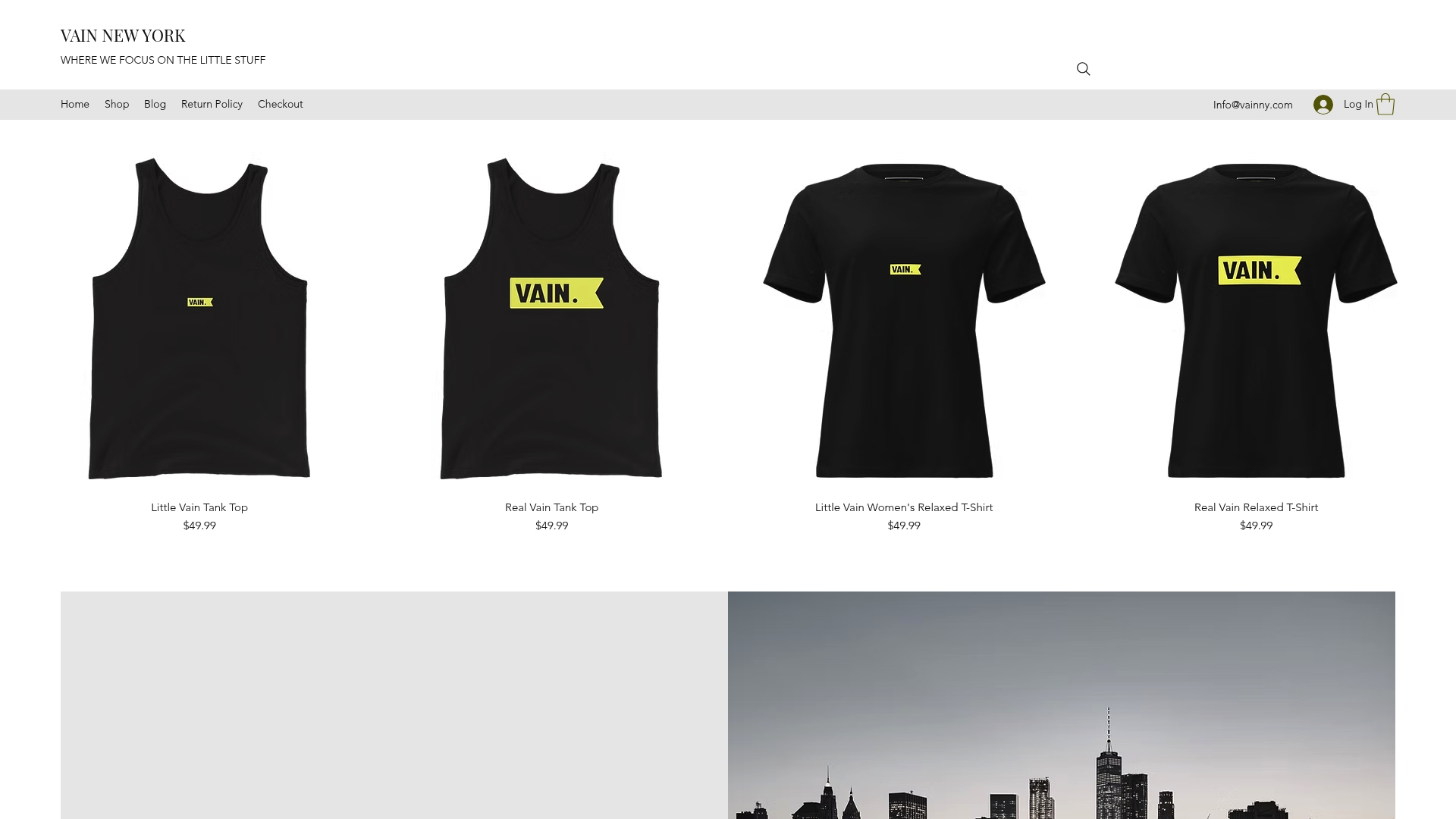
If merchandise is part of your launch, we also make branded apparel to order, from the Studio Tank Top at $49.99 to the Studio Hoodie at $99.99. You can see the range on our Studio Hoodie page.
FAQ
What is the difference between an AR filter and an AR lens?
On Snapchat, a lens is applied before you capture, so you play with it while the camera is live. A filter is an overlay added after capture to a Snap you already took. Brands choose between them, or combine them, depending on whether they want to own the moment of play or the moment of sharing.
How long does it take to make a branded AR filter?
It depends on the mechanic. Snapchat says simple post-capture filters can be built in under 10 minutes using its free web builder templates. A custom effect with original animation, sound and testing takes longer, because the design and interaction work is the bulk of the job. Plan for the demo video and promotion as well.
What should a brand put in an AR filter?
One simple, playful idea that people want to share, with your brand present but not dominant. Research on branded filters finds that entertainment drives playability, so lead with fun and let the brand come through in the artwork, sound and call to action.
How do you measure an AR filter campaign?
Set a business goal first, then track a sequence: reach, plays, play time, shares, clicks and the conversion you chose. Measure earned and paid impressions separately, as Snapchat’s summary of Nielsen recommendations advises.
Can small brands use AR filters?
Yes. Template-based filters lower the cost of entry, and a small brand can focus on one clear idea and one call to action. Start with a modest goal, such as a launch countdown frame or a product try-on, and build from the results.
Sources
The impact of creativity in social AR filters on brand (University of Zaragoza repository)
Augmented reality filters on social media (Psychology & Marketing)
Diageo promotes moderation, sustainability with Instagram AR lens (Marketing Dive)
Trident urges Instagram users to mix beats with #ChewTunes (Marketing Dive)
Tyson Foods breaks Jimmy Dean sausage products out of the shelf (Amazon Ads)
Keys To Using AR Filters To Engage With Your Instagram Audience (Forbes Communications Council)
A Case for Analyzing AR Investments Within Marketing Mix Models (Snapchat for Business)
Recommended
Comments