Creative Apparel Mockup Tools for Fashion Brands in 2026


Creative apparel mockup tools are specialized software platforms that generate realistic, customizable visual representations of clothing designs without requiring physical samples or studio photoshoots. Known in the industry as digital garment visualization software, these tools have become foundational for fashion designers, apparel brands, and marketing teams who need to move fast without sacrificing quality. Platforms like Mock It AI, SEDDI, and Vizcom now define what’s possible, producing photorealistic visuals in under 60 seconds and compressing what once took days into a single afternoon. For any team serious about design velocity and presentation quality, understanding these tools is no longer optional.
1. What makes a creative apparel mockup tool worth using?
The best apparel design mockup software earns its place in a workflow by delivering on four non-negotiable qualities: speed, accuracy, customization depth, and production readiness. A tool that looks impressive in a demo but slows down your approval cycle is a liability, not an asset.
Speed is the most visible differentiator. AI-powered generators now produce high-resolution mockups in under a minute, which means your team can present ten colorway options in the time it once took to set up a single photoshoot. Accuracy is where things get more nuanced. Generic AI image synthesis can produce visually appealing results that are technically impossible, with fabric folds that defy physics or print placement that would never survive a production run. True-to-pattern tools built on 3D CAD data, like SEDDI, avoid this entirely.
Here is what to evaluate before committing to any platform:
Garment library depth: Does it cover your core categories, from T-shirts and hoodies to outerwear and swimwear?
Artwork placement controls: Can you position graphics with precision, or are you locked into preset zones?
Background and scene options: Does the tool offer lifestyle scenes, flat lays, and studio setups?
Export formats: Does it output production-ready files, tech packs, or only social-ready JPEGs?
Pricing model: Free tiers are common, but professional subscriptions unlock unlimited downloads and advanced rendering.
IP protection: Some cloud platforms process your designs on servers for AI training. Others use local processing to protect your intellectual property.
Pro Tip: Before signing up for any subscription, upload a complex graphic with fine typography and check whether the tool preserves every detail. This single test reveals more about a platform’s accuracy than any feature list.
2. Mock It AI: fast, photorealistic, and scene-aware
Mock It AI is an AI-powered fashion mockup generator built for speed and creative flexibility. It produces high-resolution, photorealistic mockups in under 30 seconds, making it one of the fastest options available for teams running rapid concept cycles. The platform supports a wide range of garment types and allows users to customize backgrounds, lighting, and scene context directly within the interface.
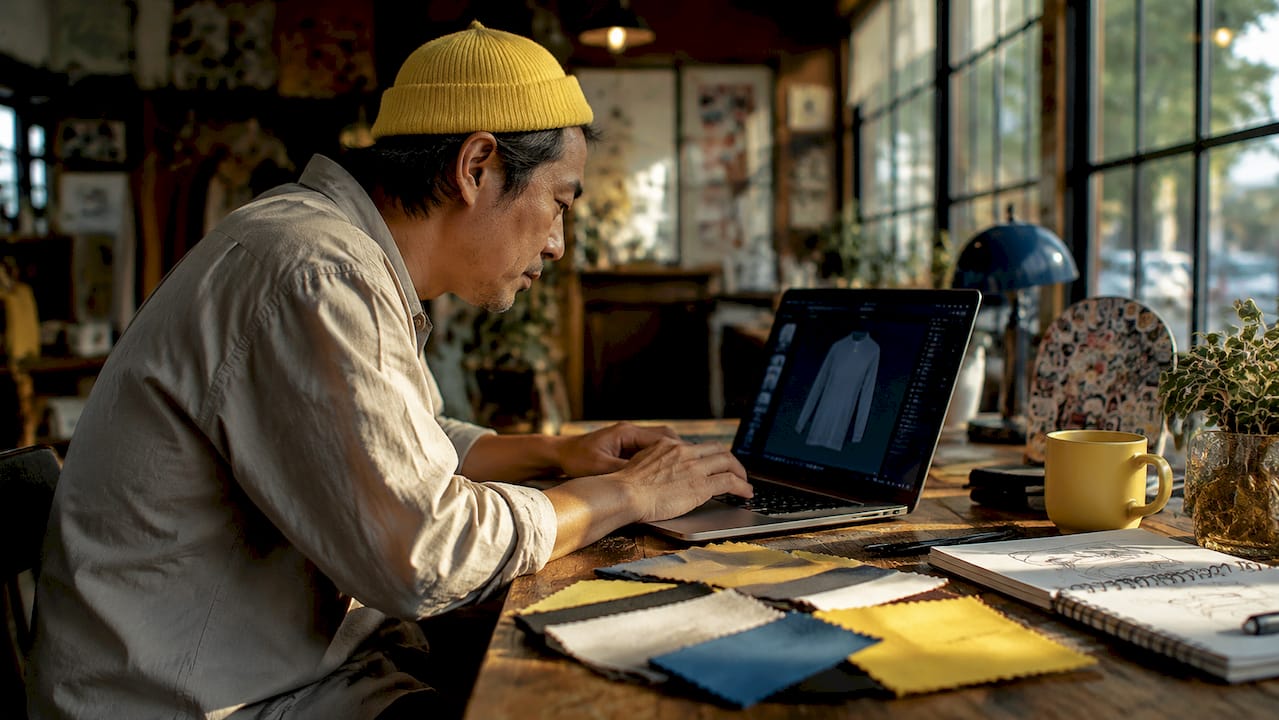
What separates Mock It AI from generic image generators is its focus on designer control. You upload your artwork, select a garment, and the AI places your design with consistent proportions across multiple views. The scene customization feature is particularly useful for marketing teams building social media assets, since you can generate lifestyle imagery without booking a model or a location. For startups and independent designers who need professional visuals on a tight timeline, this tool delivers real value.
3. SEDDI Decorator: production-accurate 3D apparel modeling
SEDDI operates in a different category from most fashion mockup generators. It is built on true-to-pattern 3D technology, meaning its digital garments replicate actual fabric physics, construction data, and fit grading rather than approximating the look of clothing through image synthesis. This distinction matters enormously when mockups need to serve both marketing and production teams.
The platform’s true-to-pattern 3D replicas allow designers to catch fit issues and print placement errors before a single physical sample is cut. For brands that produce seasonal collections at scale, this translates directly into reduced sampling costs and faster approval cycles. SEDDI also supports tech pack exports with exact print placement and color-matched fabric data, which means the visual your marketing team approves is the same specification your factory receives. This level of production clarity is rare and genuinely valuable.
4. Vizcom: real-time visualization from sketch to final approval
Vizcom is built for the full design arc, from initial sketch to final collection approval. Its integrated visualization workflow supports real-time collaboration, dynamic colorway exploration, and consistency across seasonal marketing assets. Designers can iterate on a concept and share live previews with stakeholders without exporting a single file.
The platform’s strength is its ability to maintain visual coherence across an entire collection. When you change a colorway on one piece, Vizcom reflects that change across related garments in the same session. This matters for marketing teams building lookbooks or campaign imagery, where consistency across twenty SKUs is as important as the quality of any single image. Real-time collaboration also reduces the back-and-forth that typically slows down approval cycles between design, merchandising, and marketing.
5. Studio Innate: brand fidelity and cinematic AI output
Studio Innate takes a firm position on a problem most mockup platforms ignore: AI drift. Generative AI tools often prioritize aesthetic output over technical precision, which means logos get softened, typography shifts, and brand colors drift from their specified values. Studio Innate addresses this directly by offering a specialized apparel design interface built to maintain 100% brand fidelity across every output.
The platform also supports video and scene-based asset generation alongside static mockups, which gives marketing teams a single source for both print and digital campaign materials. For brands with strict visual identity standards, this combination of brand accuracy and cinematic output quality is a significant advantage. The caution worth noting is that AI-generated mockups from any platform should never be treated as production-ready without a technical review, since image synthesis lacks the garment data needed to guarantee manufacturing accuracy.
Pro Tip: If your brand uses Pantone-specified colors, always cross-reference your mockup tool’s color output against your brand standards before sending assets to a print vendor. Even the best platforms can shift hues under certain lighting presets.
6. VirtualThreads: free ultra-realistic 2D mockups
VirtualThreads offers ultra-realistic 2D clothing mockups with a free access tier that includes watermark-free exports, making it one of the most accessible custom clothing mockup platforms available. The tool is browser-based, requires no software installation, and produces clean, high-resolution outputs suitable for e-commerce listings and social media.
For budget-conscious designers and small brands testing new product lines, VirtualThreads removes the financial barrier to professional-quality visuals. The export options cover standard formats compatible with Shopify, Etsy, and most major e-commerce platforms. The trade-off is that the platform does not offer production-ready features like tech pack exports or 3D fabric simulation, so it is best positioned as a marketing visualization tool rather than a production planning resource.
7. Mockup Mark: high-resolution templates for e-commerce
Mockup Mark is a high-resolution apparel mockup generator with a library exceeding 5,000 template variations covering T-shirts, hoodies, jackets, jerseys, and more, including front, back, and detail views. This depth of template coverage makes it particularly strong for e-commerce brands that need consistent, professional imagery across large product catalogs.
The platform’s strength is volume and variety. You can generate mockups for an entire seasonal collection in a single session, maintaining consistent lighting and background treatment across every SKU. For marketing teams managing product photography at scale, this consistency reduces post-production work and keeps catalog imagery cohesive. Mockup Mark also offers lifestyle scene templates, which reduces the need for separate photoshoot assets for social media campaigns.
8. How these tools compare on features, pricing, and output
Choosing between these platforms comes down to your team’s primary use case. Here is a direct comparison across the dimensions that matter most:
Tool | Best for | 3D accuracy | Tech pack export | Free tier |
Mock It AI | Speed and scene variety | Moderate | No | Yes |
SEDDI Decorator | Production and sampling | High | Yes | No |
Vizcom | Collection workflow | Moderate | No | Limited |
Studio Innate | Brand fidelity and video | Moderate | No | Yes |
VirtualThreads | Budget e-commerce visuals | Low | No | Yes |
Mockup Mark | Catalog volume | Low | No | Yes |
The pricing gap between free and professional tiers is meaningful. Most platforms offer free access for basic mockup generation, but professional subscription tiers unlock unlimited downloads, advanced rendering options, and priority processing. For teams generating mockups at volume, the cost of a subscription is almost always recovered in the time saved versus manual photoshoot coordination.
9. Best tools for specific scenarios and user needs
Not every team needs the same thing from an online apparel mockup maker. The right choice depends on where you are in your design and marketing cycle.
Startups and independent designers should start with VirtualThreads or Mock It AI. Both offer free access, fast outputs, and no technical setup. You get professional visuals without a budget commitment.
E-commerce brands managing large catalogs will find Mockup Mark’s template library and batch processing most efficient. Consistent imagery across hundreds of SKUs is where this platform excels.
Production teams and sample approval workflows need SEDDI Decorator. Its fabric physics and pattern accuracy are the only reliable way to use digital mockups as a substitute for physical samples.
Marketing teams building campaign assets should evaluate Vizcom for collection-wide consistency and Studio Innate for video and scene-based outputs alongside static imagery.
Brands with strict visual identity standards should prioritize Studio Innate’s brand fidelity controls to prevent the AI drift that corrupts logos and typography in generic generators.
Pro Tip: Use two tools in parallel during your first month: one for fast concept visualization and one for production-accurate review. This combination catches creative and technical issues at the earliest possible stage.
Key takeaways
The most effective approach to creative apparel mockup tools is matching each platform’s core strength to a specific stage of your design and marketing workflow rather than relying on a single tool for every purpose.
Point | Details |
Speed vs. accuracy tradeoff | AI-powered tools like Mock It AI generate visuals in seconds; production tools like SEDDI prioritize technical precision over speed. |
Free tiers have real limits | Free access works for marketing visuals, but tech pack exports and unlimited downloads require paid subscriptions. |
AI drift is a real risk | Generic AI generators can distort logos and typography; tools like Studio Innate are built specifically to prevent this. |
Production mockups need 3D data | Only tools built on fabric physics and pattern data, like SEDDI, are reliable substitutes for physical samples. |
Workflow integration matters | Platforms like Vizcom that support real-time collaboration reduce approval cycle time across design and marketing teams. |
Why I think most brands are using mockup tools at the wrong stage
I have watched brands invest in sophisticated mockup platforms and then use them almost exclusively at the end of the design process, as a presentation layer before launch. That is the least valuable place to introduce these tools. The real leverage comes from integrating mockup tools early in the design cycle, before colorways are locked, before sampling budgets are committed, and before marketing calendars are set.
When you use a 3D production-accurate tool like SEDDI at the concept stage, you are not just making a pretty image. You are making a technical decision that ripples through your entire supply chain. When you use a brand-fidelity tool like Studio Innate before your campaign brief is written, you are giving your marketing team a visual language to work from rather than a set of constraints to work around.
The other thing I would push back on is the assumption that AI-generated mockups are interchangeable with production specifications. They are not. AI hallucinations in mockups, such as impossible fabric folds or stretched print placement, arise because image synthesis has no knowledge of how garments are actually constructed. Treat AI mockups as creative communication tools and reserve your production decisions for platforms with real garment data behind them.
The brands getting the most from these tools are the ones treating mockups as a design and business decision, not just a visual one.
— Neville
See how Vainnewyork brings apparel to life
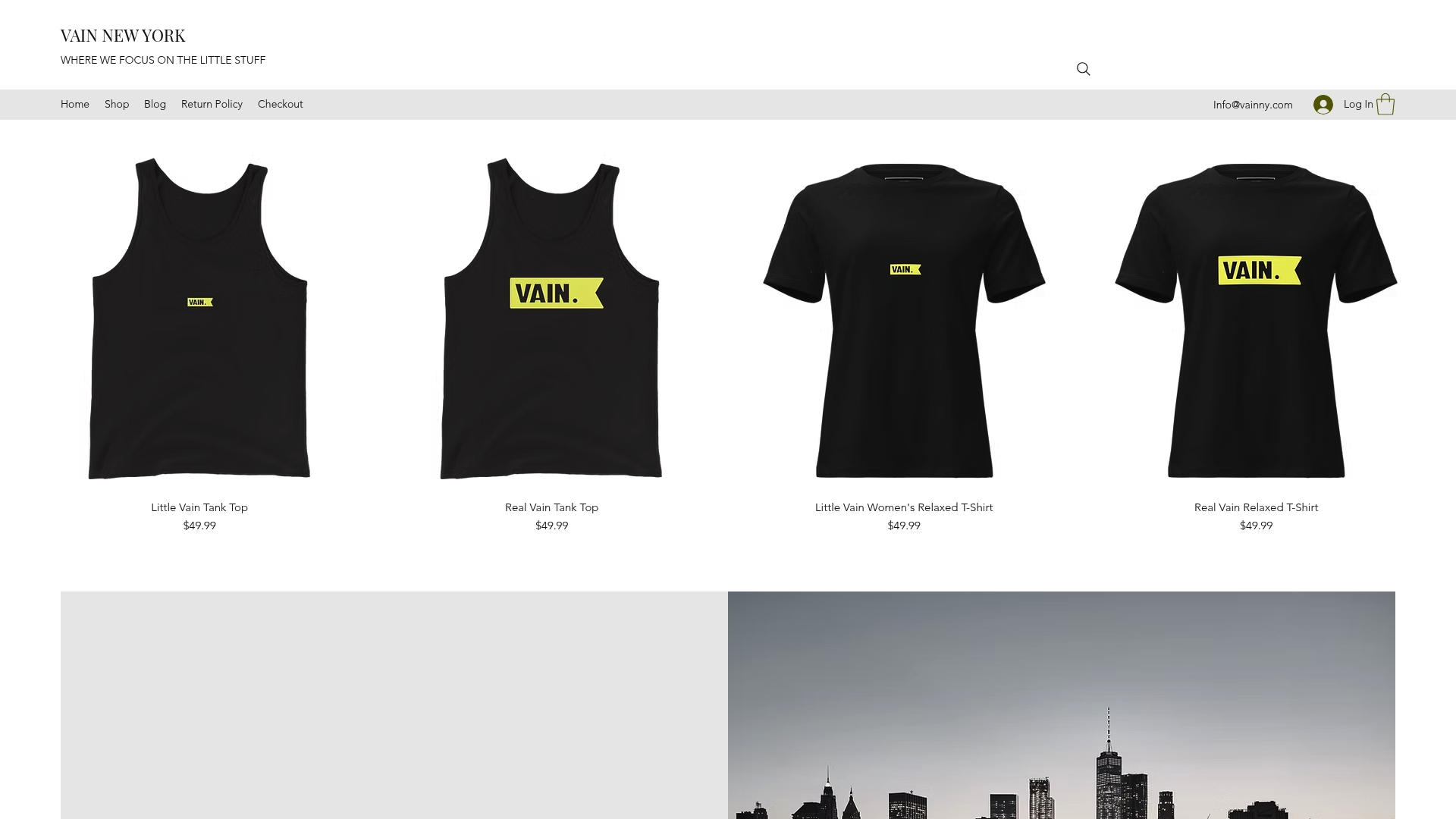
At Vainnewyork, we understand that great apparel starts with a great visual. Our designer apparel collection reflects the same commitment to craft and presentation that the best mockup tools are built to support. Every piece in our shop represents a design process where creativity and quality are treated as inseparable. Whether you are looking for inspiration for your next collection or searching for apparel that sets a standard, our shop is the place to start. Visit Vainnewyork to explore our full range of clothing and see what intentional design looks like in practice.
FAQ
What are creative apparel mockup tools?
Creative apparel mockup tools are software platforms that generate realistic visual representations of clothing designs without physical samples. They range from AI-powered generators like Mock It AI to production-accurate 3D platforms like SEDDI.
How fast can mockup tools generate apparel visuals?
Modern AI-powered platforms produce high-resolution mockups in under 30 to 60 seconds, replacing photoshoots that previously took days to organize and execute.
Are free apparel mockup tools good enough for professional use?
Free tiers from platforms like VirtualThreads and Mockup Mark work well for e-commerce and social media visuals. Professional subscriptions are necessary for unlimited downloads, advanced rendering, and production-ready exports.
Can AI mockups replace physical samples?
Generic AI mockups cannot replace physical samples because they lack fabric physics and construction data. Only tools built on true-to-pattern 3D data are reliable enough to inform production decisions.
How do I protect my designs when using cloud-based mockup tools?
Check each platform’s data policy before uploading proprietary artwork. Some services process designs on shared servers for AI training, while others use local processing to keep your intellectual property secure.
Recommended
Comments