Brand Development Cost in NYC: What to Budget in 2026


Brand development in New York City typically runs from a few thousand dollars for freelance or DIY work to well over $70,000 for a full audit and high-end, comprehensive package. Most small and midsize businesses land somewhere between those poles, and where you land depends on scope, who does the work and how many decisions your team can make quickly. Shopify’s 2026 rebrand guide frames the same spread, and it reports one studio’s projects starting around $10,000 to $15,000.
Below, we break down what drives those numbers, what each budget level usually includes, how to phase the work, and what to check before you sign a proposal.
TL;DR
Expect a few thousand dollars for DIY or freelance branding, and more than $70,000 for a full audit and comprehensive high-end package.
Studio-level projects in the market often start around $10,000 to $15,000, according to Shopify’s 2026 guide.
Scope, team seniority, research depth and the number of rollout assets move the price more than the logo does.
You can phase the work: strategy first, identity second, rollout third.
Compare proposals by deliverables, revision rounds, ownership of files and timeline, not by the headline number.
Table of Contents
What brand development actually means
Brand development is the whole chain that turns a business into something people recognize and remember. It starts with strategy (who you serve, what you stand for, how you sound) and moves into identity (name, logo, typography, color, imagery). It ends with application: the website, packaging, social content, video, merchandise and every place the brand shows up.
That chain is why quotes vary so widely. One provider may price a logo and call it branding. Another prices research, positioning, a messaging framework, a visual system, guidelines and the first round of content. Both are honest quotes for different jobs, so the first step in budgeting is deciding which job you are buying.
Brand development cost in NYC by budget level
The ranges below combine the figures in the sources cited in this article with how projects are commonly scoped. Treat them as planning bands, not quotes, and confirm every number against written proposals.
Budget level | Typical range | What it usually covers | Best for |
DIY or template-led | A few thousand dollars or less | Logo, basic palette, a handful of templates | Side projects, very early validation |
Freelance designer | A few thousand dollars and up | Logo or visual identity, limited strategy | Startups with a clear idea of their positioning |
Studio or small team | Often from about $10,000 to $15,000 | Strategy, identity, guidelines, first assets | Growing businesses that need a coherent system |
Full audit and comprehensive package | More than $70,000 at the high end | Research, audit, positioning, identity, rollout, content | Established brands, rebrands across many channels |
The low and high ends come from Shopify’s rebrand guide, which describes DIY or freelance work at a few thousand dollars and a full audit with a high-end comprehensive package above $70,000. The $10,000 to $15,000 starting point is that guide’s report of one studio’s projects, so read it as one data point rather than a market floor.
New York pushes everything toward the upper part of each band. Office space, senior talent and local production costs are all higher here, and many NYC providers price for brands that expect to be seen in a crowded market. If you want a deeper walk through deliverables at each tier, our breakdown of NYC brand identity costs and deliverables goes line by line.
Freelancer, studio or agency: how the costs compare
The type of provider is the single biggest lever on price, because it changes how many people touch the project and how much overhead sits inside the quote.
Freelancers
A freelancer is usually the lowest-cost route to a professional identity. You work with one person, so the strategy, design and revisions all run through the same hands. That is efficient, but breadth is limited: if you also need video, sound, animation or a content plan, you will be coordinating several people yourself.
For a sense of the labor market, the U.S. Bureau of Labor Statistics reported a mean hourly wage of $38.65 and a mean annual wage of $80,390 for graphic designers in New York State in May 2023. Those estimates cover employed designers and exclude the self-employed, so they describe salaried pay, not freelance project fees. They do show why an experienced designer’s project rate in NYC is not small: the living and business costs behind it are real.
Studios and small creative teams
A studio brings strategy, design and production under one roof. You pay more than you would for a single freelancer, and in return you get a coordinated team, a clearer process and often a faster path from idea to finished assets. This is the level where brand development starts to include things a logo alone never could: messaging, guidelines, launch content.
Large agencies
Large agencies add account management, research departments and layers of review. That infrastructure suits global brands and regulated industries, and it shows up in the price. For most small and midsize businesses it is more process than the project needs.
What factors move the price
The same brand can cost very different amounts depending on a handful of variables. Know which ones apply to you before you ask for quotes.
Scope. A logo, a visual identity, and a full brand system with strategy and rollout are three different products. Every added deliverable (guidelines, stationery, social templates, packaging) adds hours.
Research and strategy depth. Interviews, competitor review and audience work take senior time. Skipping them lowers the price and raises the risk that the identity looks good but says nothing.
Team seniority. A principal’s hour costs more than a junior’s. A proposal that puts senior people on strategy and juniors on production can be a smart balance.
Number of revisions and stakeholders. Every extra decision-maker adds rounds. A team that can approve in 48 hours finishes faster and cheaper than one that circulates drafts for weeks.
Rollout and production. Brand applications such as video, photography, motion graphics and merchandise are often priced separately from identity work.
Timeline. Rush schedules compress work into fewer days and usually cost more.
Existing assets. A rebrand that keeps some equity (a name people know, a color they associate with you) is often cheaper than a launch from zero, though audits take time.
That last point connects to timing. Our 12-week rebrand timeline shows how fast decisions keep a project inside its budget.
What each budget typically buys
A few thousand dollars: the starting kit
At this level you are buying a logo and a simple visual foundation: a palette, a font pairing and perhaps a few templates. It is a sound start for a business testing an idea. What it rarely includes is positioning work, so the identity reflects your taste more than a researched strategy.
Around $10,000 to $15,000: a working identity
Studio-level projects reported in the market begin around here. Expect some discovery, a defined brand voice, a logo suite, typography and color, and a compact set of guidelines. This is the range where a small business can leave with something a new hire or vendor can actually follow.
Mid-five figures and up: a brand system
Here the work widens into messaging architecture, naming, audience research, a complete visual system and the first wave of applications. It suits businesses entering a new category, raising capital or unifying several product lines.
Above $70,000: the comprehensive package
The high end described in Shopify’s guide covers a full audit plus a comprehensive build-out. It is meant for established companies where inconsistency across many channels is costing money, and where the brand has to be rolled out across teams, markets and formats.
A price tag on its own tells you little. A $10,000 project with clear deliverables beats a $30,000 project nobody can describe.
How to scope and phase brand development on a budget
You do not have to buy everything at once. Phasing protects cash and lets early results inform later spending.
Phase 1: strategy and positioning
Start with who you serve, what you promise and how you sound. This is the cheapest place to prevent expensive mistakes, because every later decision (name, logo, website copy) rests on it.
Phase 2: core identity
Build the logo, palette, typography and a short guideline document. Ask for source files and usage rules so you can hand the brand to a printer, a web developer or a video editor without calling the designer each time.
Phase 3: rollout
Apply the identity where customers meet you. For many NYC brands that means a brand film or social video, a podcast, a lookbook, and merchandise. Each has its own budget logic, and we have written guides for the main ones:
If you are unsure whether you need a consultant to sequence all of this, see what marketing consultant rates in NYC look like before you decide.
Where to save and where not to
Save on volume: launch with the assets you will use in the first 90 days rather than a full suite. Do not save on strategy or on file ownership. A beautiful identity built on a vague position, or delivered without editable files, costs more to fix than it saved.
Comparing brand development proposals
Two proposals at the same price can hold very different value. Put them side by side and check these points.
Check | What a clear proposal states |
Deliverables | A named list: logo variants, color and type specs, guidelines, templates, formats |
Strategy work | Whether research, positioning and messaging are included, and how many sessions |
Revisions | How many rounds, and what counts as a new request |
Ownership | Who owns the final files and whether source files are handed over |
Timeline | Milestones with dates and the decisions needed from you by each |
Rollout | Which applications are in scope and which are quoted separately |
Team | Who does the strategy and who does the production |
Payment | Deposit, milestone payments and what happens if scope changes |
Two more habits help. Ask to see work from projects of similar size and speak to a past client if you can. And ask how the provider handles feedback from several stakeholders, because that is where budgets quietly grow.
A note on repetition: the 3-7-27 rule
People often ask about the 3-7-27 rule in branding. It is a marketing rule of thumb, not a measured law, and it says that audiences need roughly three exposures to notice a brand, seven to connect it with what you do, and twenty-seven to remember it and act. Treat the numbers as a reminder rather than a formula.

The practical lesson is budgetary: a brand needs repeated, consistent exposure. Money spent on identity without a plan to show it often is money half-spent. That is why we encourage clients to hold back part of the budget for content that carries the identity into the world.
Our perspective
Most brand budgets go wrong in the same place: they fund a beautiful identity and leave nothing to show it. We see brand development as a tapestry, where strategy, design, sound, motion and merchandise are threads that only mean something when woven together. That is how we work at Vain. We are a creative consultancy and production company, and our process is intentional and collaborative. We draw on a curated network of collaborators so a project gets the right specialists at each stage, from positioning to video, audio, animation and strategy, without you managing a dozen vendors. Our view is simple: make the ordinary extraordinary. A brand does not need to be loud. It needs to be clear, consistent and made with care, and the people who build it should be able to produce the content that brings it to life. When strategy and production sit in one conversation, decisions move faster and the budget goes into work your audience will actually see. Vain.
Work with a team that builds and produces
If you want one team to shape the strategy and produce what follows, we offer video, audio, animation and strategy services for brands, artists and organizations in New York City and beyond. Pricing is project-based, so we scope each engagement around your goals, deliverables and timeline. Tell us what you are building and we will map the phases with you.
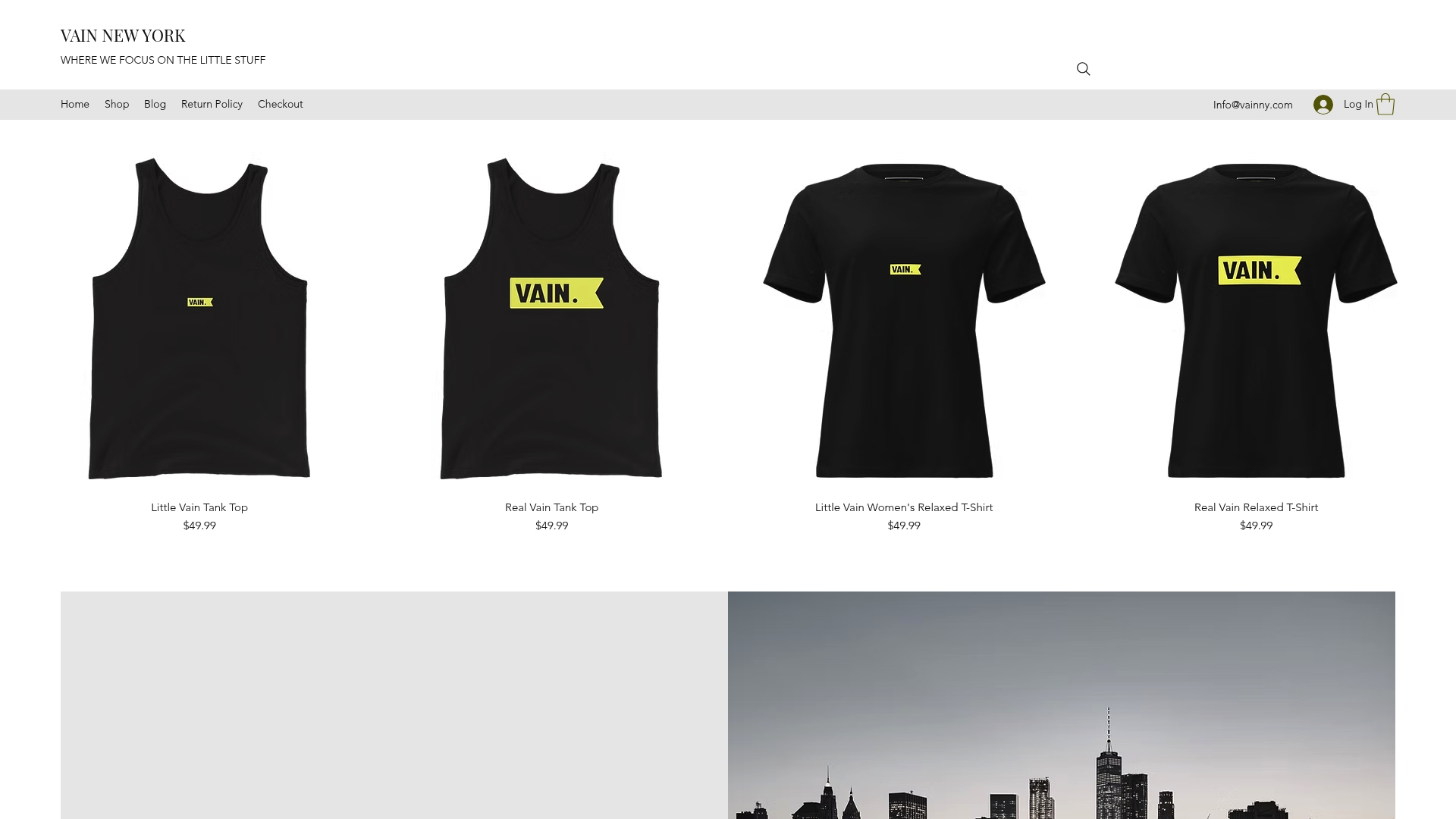
When your brand is ready to be worn as well as seen, our studio line of tees, hoodies and sweatshirts is made to order, with the Studio Tank Top at $49.99 and the Studio Hoodie at $99.99.
Frequently asked questions
How much does it cost to develop a brand?
It ranges from a few thousand dollars for DIY or freelance work to more than $70,000 for a full audit and high-end comprehensive package, per Shopify’s 2026 guide. Studio projects are reported as starting around $10,000 to $15,000. Your final number depends on scope, team and timeline.
Is it cheaper to rebrand or to build a brand from scratch?
A rebrand can cost less when you keep recognizable equity such as your name or core colors, but it also adds an audit and a transition across every channel. The fair comparison is deliverable by deliverable. Ask for both options in writing from the same provider.
How can a small business keep brand development affordable?
Phase the work: strategy first, a core identity second, and rollout assets third. Launch with only what you will use in the first few months. Keep the strategy and file ownership in scope, since those are costly to redo.
What is the 3-7-27 rule in branding?
It is a rule of thumb that people need about three exposures to notice a brand, seven to connect it to what you do, and twenty-seven to remember it. It is not a scientific finding. Use it as a reminder to plan consistent, repeated visibility.
What should I look for when comparing proposals?
Look for a named list of deliverables, the number of revision rounds, file ownership, milestone dates and which rollout work is quoted separately. A proposal that cannot say what you receive is not comparable to one that can.
Sources
Recommended
Comments