Artist Brand Development: A Step-by-Step Guide for Musicians

Artist brand development is the process of turning your sound, story, and values into a repeatable identity that fans, collaborators, and press can recognize instantly. Done well, it produces three tangible deliverables: a one or two sentence brand statement, a visual-rule checklist for your aesthetic booklet, and an EPK checklist you hand to anyone you work with. Consultancies like Berklee Online’s brand identity coursework and creative firms like Vainnewyork emphasize treating brand development as a system rather than a vibe. By the end of this guide, you’ll have:
A brand statement you can paste into any bio
A visual-rule checklist covering color, typography, and photo style
An EPK checklist ready to send to promoters, press, and stylists
Key Takeaways
Artist brand development succeeds when a documented brand statement, visual rulebook, and EPK exist before any redesign or ad spend begins.
Point | Details |
Audit your catalog first | Extract tempo, instrumentation, and lyrical themes before writing any brand statement. |
Write the statement before visuals | Compress sound, story, and values into one paragraph that guides every design choice after. |
Document visual rules | Record palette hex values, typography, and photo style so collaborators execute without guesswork. |
Build fan personas from real data | Combine streaming analytics and direct fan feedback to guide merch, ads, and setlists. |
Know when to bring in help | Vainnewyork produces brand statements, aesthetic booklets, EPK templates, and merch briefs when scope outgrows a DIY checklist. |
Table of Contents
How Do You Translate Your Music Into a Brand Foundation?
Your catalog already contains your brand. Most artists just haven’t audited it yet. Sit down with some recent releases and run through a simple checklist: What’s the average tempo range? What instrumentation shows up repeatedly? What lyrical themes keep resurfacing, such as heartbreak, defiance, or escapism? What mood dominates when you play a track for a stranger?
List every recurring sonic element (instrumentation, tempo range, vocal texture).
Circle the two or three lyrical themes that appear in at least half your catalog.
Name a primary genre and a secondary genre. A narrow primary genre helps algorithms and playlist curators categorize you more effectively than a vague “genre-blending” label, improving discoverability.
Write one paragraph describing your sound and mood in plain language.
Draft three taglines under ten words each, testing which one a stranger repeats back to you.
This process mirrors what Bandsintown for Artists recommends: translate recurring moods and influences into a foundation before you touch visuals or copy.
Pro Tip: Ask five people who’ve heard your music to describe it in three words each, without prompting. The words that repeat across answers are your real brand foundation, not the ones you’d pick for yourself.
How Do You Tell an Artist Story That Sticks?

A memorable artist story isn’t a biography. It’s a small set of beats that explain who you are, what you make, and why it exists, repeated consistently enough that people can retell it themselves. Use a simple what/who/why framework: what you make (genre, format, signature sound), who you are (background, community, influences), and why it matters (the problem or feeling your music addresses).
Three anecdote types work reliably in bios and press:
The origin moment: the specific night, room, or event that pushed you toward music.
The influence collision: two unlikely reference points that explain your sound better than a genre label does.
The stakes anecdote: what you’d be doing, or losing, if you weren’t making this music.
Try these three prompts to surface your version: What’s the first song that made you want to do this? What do people misunderstand about your music on first listen? What would you tell your younger self about why this matters now?
How Do You Define Your Core Values as an Artist?
Pick core values and turn each one into a rule for how you talk and what you sell. Values like rawness, humor, or theatricality guide tone in captions, interviews, and merch drops.
Rawness → unfiltered, lowercase captions; unpolished behind-the-scenes video; merch with handwritten-style graphics.
Humor → self-deprecating captions, meme-style content; novelty items like pun-based stickers or mugs.
Theatricality → dramatic language, cinematic visuals; limited-edition merch tied to a specific “era” or persona.
Write a one-line values statement for each: “We are [value] because [reason tied to your music].” That sentence becomes your filter for every future post.
Pro Tip: If a caption or merch idea doesn’t clearly match one of your chosen values, cut it. Consistency beats novelty every time a fan scrolls past your profile.
How Do You Write a Brand Statement and Visual Rules?
Compress your sound, story, and values into one paragraph: two to three sentences naming your genre lane, your defining theme, and the feeling you want listeners to leave with. That paragraph becomes the cover-page anchor of your aesthetic booklet.
Write the brand statement first; everything visual should support it, not the other way around.
Choose a color palette (two to three primary colors, one accent, with hex codes) that echoes your sound’s mood.
Define a photo style: lighting preference, posing energy, color grading notes.
Set typography guidance: one display font, one body font, and rules for when each appears.
Decide your logo’s actual job, whether it’s a standalone mark or just a wordmark, since many artists confuse a logo with a full brand system, and a logo alone can’t carry consistency across album art, merch, and video the way documented rules can.
How Do You Audit Your Current Brand Presence?
Before redesigning anything, check what’s already live. Pull up your website, Instagram, TikTok, X, your streaming profiles, and any merch storefront side by side.
Do your profile photos across platforms look like the same artist, or three different people?
Does your bio use the same tone everywhere, or does one platform sound corporate while another sounds casual?
Are your streaming bios outdated, missing your latest release, or generic?
Is your merch storefront using old artwork that doesn’t match your current sound?
Fix high-impact, low-effort items first: mismatched profile photos, outdated bios, broken links. Save full visual redesigns for after your brand statement and visual rules exist. Screenshot each channel monthly so you can measure whether updates actually stuck.
Who Is Your Audience, and How Do You Build Fan Personas?
Building two to four fan personas turns scattered data into decisions you can act on. Pull numbers from Spotify for Artists (age range, top cities, playlist sources), social insights (which posts get saves versus likes), and direct fan replies or DMs, since combining streaming analytics with qualitative fan feedback gives a fuller picture than either source alone.
For each persona, note: demographics, core motivation for listening, primary discovery channel, and what triggers engagement (a lyric video, a tour announcement, a merch drop). A scholarly look at artistic identity formation frames this as an ongoing thread of discovery rather than a one-time decision, which matters here too, since personas shift as your audience grows.
Persona informs merch: a college-age persona might respond to affordable stickers; an older persona might pay more for vinyl.
Persona informs paid ads: discovery channel data tells you whether TikTok spend or playlist pitching deserves the budget.
Persona informs setlists: engagement triggers tell you which songs to open or close with on tour.
How Do You Brief Collaborators on Your Brand?
Collaborators can’t guess your brand. They need documents. An aesthetic booklet and moodboard let a photographer or director match your look on the first shoot instead of the third.
Build a moodboard with five to ten reference images covering lighting, color, and wardrobe, since moodboards remain the fastest way to communicate visual direction to a creative team.
Assemble an EPK: short bio (50 words), long bio (200 words), high-res photos, logo files, streaming links, and a one-page technical rider.
Write a show advance covering lighting cues, projection assets if you use them, and stage production notes, kept to one page so venue staff actually read it.
How Do You Apply Your Brand Across Social, Streaming, and Merch?
Consistency online comes down to matching every touchpoint to the same visual and tonal rules you already wrote down. Plan your social grid or content series around your release art, so a scroll through your feed reads as one continuous aesthetic rather than a patchwork of unrelated posts.
On streaming platforms, pick a profile photo and banner that match your latest era, and write two or three bio variations (short, medium, playlist pitch) rather than one generic paragraph.
Pitch your music for playlist placements that match your genre lane, since a scattered pitch list dilutes the narrow-genre discoverability advantage you built earlier.
Treat merch as concept-first: design drops around a theme or lyric rather than slapping a logo on a blank shirt, and use consistent product photography so thumbnails look like they belong to the same catalog.
Consider a simple storefront tool, such as Payhip’s website builder for visual artists, if your current site can’t keep merch and music on-brand together.
Run limited runs instead of always-available stock, which keeps merch feeling tied to a specific release moment.
What Does a Practitioner Checklist for Turning Identity Into Deliverables Look Like?
Agencies build aesthetic booklets and brand guidelines because verbal direction gets lost between a shoot, a designer, and a merch printer. A documented system prevents that drift. Vainnewyork’s own approach, outlined in its brand strategy roadmap, treats intuition as raw material that needs a system to survive contact with collaborators.
Typical deliverables a consultancy produces:
A finalized brand statement, tested against two or three concepts
A visual rulebook: palette with hex values, typography stack, photo usage notes
EPK templates ready to send without editing
A merch brief connecting concept to product
If you brief a consultant, specify the scope up front, deliverables like two brand concepts plus a final aesthetic booklet, so pricing across providers compares apples to apples rather than vague hourly estimates.
Deliverable | What it solves |
Brand statement | Gives every collaborator one sentence to align copy and tone |
Aesthetic booklet | Prevents visual drift across shoots, merch, and video |
EPK template | Speeds up press and booking requests |
Merch brief | Keeps product drops concept-first instead of logo-slapped |
What Does the Research Actually Support Here?
Most advice on artist branding treats the logo and the color palette as the finish line. That’s backward. The real leverage sits in the brand statement, the one paragraph that forces you to decide what your music is actually about before a single visual gets made. Skip that step and you end up with a beautiful moodboard attached to nothing.
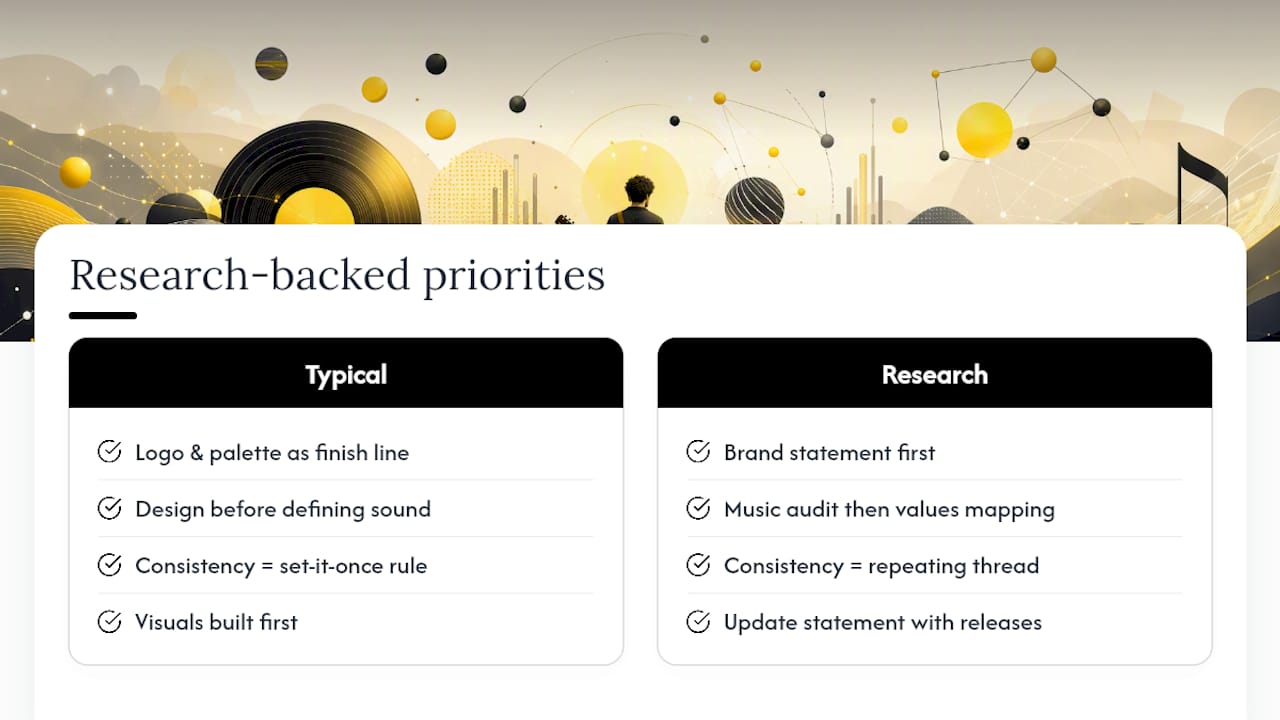
The conventional wisdom also oversells “consistency” as a static rulebook you set once. It isn’t. Identity tends to surface as a repeating thread across your catalog rather than a single decision you make in a afternoon, which means your brand statement from eighteen months ago is probably already stale if you’ve released new work since.
Here’s what we’d prioritize differently than most guides: do the music audit and the values mapping before touching visuals, not after. A gorgeous aesthetic booklet built on top of a vague sound identity just produces expensive inconsistency later. Get the sentence right first. The palette can wait a week.
— Vain.
Where Vain. Fits Into Your Brand Development
Vainnewyork exists for the moment your DIY checklist runs out of hours in the day. We build the exact deliverables this guide walks through, aesthetic booklets, EPK templates, merch strategy, and full production support, so an independent artist gets an agency-level system without hiring a full internal team.
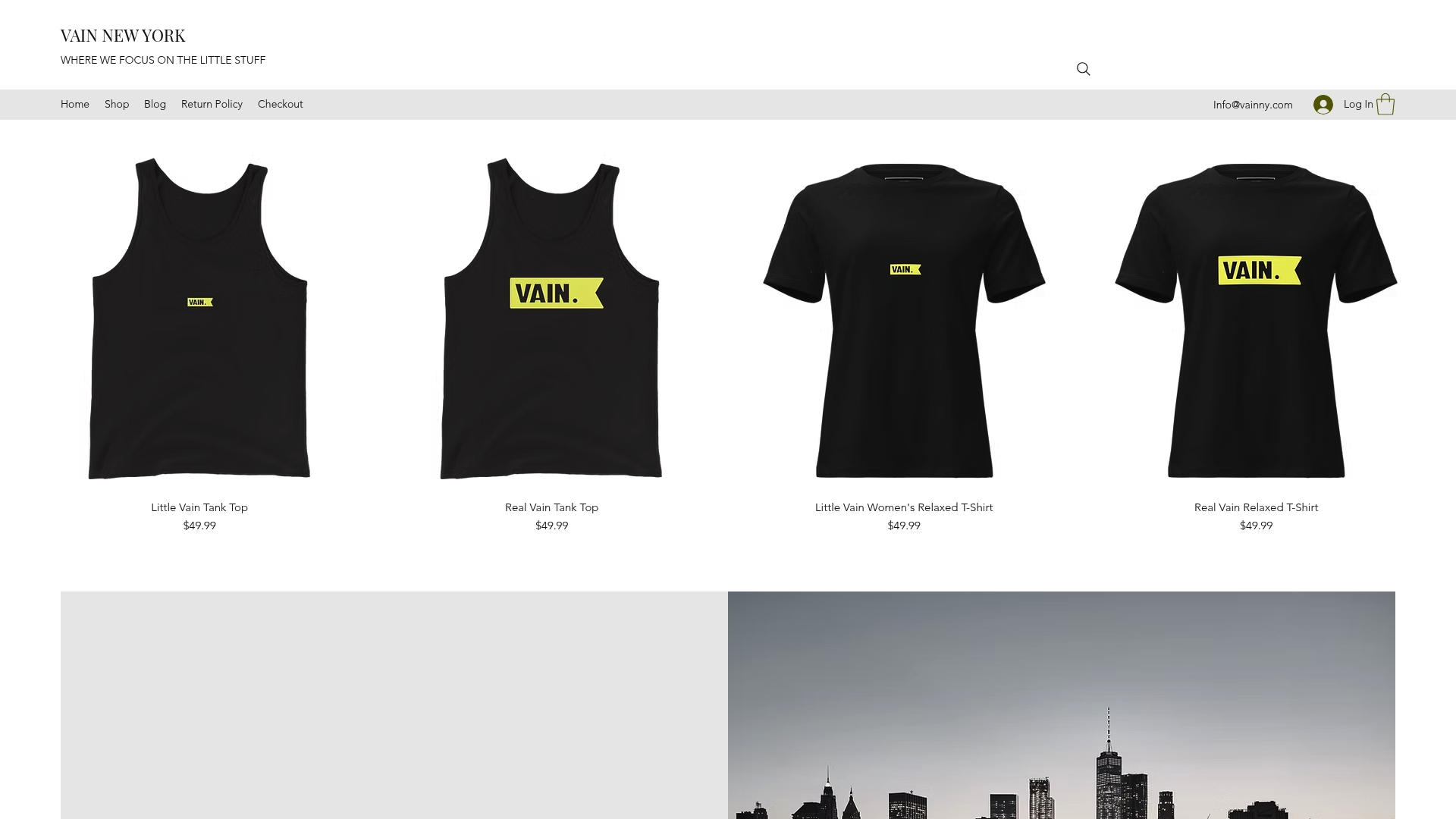
Artists who’ve already drafted a rough brand statement but need it stress-tested against real visual direction get the most out of working with us, as do bands preparing for a release cycle who need a moodboard, merch brief, and EPK finished before a deadline rather than built from scratch. If your merch drop needs concept-first thinking instead of another logo tee, our merchandise strategy work walks through exactly how that’s different from retail thinking.
Start by outlining your current deliverables gaps, then get in touch through Vainnewyork to scope a project built around the specific assets your next release actually needs.
Sources
Recommended
Comments