No Big Budget: Transmedia Storytelling Examples Creators Can Reuse


Transmedia storytelling means distributing integral pieces of one fiction across multiple platforms, with each medium contributing something the others cannot, a definition Henry Jenkins established nearly two decades ago. The clearest teaching examples are The Matrix, Star Wars, the Marvel Cinematic Universe, The Blair Witch Project, The Lizzie Bennet Diaries, the I Love Bees and Bolton Storyworld alternate reality games, and the Knives Out and The Beauty Inside campaigns. Each one shows a different way to hand a piece of the story to a different platform, and each carries a lesson worth stealing for your next production.
TL;DR:
Transmedia storytelling spreads a single story across multiple platforms, each adding unique information that the others cannot provide, enhancing audience understanding.
Core assets like films, books, or games should focus on essential canon, with auxiliary content filling narrative gaps without risking contradictions.
Sequencing releases, such as standalone films and reward-based series, balances onboarding new viewers while rewarding dedicated fans.
Authenticity in low-budget projects benefits from diegetic artifacts and careful pacing, avoiding promotional tactics that break the story’s believability.
A strong story bible, clear canon ownership, and platform-specific narrative roles are key principles to ensure cohesive and scalable transmedia projects.
Table of Contents
The Matrix and the Case for Additive Comprehension
The Wachowskis didn’t just license merchandise around three films. They built a storyworld where the films, the Animatrix animated shorts, comic books, and the Enter the Matrix video game each carried narrative weight the others didn’t, spreading storyworld information across live-action, animation, comics, and games so no single format told the whole story.
The animated shorts filled gaps the films skipped entirely. “The Second Renaissance” explained the war between humans and machines that triggered everything, background the theatrical cut never bothered to dramatize. The video game let players experience Niobe’s storyline, a character who existed at the edges of the films but got her own playable arc in the interactive layer. Miss anything, and your understanding of the trilogy’s mythology stays incomplete.
That’s additive comprehension in action: each new piece revises what you thought you understood, rather than simply repeating it in a new format.
Films carried the philosophical spine and the character arcs audiences needed to follow the core plot.
Animated shorts delivered backstory too dense or too tangential for a theatrical runtime.
The video game gave secondary characters a spotlight the films had no room for.
Comics filled small narrative gaps between major releases.
Pro Tip: Before greenlighting any auxiliary asset, ask whether it reveals something the core work doesn’t. If the answer is no, you’ve built a repackaged trailer, not a transmedia extension.
The takeaway for creators building on a budget: decide early which pieces are essential canon and which are optional deep cuts. Essential canon needs coordination across every writer touching it. Deep cuts can experiment more freely, since missing them shouldn’t break comprehension of the main story.
Star Wars and the Discipline of Canon Management
Star Wars is the best argument for writing your story bible before you write your first tie-in novel. The franchise spans films, television series, novels, comics, and games, and StarWars.com’s own worldbuilding material shows how the storyworld now spans multiple eras and interactive game experiences that add playable perspectives no film could offer.
Novels dug into political maneuvering the films skipped past in favor of action. Games let players inhabit Jedi, smugglers, or bounty hunters, roles the films only glimpsed from the outside. The old Databank-style reference material gave fans a canon lookup tool, a way to check whether a name or detail they half remembered actually fit.
None of that works without discipline. Lucasfilm’s own history shows what happens without it: decades of Expanded Universe material eventually contradicted itself so often that a formal reset became necessary. Large universes need rules about authoritative stories, versioning, and ownership long before the fifth writer starts touching the same characters.
Pro Tip: Assign one person canon authority before writing begins. Every other contributor submits to that person’s story bible, not the other way around.
A practical checklist for anyone building a multi-text universe:
Write the story bible first: timelines, character facts, rules of the world.
Name one canon owner with final approval on contradictions.
Version every update and note which prior material it supersedes.
Build a searchable reference so writers can check details before inventing new ones.
Marvel’s Cinematic Universe and the Art of Staged Payoff
Marvel Studios solved a problem most franchises never crack: how do you reward longtime fans without locking out someone who just walked in? The answer is sequencing. Each film introduces new characters cleanly enough for a first-time viewer, while planting a payoff that only lands for someone who watched the last six.
Iron Man’s post-credits scene teased the Avengers to an audience that had no idea what an Avengers movie was. Captain America: The Winter Soldier worked as a standalone thriller and, for attentive viewers, quietly rewired the politics of the entire universe. Streaming series like WandaVision and Loki later took characters who’d been supporting players in films and gave them arcs deep enough to change how earlier movies read in hindsight.
That balance is the whole trick. New viewers get complete stories. Long-term fans get connective tissue that makes rewatching earlier entries feel different.
Films function as onboarding, giving new audiences a self-contained entry point.
Post-credits scenes and streaming series function as reward, paying off long-term attention.
Character-specific spinoffs let secondary players earn deeper arcs without derailing the main timeline.
Release sequencing itself becomes a storytelling tool, not just a distribution schedule.
If you’re mapping a rollout, decide up front which assets are onboarding and which are reward. Confusing the two either alienates newcomers with excessive homework or bores your most loyal audience with information they already have. Vain.'s media and entertainment trends coverage tracks how staggered releases continue shifting audience expectations year over year.
The Blair Witch Project and Manufactured Authenticity
Long before found-footage horror became a genre cliché, The Blair Witch Project used a website full of fabricated police reports, missing-person flyers, and “found” journal entries to convince audiences the footage might be real. That website wasn’t marketing bolted onto the film. It was narrative material that changed how audiences watched the movie itself.
Small-budget transmedia tends to succeed when extensions feel diegetic rather than promotional, meaning faux-document tactics work because they read as evidence, not advertising. A flyer for a missing student does more narrative work than a poster with a release date on it.
That distinction is the entire lesson for indie creators. A trailer says “watch this.” A faux police report says “this happened.” The second one recruits the audience into investigating rather than just anticipating.
Build artifacts that look like evidence, not promotional collateral: reports, letters, photographs, transcripts.
House those artifacts on a plain, unglamorous website. Slick design undercuts believability.
Withhold confirmation. Ambiguity about what’s real is what keeps people digging.
Keep budget low. Authenticity tactics cost far less than a second unit shoot.
The Lizzie Bennet Diaries and Platform-Native Storytelling
Adapting Pride and Prejudice into a modern web series sounds like a gimmick until you watch how The Lizzie Bennet Diaries actually used its platforms. The vlogs carried Lizzie’s direct-to-camera narration, the format doing the emotional work a novel’s internal monologue usually does. Twitter accounts for supporting characters ran in real time between episodes, letting Lydia’s recklessness or Charlotte’s practicality play out in tweets rather than exposition.
Each piece held up on its own. You could watch the vlogs without following the Twitter accounts and still get the plot. Follow both, and the story deepened. That’s the platform-native version of additive comprehension: nobody was forced into extra homework, but attentive fans were rewarded for doing it.
Vlogs delivered first-person narration and confessional intimacy video does better than prose summary.
Character Twitter accounts filled time between episodes with small, in-character beats.
Companion blog posts let secondary characters narrate events the vlogs skipped.
Every asset worked as a standalone entry point, never demanding the full set to make sense.
For creators adapting fiction to social-first formats, the practical move is matching narration style to platform behavior. Confessional video suits vlogs. Quick, reactive beats suit social posts. Longer reflection suits blog text. Vain.'s guide to social media marketing strategies breaks down how platform-native tone shifts audience behavior even outside fiction.
I Love Bees and Bolton Storyworld: When the Audience Becomes the Investigator
Alternate reality games flip the transmedia model on its head. Instead of the story pushing content to you, you pull it out through action. I Love Bees, the ARG built to promote Halo 2, buried an entire wartime narrative inside a fake beekeeping website, activated only after players solved GPS coordinate puzzles tied to pay phones ringing at specific times across the country. The story didn’t advance on a schedule. It advanced when players did the work.
Bolton Storyworld: Codename Winterhill used the same logic on a smaller, contained scale. The multi-day experience released text messages, voice calls, websites, puzzles, and filmed video on a schedule participants triggered themselves, later compiling the material into a film artifact.
That mechanic has a name: a participant-activated release schedule, or PARS. Content sits dormant until someone earns it.
Design puzzles with layered difficulty so casual players progress while dedicated solvers reach deeper content.
Gate the next narrative beat behind a genuine action, not a passive click, so participation carries real cost.
Build safety and pacing checks so puzzles don’t demand illegal, dangerous, or exploitative behavior to solve.
Test with a small cohort first. Prototyping and testing mechanics with a real audience reduces drop-off and confirms that participation actually yields narrative consequence before a wide release.
Pro Tip: Never gate essential plot behind a puzzle so hard that most participants quit. Reserve the hardest layers for optional depth, and let the main story remain reachable by persistence alone.
Knives Out and The Beauty Inside: Campaigns That Turned Audiences Into Performers
Marketing campaigns rarely earn a place next to Star Wars in a serious transmedia discussion, but two deserve it. The Knives Out campaign built layered mysteries across advertising, social content, and the film’s own premiere, connecting clue placement across advertising, social content, premieres, and the film itself so casual viewers could play along at a surface level while dedicated solvers chased buried Easter eggs.
That layering was deliberate. It let different audience segments participate at their own comfort level while preserving harder puzzles for the audience that wanted to dig. Nobody felt excluded by a mystery too easy, and nobody felt patronized by one too shallow.
The Beauty Inside took a different approach entirely. The branded web series invited viewers to audition to play its shapeshifting main character, meaning audience members didn’t just consume the story, they physically became part of its cast. That’s participation with genuine consequence: your action changed who the character was on screen, not just how many comments the post received, a distinction research on transmedia audience roles treats as the real test of meaningful participation design.
Place easy clues in obvious channels (social captions, trailers) so casual audiences never feel locked out.
Reserve harder clues for niche channels dedicated fans already monitor.
Coordinate release timing across channels so clue discovery builds toward, not against, the film’s premiere date.
Measure participation by depth reached, not just raw engagement counts, since layered difficulty exists specifically to separate those tiers.
Vain.'s audience segmentation examples walk through how layering difficulty by audience tier applies well beyond entertainment marketing.
The Design Principles Behind Every Great Transmedia Project
Strip away the genre differences between a cyberpunk trilogy and a murder mystery campaign, and the same handful of design rules show up every time.
Additive comprehension is the first rule, and it separates real transmedia from simple licensing. If a comic just retells a scene from the film, that’s merchandise. If it reveals something the film left out, that’s transmedia. Every example above passes this test; ordinary promotional reposting across channels does not, since transmedia is a production logic, not a label for cross-posting the same asset everywhere.
Distinct narrative jobs per platform is the second. Every channel in a strong transmedia project does something the others can’t: film establishes conflict, games let audiences choose, podcasts build intimacy, social media stages character interaction, and ARGs turn audiences into investigators. A channel that only repeats existing content isn’t pulling its weight.
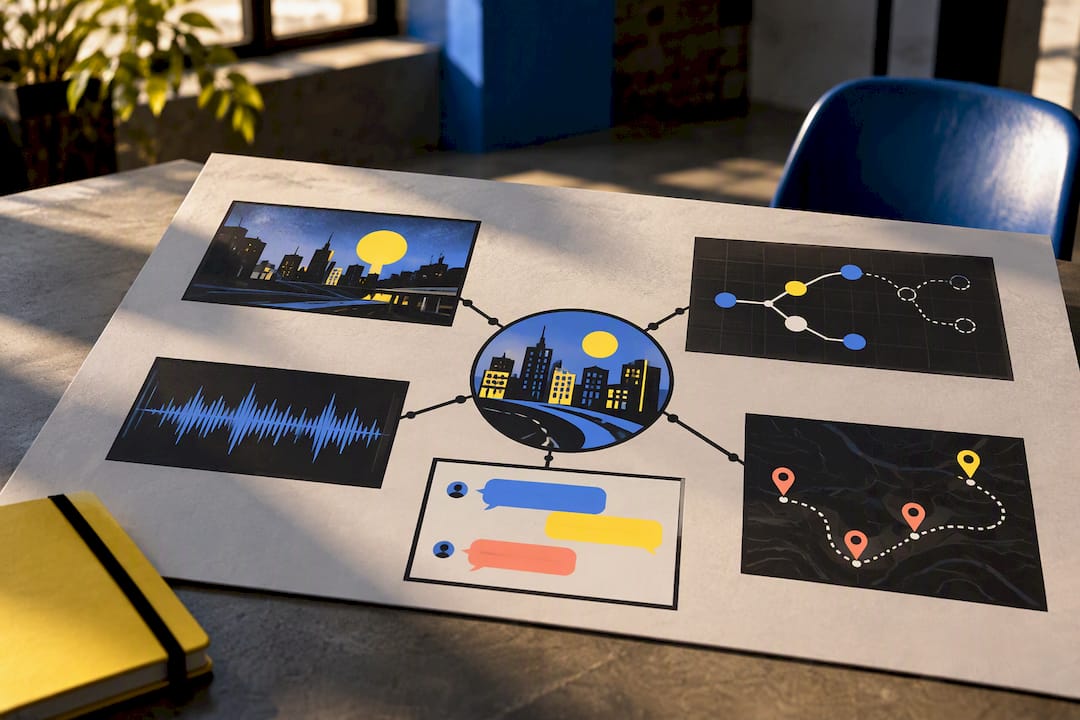
A story bible with a canon policy is the third, and it’s the one creators skip most often because it feels bureaucratic during early production. It isn’t optional at scale. Star Wars proves what happens without one.
Here’s a working sequence for building your own project:
Define your core story and identify which elements are essential canon versus optional extension.
Assign each planned platform a distinct narrative job before assigning it a budget.
Draft a story bible covering timeline, character facts, and canon ownership.
Prototype your riskiest asset (usually the interactive or participatory one) and test it with a small group.
Layer difficulty into any participatory element so multiple audience tiers can engage.
Sequence release so onboarding assets ship before reward assets that depend on prior context.
Platform type | Best narrative job | Typical budget priority |
Film or long-form video | Establishing core conflict and character | Highest |
Interactive game or app | Letting audiences make consequential choices | High |
Podcast or audio drama | Building intimacy and internal voice | Medium |
Social media | Staging real-time character interaction | Medium |
ARG or puzzle layer | Turning audience into investigator | Variable, scales with ambition |
Spend the biggest share of your budget where additive comprehension matters most; usually the flagship platform and whichever secondary platform carries plot audiences can’t get anywhere else. Everything else can run leaner, since its job is depth, not delivery.
Vain.'s Production Checklist for Building a Transmedia Project
Every transmedia build we’ve studied starts with the same unglamorous document: a story bible. At minimum, ours covers timeline, character facts, tone rules, and a single named canon owner with final say on contradictions.
Team roles matter just as much as the document. Someone owns canon. Someone owns platform-specific creative (video, audio, animation). Someone owns the participation mechanics if you’re building anything interactive. Splitting those roles cleanly prevents the exact contradictions that plagued Star Wars before its canon reset.
Draft the story bible before assigning any platform its content.
Prototype your riskiest platform (usually the interactive one) with a small test group before full production.
Track participation depth, not just volume, if your project includes any puzzle or investigative layer.
Review every new asset against the canon owner’s sign-off before publishing it.
Pro Tip: Budget your prototype phase as its own line item. Skipping it is the single most common reason transmedia projects launch with contradictions nobody caught in time. Vain.'s creative storytelling guide covers structuring these prototypes in more depth.
Why Transmedia Thinking Belongs in Brand Storytelling
Transmedia logic improves retention because it gives audiences more than one door into a story, and more doors means more chances someone stays engaged past a single viewing or a single purchase. A product launch built this way might use a short film to establish the product’s world, a behind-the-scenes podcast to build intimacy with the people making it, and a social layer where customers post their own use cases as canon-adjacent content. A cultural campaign might use a puzzle layer the way Knives Out did, giving casual fans a light entry point and dedicated fans a reason to dig deeper.
Neither scenario requires Star Wars money. It requires deciding, before production starts, what job each platform does that the others can’t. That’s the whole discipline, scaled to whatever budget you have.
— Vain.
Bring Your Transmedia Concept to Vain.
This approach to transmedia projects prioritizes story bible first, platform roles second, production last. That order is why the work holds together instead of reading as a film with some social posts bolted on.
Where a traditional agency hands you a single deliverable and calls it a campaign, Work that builds across video, audio, animation, and strategy under one coordinated canon prevents launches from ending up with three platforms telling three slightly different stories. If you’re planning a product launch or a cultural campaign that needs more than one entry point, start by reviewing Vain.'s services and reaching out with your project scope. We’ll help you map which platform earns which piece of the story before a single asset gets produced.
Sources
Henry Jenkins’ foundational writing remains the clearest starting point for anyone serious about the craft, particularly his original transmedia storytelling essay and its follow-up Pop Junctions breakdown. For franchise-scale case studies, the academic analysis of Star Wars canon and worldbuilding and the Knives Out campaign case study both document real production decisions worth studying line by line.
FAQ
What Is Transmedia Storytelling?
Transmedia storytelling is the practice of spreading integral pieces of one story across multiple platforms, with each medium contributing something the others don’t, as Henry Jenkins defined it. A film, a game, and a comic each carry a different piece of the same canon rather than repeating one story in three formats.
What Are Some Examples of Digital Storytelling?
Web-native examples include The Lizzie Bennet Diaries, which split its narrative across vlogs and character Twitter accounts, and alternate reality games like I Love Bees and Bolton Storyworld: Codename Winterhill, which released content on a participant-activated schedule. Both used platform-native formats to make audience action part of the storytelling itself.
What Are the 5 C’s of Storytelling?
Definitions of the “5 C’s” vary by source and discipline, and no single version applies universally to transmedia design. Rather than force a mismatched framework onto this topic, the design principles that actually govern strong transmedia work are additive comprehension, distinct platform roles, and a formal story bible with canon ownership.
Can You Give Examples of Transmedia Storytelling Case Studies Worth Studying?
The strongest case studies are The Matrix for additive comprehension, Star Wars for canon management, the Marvel Cinematic Universe for staged audience payoff, and the Knives Out campaign for layered audience participation. Each one pairs a distinct design principle with a concrete production decision you can study directly.
Does Vain. Help Produce Transmedia Campaigns?
Vain. offers video, audio, animation, and strategy services suited to coordinating a transmedia rollout across platforms. Pricing for these services is available on Vain.'s site after discussing project scope.
Recommended
Comments