Mixed Media Animation: Techniques, Examples and Planning


Mixed media animation combines two or more distinct techniques in a single piece: hand-drawn art with live action, stop motion with 3D, photographs and paper with motion graphics. The goal is one cohesive look that carries a clear story. When it works, it is a tapestry of talent in which each medium does the job it does best. When it is planned badly, it is a pile of styles fighting for attention. Below, we walk through how it works, how live-action and animation hybrids fit in, which productions set the standard, and what to settle before your first shoot day.
TL;DR
Mixed media animation blends techniques such as 2D, 3D, stop motion, photography and live action into one visual style, and a live-action animation hybrid is one of its oldest forms.
The craft rests on compositing: keying, tracking, rotoscoping and color grading make separate layers feel like one world.
In advertising, it lets you assign each medium to the scene where it delivers the most look for the budget.
The biggest risks are camera matching, shifting assets and time. Plan the pipeline, storyboard and shot list before you shoot.
We help brands, artists and organizations build this kind of work through video, animation, audio and strategy.
Table of Contents
What mixed media animation actually is
Think of it as collage in motion. One approach, described by a stock-footage library’s guide to the style, blends footage, photos, illustrations, drawings, stickers and graphic animation into a single visual language. It can be analog, with physical art put through a digital process, or fully digital with a handmade feel.
Three families cover most of what you will see:
Animation inside live action. A cartoon character, creature or graphic element moves through filmed footage.
Live action inside animation. Filmed performances are drawn over, painted over or placed into illustrated worlds.
Animation mixed with animation. Miniature sets with 3D characters, hand-drawn frames with polished 3D renders, or claymation beside illustration.
What unites them is intention. The viewer should feel that the mix is the idea, not a technical stunt.
How live-action animation hybrids fit in
A live-action animation hybrid is the best-known branch of the family. The form is older than most people expect: the earliest example on record is The Enchanted Drawing from 1900, in which a live man interacts with a hand-drawn face on an easel.
Much later, Who Framed Roger Rabbit raised the bar. Its effects team won an Academy Award for the most comprehensive blend of animation and live action to that date, with animated figures taking light from practical sources and interacting with physical objects and people. The production was effectively two productions: producer Frank Marshall compared it to making three movies. The American Society of Cinematographers’ account stresses that the live and animated elements needed consistent matching, with reference looks for color and depth.
So a hybrid is mixed media with one fixed ingredient: real people or real locations. Every other medium has to earn its place beside them.
The techniques behind the look
The visible magic is nearly always compositing, the craft of stacking separately made layers so they read as one image. These are the building blocks.
Keying and mattes
Keying removes a colored or lit background so a subject can sit on a new one. Animation World Network describes shooting live action separately, animating a stop-motion puppet against a screen, keying it out and compositing it over the live-action plate. The same account covers a checkerboard approach in which each frame is captured as a beauty shot and a back-lit silhouette matte, then layered over the background.
On the feature No Dogs or Italians Allowed, the team ran advance compositing tests and used keying, tracking, rotoscoping, depth reconstruction and color grading to combine stop motion, photography and live action. Their breakdown lists tools such as Ultra Keyer, Delta Keyer, Primatte and Planar Tracker, a useful picture of how many small decisions sit behind a single seamless frame.

Rotoscoping
Rotoscoping uses filmed footage as a drawing guide. It was invented by Max Fleischer in 1915, painting over live-action frames to give character movement realism. A modern showpiece is Undone, where rotoscope work projects and enlarges individual frames of live action so artists can build cartoon animation from them, with artists spread from Texas to Amsterdam.
Tools keep evolving. For GoFundMe’s 2022 animated stories, a production team shot actors on a white cyclorama, used AI rotoscoping to isolate them, processed frames at 10 frames per second, built backgrounds with generative tools and assembled 3D layers in After Effects. If you want to see how we think about keeping craft in charge when automation is on the table, read our piece on AI workflows that keep humans in control.
Camera matching and tracking
If the virtual camera does not move like the real one, the illusion breaks. In the Jam Van project, camera movements were maintained in Harmony so animators could work with framing and positioning, while After Effects handled the live-action plates and compositing. When photographic backplates were not yet available, the team built low-resolution proxy backgrounds so animators could judge the relationship between foreground and background.
Style discipline
One principle from Roger Ebert is often repeated in guides to the form: let the animation look like animation rather than straining to look real. Different media should feel like deliberate neighbors, not failed imitations of each other.
Examples worth studying
The table below pairs well-documented productions with the media they combine.
Production | Media combined | What to notice |
Undone (Amazon) | Live-action performance, oil-painted backgrounds, rotoscoped characters, 3D animation | Around 3,000 shots were storyboarded for the first season of eight 22-minute episodes, according to VFX Voice |
DuPont film (2008) | Miniature stop motion, CG, filmed clouds, live-action people | About 50 filmed passes for one destruction sequence and about 60 motion-control passes for a village-light sequence, per Motionographer |
A Cautionary Tail | Handcrafted miniature sets, 3D characters | 21 miniature sets built over four months, a five-day miniature shoot and three months of animation, reported by IF Magazine |
On Cloudboom Max commercial | Hand-drawn illustration, polished 3D shoe render | Roughly 1,400 hand-drawn frames made over weeks, according to Creative Boom |
Amazon Books campaign | Illustration, special effects, claymation, manga-inspired imagery | Five animated styles in one campaign, covered by The Drum |
The pattern across all five is the same. The mix was chosen because each ingredient could do something the others could not, and the teams paid for that choice in planning time.
Using mixed media in advertising
Brands reach for this approach for three practical reasons: recognition, flexibility and reach across formats.
Mascots in the real world. Starkist’s Charlie the Tuna spots put the animated character beside actress Candace Cameron Bure. According to a trade case study, one spot was shot entirely against green screen, with much of the environment built in post. A beloved character gets a believable stage without a location budget.
One idea, many surfaces. The Amazon Books work carried its mixed-media concept across a hero film, out-of-home posters and a 3D billboard, using roughly 15 to 20 reading-related emojis as campaign assets. A visual system built from many textures breaks apart into assets easily.
Budget-aware craft. The DuPont case shows mixed media used strategically: miniature, CG, cloud footage and live action were assigned scene by scene according to budget and the look each medium could deliver. That is a good mindset for any brand. You do not need every shot to be the most expensive technique, only the shots where it matters.
If your campaign leans on apparel or product storytelling, the same thinking applies to a campaign-first lookbook video, where texture, motion and styling carry the message.
What makes it hard, and how to plan for it
Mixed media rewards preparation and punishes improvisation. Four lessons come up again and again in production accounts.
Camera matching is the crux. On A Cautionary Tail, matching the cameras between live-action miniatures and 3D animation was the hardest part, and motion control slowed the shoot enough that the director minimized camera movement. Decide early how much the camera needs to move, because every move multiplies the matching work.
Frame counts add up fast. Nike’s Never Ask commercial required a 20-second, 240-frame stop-frame sequence, with extensive location scouting and a different printed poster or wall treatment for many frames. Seconds of screen time can mean weeks of handmade work.
Assets move. On Jam Van, photographers, animators and music-star videos were being produced at the same time, so planned elements changed and the schedule needed flexibility and extra time. Build slack into the plan and use proxies so animation can start before final plates arrive.

The niche is demanding. A Letterboxd essay on live-action and animation hybrids notes that only a few have become major hits, and that commitment and a sincere love for the medium’s history help them click. Passion shows on screen, and so does its absence.
A planning checklist before you shoot
Write the idea in one sentence, including why more than one medium is needed.
Assign each medium a job (for example: live action for emotion, 2D for fantasy, 3D for the product).
Storyboard first. Our guide to storyboards versus shot lists explains how the two documents work together on a hybrid shoot.
Lock the camera plan and decide where tracked or motion-controlled moves are truly needed.
Map the pipeline. The animation pipeline steps every project follows show where reviews and approvals belong.
Set the look reference for color, depth and texture, so every department matches the same target.
Choose a motion language. Our guide to motion graphics styles helps you pick the graphic layer that sits well beside footage.
Plan how the team works together. A remote production workflow keeps animators, editors and sound in sync when the crew is spread across cities.
For a wider view of the stages behind any shoot, our complete video production guide and film production stage-by-stage overview fill in the surrounding steps.
Perspective: why we believe in the mix
We love mixed media because it is the clearest expression of what we do: making the ordinary extraordinary through content, collaboration and culture. A single technique can be excellent. A well-chosen combination can feel like a signature. Our approach starts with intention. Before any frame is drawn or shot, we ask what each medium is for, who on our network of collaborators is best placed to handle it, and how the pieces will meet in the final image. Illustrators, cinematographers, sound designers and compositors are visual architects working on the same building, and the project is strongest when they share a blueprint from day one. We also think sound belongs in the conversation from the start. Texture on screen deserves texture in the mix, and the emotional heartbeat of a hybrid piece often lives in its audio. That is why we bring video, audio, animation and strategy together under one roof, so the idea, the look and the audience plan stay connected. If you have a story that deserves more than one way of being told, we would love to hear it. Vain.
Bring your mixed media project to Vain.
We are a creative media and technology company in New York City, and we work with brands, artists and organizations on video, audio, animation and strategy. If you are weighing a hybrid concept, we can help you shape the idea, choose the mix of media and plan the production around your goals. Start with our creative services and tell us what you are imagining.
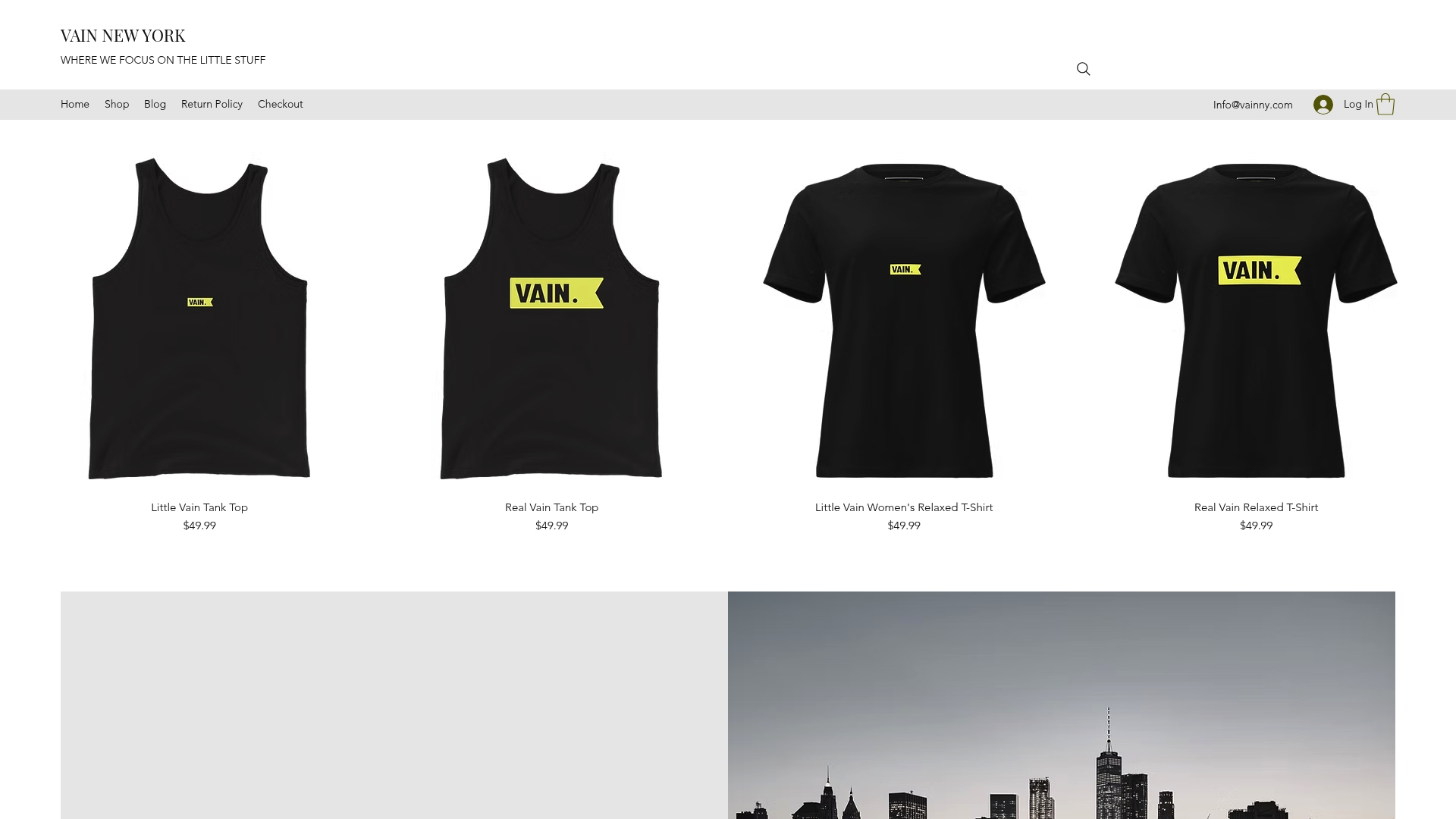
If you would like to wear the studio too, our made-to-order apparel includes the Studio Tank Top at $49.99, the Studio T-Shirt at $59.99 and the Studio Hoodie at $99.99, all available on our site.
FAQ
Is mixed media animation the same as a live-action animation hybrid?
Not exactly. A live-action animation hybrid is one kind of mixed media animation, where animated elements share the screen with filmed people or places. Mixed media is the wider category and also covers combinations such as stop motion with 3D, or hand-drawn frames with a rendered product.
Which techniques are used most often?
Compositing sits at the center: keying, tracking, rotoscoping and color grading let separate layers read as one image. Around that, teams add 2D, 3D, stop motion, miniatures, photography and motion graphics, depending on the look the idea calls for.
Why would a brand choose mixed media for an ad?
It gives a campaign a distinctive look and lets you place each medium where it adds the most. Mascots can step into real settings, and a visual system built from several textures can be repurposed across films, posters and out-of-home formats.
What should I settle before production starts?
Define why each medium is in the piece, storyboard the sequence, and plan the camera moves early, since camera matching is often the hardest step. Allow extra time for changes in assets, and map the full pipeline so reviews happen at the right stages.
Sources
Recommended
Comments