Comfort Colors vs Gildan: Which Blank Fits Your Shirt or Hoodie?


Gildan is the dependable, budget-friendly workhorse, and Comfort Colors is the softer, garment-dyed blank with a lived-in look. The two are closely related, but they do different jobs. Gildan suits volume, uniformity and tight unit costs. Comfort Colors suits pieces where the feel and color of the garment are part of what people are buying. We make branded apparel to order at Vain., so we think about this choice from the first sketch of a collection, not just the print.
TL;DR
Gildan 5000 is a 5.3 oz tee with a firmer, traditional hand. Comfort Colors 1717 is a 6.1 oz ring-spun tee with a softer, more relaxed feel.
Comfort Colors is garment-dyed, so shades vary naturally. Gildan’s piece-dyed color is more uniform from order to order.
For hoodies, Gildan 18500 is 8.0 oz/yd² (about 271 GSM). Comfort Colors 1567 is 9.5 oz/yd² (about 322 GSM).
GSM measures fabric weight, not quality. Fiber blend, knit and construction decide how a hoodie actually feels.
Pick by the garment’s job: giveaways and events favor Gildan, while a garment that is the product favors a softer blank.
Table of Contents
How the two brands relate
Before comparing, it helps to know that Gildan owns Comfort Colors. The two share a parent company, and that explains why the comparison is less about good versus bad and more about two positions on the same shelf. Gildan covers a very wide catalog at a range of prices. Comfort Colors concentrates on a smaller range of garment-dyed cotton apparel for buyers who want a more premium feel.
So the question is not which brand wins. It is what your garment has to do. A shirt handed out to four hundred people at a conference has a different job than a tee that sits in a shop next to a $60 price tag.
Comfort Colors vs Gildan tees: the numbers side by side
The two most compared styles are the Gildan 5000 and the Comfort Colors 1717. Here is what the manufacturers publish for each.
Feature | Gildan 5000 | Comfort Colors 1717 |
Weight | 5.3 oz | 6.1 oz/yd² |
Fiber | 100% cotton | 100% ring-spun U.S. cotton |
Dye method | Piece-dyed | Garment-dyed |
Feel | Firmer, traditional | Softer, lived-in |
Fit | Classic, structured | Relaxed, tubular body |
Sizes | Varies by color | S to 4XL |
The Gildan 5000 spec sheet lists a 5.3 oz Heavy Cotton tee with a seamless double-needle 7/8-inch collar, taped neck and shoulders, and double-needle sleeves and hem. It also notes that not every size is offered in every color, which matters when you plan a multi-color run.
The Comfort Colors 1717 page describes a 6.1 oz/yd², 100% ring-spun U.S. cotton tee, garment-dyed for a lived-in vintage feel with almost no shrinkage at home. It has a relaxed-fit tubular body, a topstitched classic-width rib collar, shoulder-to-shoulder twill tape and a signature twill label. Sizes run S to 4XL.
Quality and feel
Feel is where most people notice the difference first. Ring-spun cotton and garment washing make the 1717 smoother and softer from the first wear. The Gildan 5000 has the firmer hand people associate with a classic ringer or promotional tee. Neither is wrong. A firm tee holds a crisp silhouette and takes ink predictably, while a soft tee reads as a worn-in favorite.
Durability is more about construction than brand name. Both styles use reinforced seams, with double-needle hems and taped shoulders. Gildan’s range is wide, so you can match the garment to a rough-use case such as events, crews and uniforms.
Color is the other half of feel. Comfort Colors lists 67 colors on the 1717 page: 52 pigment-dye colors in soft, dusty, faded tones and 13 direct/reactive-dye colors with a more even appearance. The brand also says it uses OEKO-TEX certified low-impact dyes, is a member of the U.S. Cotton Trust Protocol, and uses a Pigment Pure process that it says needs three times less water, 40% less process time, less energy and no salt compared with conventional reactive dyeing.
Garment-dyed vs piece-dyed: character or control
This is the decision that surprises people most. In garment dyeing, the shirt is sewn first and dyed afterward. That gives the soft, washed, slightly irregular look, and it also means no two shirts, and no two batches, are exactly identical. Piece-dyed fabric is dyed before cutting and sewing, so the color is more uniform across an order.

If you want a vintage look, variation is the feature. If you need twelve shirts to match exactly for a team or a booth, uniformity is. This explainer on garment dye versus piece dye lays out the trade-off for small brands that want character without losing control over reorders.
There is a practical print tip hidden in here. Color choice changes how artwork reads, and muted garment-dyed tones behave differently from saturated ones. Our guide to color psychology in apparel design walks through how a garment color shapes the message of a graphic.
Sizing and fit
Gildan sizing tends to be predictable from run to run, with a classic, structured fit. Comfort Colors cuts relaxed, and the 1717 body runs slightly shorter than the Gildan 5000. Some buyers size up when they want a truly oversized look.
Three things to check before you commit to a size run:
The brand’s own size chart for the exact style. Never assume the number from one style carries over to another.
Body length, not only chest width. A shorter, boxier cut changes where a chest print lands.
A sample in hand. Put one on and wash it once before ordering a full run.
Shrinkage belongs in the same check. Comfort Colors states that its garment-dyed styles have almost no shrinkage at home. With any 100% cotton tee, wash cold and dry on low, and read the care label on the exact style you buy.
Heavyweight hoodie blanks: the same split, with more at stake
Hoodies raise the stakes because the blank is a bigger part of the price and the feel. The two usual references are the Gildan 18500 and the Comfort Colors 1567.
Feature | Gildan 18500 | Comfort Colors 1567 |
Weight | 8.0 oz/yd² (about 271 GSM) | 9.5 oz/yd² (about 322 GSM) |
Blend | 50% U.S. cotton / 50% polyester (solid colors) | 80% ring-spun U.S. cotton / 20% polyester |
Look | Classic fit, loose comfort | Garment-dyed, washed vintage |
Typical job | Teams, schools, events | Premium collections |
The Gildan 18500 page lists 8.0 oz/yd² in a 50/50 cotton-polyester blend with a classic fit, and describes the style as a surface that makes designs pop. The Comfort Colors 1567 page lists 9.5 oz/yd² fleece in 80% ring-spun U.S. cotton and 20% polyester, with a cotton face for enhanced printability.
When you compare hoodie blanks, look at four things:
Fabric weight and how it suits where the hoodie will be worn.
Fiber blend, especially a high-cotton face if you plan to print with direct-to-garment methods.
Construction, such as a double-lined hood and clean side seams.
Reorder consistency, which matters the moment a design sells out and you want the same hoodie again.
What GSM means, and why 400 GSM gets so much attention
GSM stands for grams per square meter. It measures how much a square meter of the fabric weighs. Americans usually see the same idea as ounces per square yard, and the conversion is simple: one oz/yd² equals about 33.906 GSM. That gives you a quick way to translate across labels:
oz/yd² | Approximate GSM |
5.3 (Gildan 5000 tee) | 180 |
6.1 (Comfort Colors 1717 tee) | 207 |
8.0 (Gildan 18500 hoodie) | 271 |
9.5 (Comfort Colors 1567 hoodie) | 322 |
11.8 | 400 |
Higher GSM usually means thicker, warmer, more opaque fabric. It does not by itself tell you about softness, drape, fit or print performance. A 400 GSM fleece is typically described as structured and boxy, the weight at which a hood can stand up behind the neck.
There is no official cutoff for heavyweight. Brands draw the line differently, but most hoodie makers put it somewhere around 350 to 400 GSM and above. By that yardstick, both 18500 and 1567 are standard to midweight fleece, and a true 400 GSM hoodie is a different, denser garment.
For a plain-language tour of how weight shifts drape, warmth and intended use, this t-shirt weight guide is a good companion read.

Heavyweight vs midweight: how to choose
Match weight to wear, not to a number on a hangtag:
Midweight (roughly 270 to 330 GSM): layers well, wears across more seasons, and suits mild climates and indoor wear.
Heavyweight (roughly 350 to 400 GSM and up): warmer, more structured, holds an oversized shape, and suits cold winters.
Fiber matters as much as weight. Cotton-polyester and 100% cotton behave differently at the same GSM, and brushed fleece feels warmer than smooth fabric at the same weight. A very heavy hoodie can be too much in a heated office, while a lighter one under a jacket is often perfect. Weight tolerances also exist. A typical fabric-weight tolerance in the industry is about plus or minus 5%, so two hoodies sold as the same GSM can differ slightly.
How to decide: a simple framework
Use these four questions in order.
Is the garment the product, or a carrier for the message? If people are buying the garment itself, as in a retail drop, softness and color character carry real weight. If the shirt is a giveaway, uniform and cost lead.
How much color consistency do you need? Matching teams or repeat orders favor piece-dyed uniformity. A vintage look favors garment dyeing.
Which print method? A smooth, high-cotton face is easier to print on. Read our explainers on direct to garment printing and DTF versus screen printing to see how each method meets the fabric.
Where will it be worn? Climate and layering should set your GSM, not fashion trends.
If you are building a whole line, our walkthrough on the graphic tee collection process shows where the blank decision sits among artwork, sampling and sizing.
We think a blank is the first design decision, not the last. Before a graphic is placed, the weight, hand and color of the garment have already told people what the piece is. That is why we approach apparel the way we approach a film set: every department matters, and the quiet craft is what makes the final frame feel considered. Our studio pieces are made to order with precision and care, so each one is produced for the person who ordered it rather than pulled from a pile. The same instinct runs through our creative work in video, audio, animation and strategy. We bring a network of collaborators to a project, and we ask what the object or the story needs to do before we choose how to make it. A hoodie that anchors a collection and a tee that supports a campaign deserve different answers, and we like helping people find them. Vain.
Our perspective
When the garment is the product
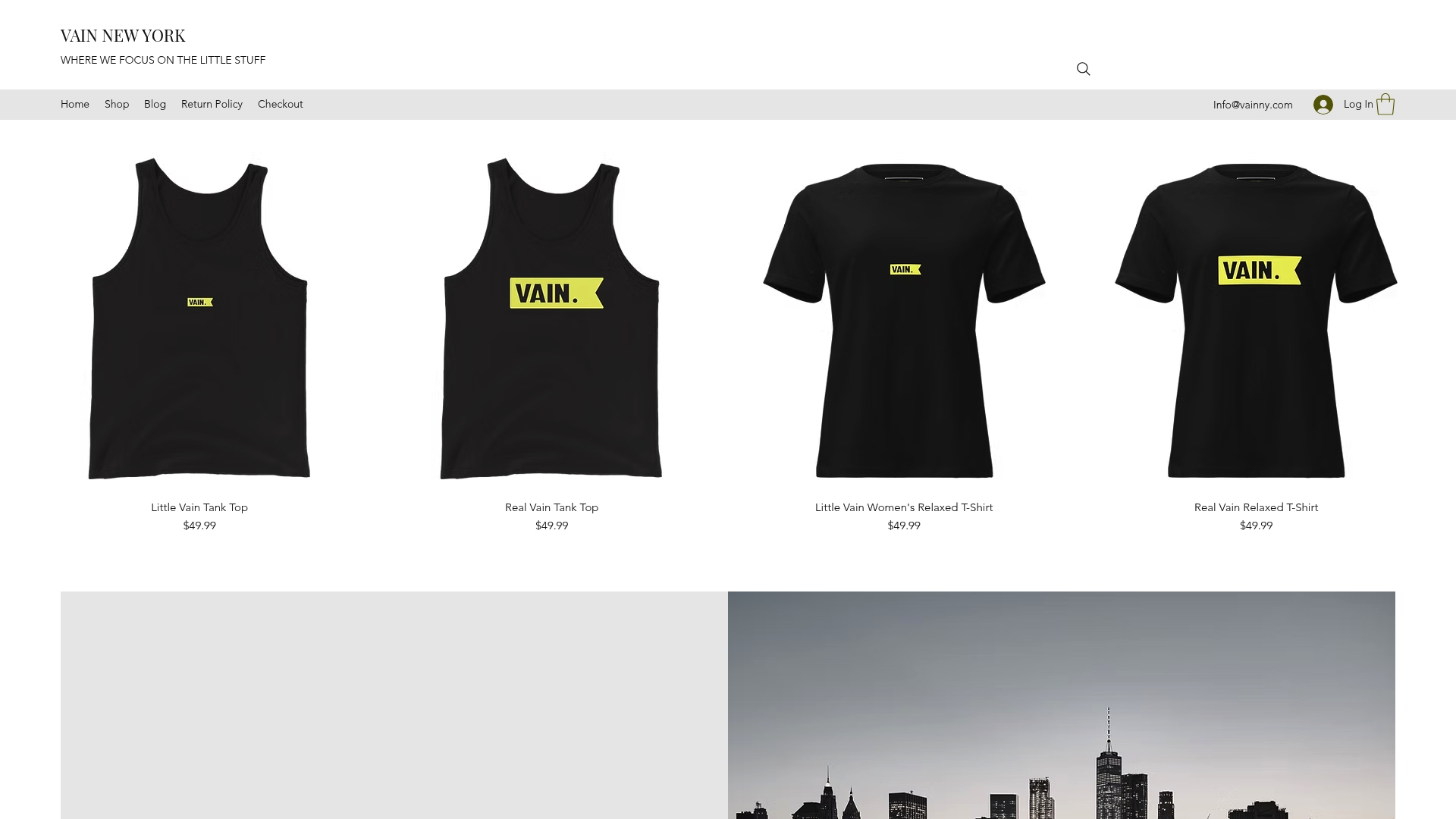
Once you have decided that the garment itself matters, the question becomes who makes it well and in the quantity you need. Our studio line is made to order, from the Studio T-Shirt at $59.99 to the Premium Studio Sweatshirt at $89.99 and the Studio Hoodie at $99.99. The range also includes a Studio Tank Top at $49.99, a Long Sleeve Studio Shirt at $69.99 and a Crop Studio Hoodie at $79.99.
If you are a brand, artist or organization planning merchandise as part of a larger launch, our team also handles the creative around it: video, audio, animation and strategy. You can see what we do at Vain..
Quick answers on care and longevity
A few habits protect any blank, whichever brand you choose:
Wash cold and inside out to protect both fabric and print.
Dry on low heat, or hang dry, especially for 100% cotton.
Keep a care label on hand and follow the exact instructions for your style.
Expect garment-dyed colors to continue to soften and fade slowly, which is part of the appeal.
For anything printed, ink type matters as well as the blank, so check the print method’s care notes before the first wash.
FAQ
Is Comfort Colors better than Gildan?
Neither is better across the board. Comfort Colors is softer and garment-dyed, with a relaxed fit and a vintage look. Gildan is more affordable, more uniform in color and available in a much larger range of styles. Choose by what the garment has to do.
Do Gildan and Comfort Colors come from the same company?
Yes. Gildan owns Comfort Colors, so they share a parent company while serving different needs. Gildan covers volume and range, and Comfort Colors focuses on garment-dyed cotton apparel.
What does GSM mean in a hoodie?
GSM is grams per square meter, a measure of fabric weight. Higher numbers usually mean thicker and warmer fabric, but fiber blend and construction also change how a hoodie feels. To convert from ounces per square yard, multiply by about 33.906.
Is 400 GSM a heavyweight hoodie?
Yes. There is no official cutoff, but most brands place heavyweight at roughly 350 to 400 GSM and above, so 400 GSM counts as properly heavy. It is dense, warm and structured, and best suited to cold climates.
Do Comfort Colors shirts shrink?
Comfort Colors states that its garment-dyed styles have almost no shrinkage at home. Follow the care label for your exact style, wash cold and dry on low for the best results.
Sources
Recommended
Comments