Live Event Production: A Complete Guide for Professionals

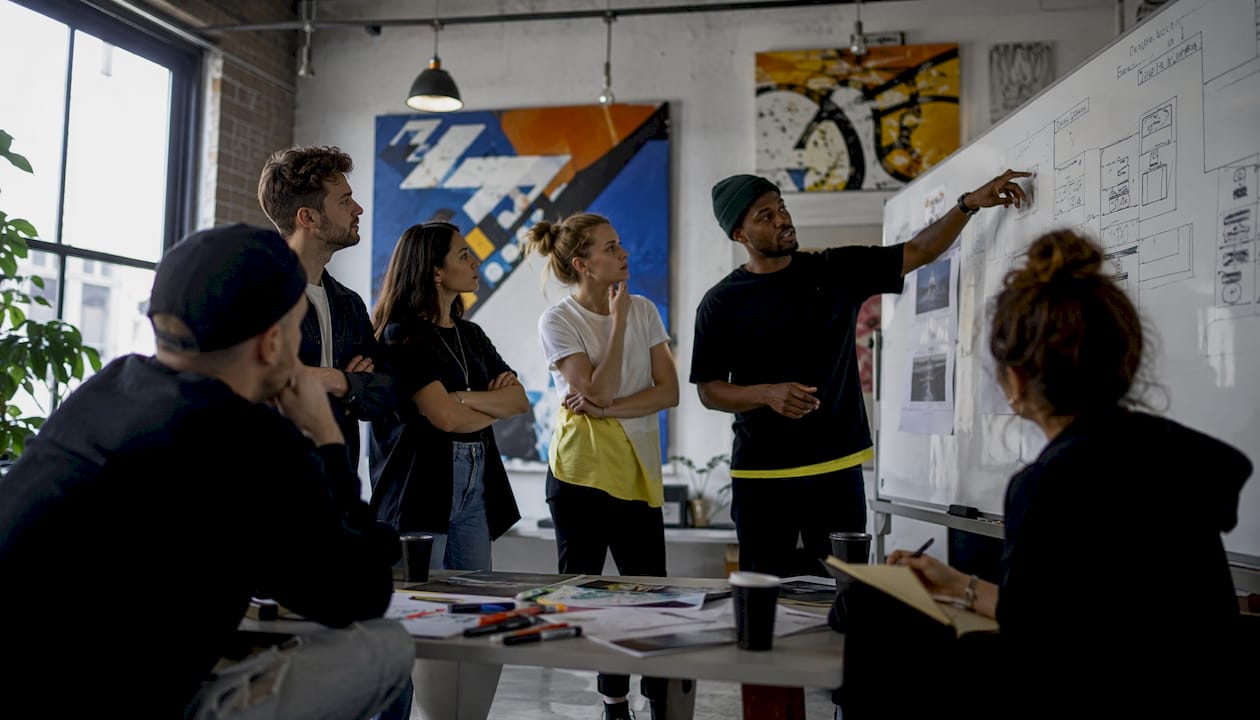
What is live event production, and how does it differ from planning?
Live event production is the technical and creative execution of live experiences, covering audio, video, lighting, staging, and rigging to shape everything the audience sees and hears. It is distinct from planning and management in ways that matter enormously when something goes wrong at showtime.
Here is how the three disciplines actually break down:
Event planning is strategic. A planner sets goals, selects the venue, builds the budget, and manages the guest list.
Event management is operational. A manager runs registration, coordinates vendors, and handles logistics on the day.
Live event production is technical and creative. A production team designs and operates everything on stage and screen: the audio, video, lighting, rigging, and scenic build.
Conflating these roles leads to real failures, including mismatched cues, incompatible equipment, and no one accountable for what the audience actually experiences. Production focuses on a multi-stage process: pre-production planning months in advance, on-site installation, real-time show operation, and load-out after the final guest leaves.
The five core technical disciplines inside every full-service production are:
Audio: sound reinforcement, wireless microphones, playback, and recording
Video: cameras, LED walls, projection, content playback, and live streaming
Lighting: stage wash, key and fill lighting, moving heads, and ambient design
Staging and scenic: physical stage construction, set pieces, and branded backdrops
Rigging: engineered hanging points for trusses, LED walls, speaker arrays, and scenic elements
Understanding these five disciplines is the foundation for evaluating any production partner or planning any live event with confidence.
How the live event production process works from start to finish
Great productions are built long before the audience walks in. The process moves through five distinct phases, each with its own crew responsibilities, documentation requirements, and timing pressures.
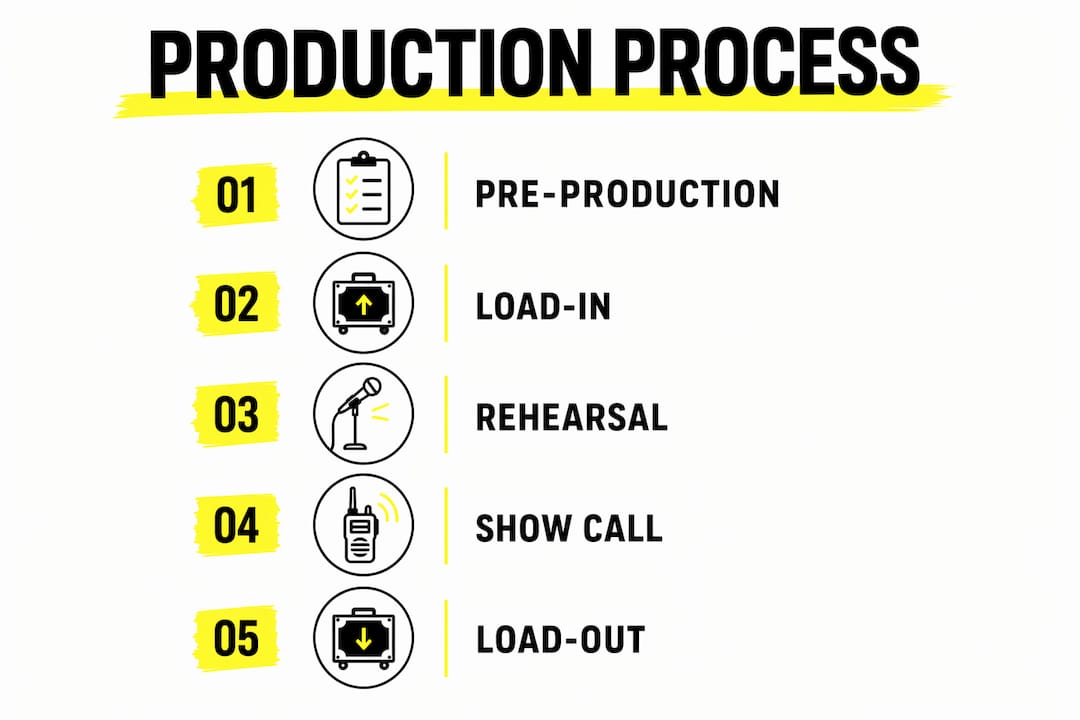
1. Pre-production
Pre-production is where the production design takes shape. The team builds room diagrams, LED wall sizing specifications, lighting plots, audio coverage maps, power calculations, and rigging plans. These documents are not administrative formalities. They are the safety and performance blueprint for everything that follows, and they must meet venue compliance standards before a single cable is pulled. Production also coordinates with the venue on load-in windows, freight elevator access, power drops, and union labor rules.
2. Load-in
The crew typically arrives at 6:00 AM the day before the show. Rigging goes up first because everything else hangs from it. Then audio, lighting, video, and scenic follow in roughly that order. A 500-person keynote with a 16-by-9-foot LED wall, a full lighting rig, line array audio, and scenic build takes a crew of 12–20 people approximately 8–12 hours to install and tune. Crew size scales with event complexity, and medium to large events often require union labor in major markets.
3. Rehearsal and tech checks
Speakers walk the stage. The production team runs cues with the content decks. This is where most last-minute changes surface, because a presenter always wants something adjusted once they see it live. Build rehearsal time into the schedule, ideally the evening before or the morning of the event. Cue runs, speaker walk-throughs, and final adjustments to audio levels and lighting positions all happen here.
4. Show call
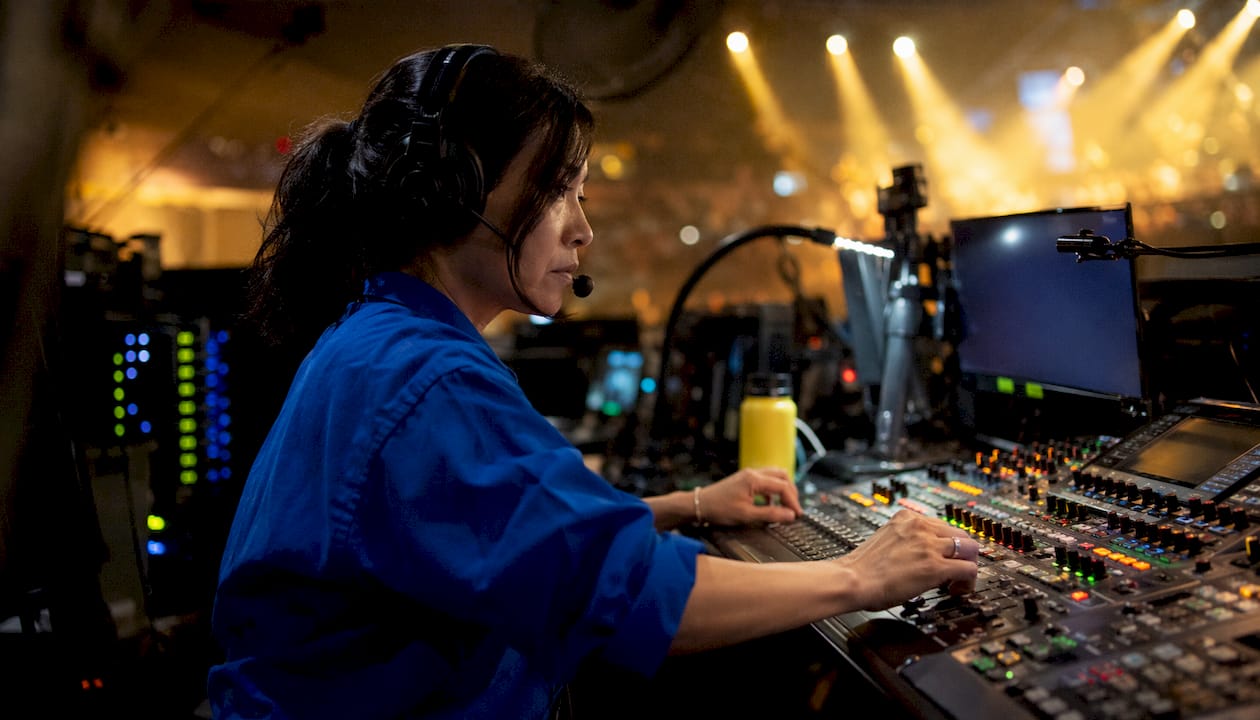
During the event, a show caller runs cues from a headset position at the back of the house. Video switching, lighting cues, audio changes, camera cuts, LED wall content, and speaker transitions are all called by one person in real-time communication with the full crew. That coordination is the nerve center of the live show.
5. Load-out
Load-out begins within minutes of the last guest leaving. A crew of about 20 professionals can usually dismantle a keynote setup for several hundred attendees in a few hours depending on rigging complexity. Experienced teams follow detailed strike plans that dictate the exact order of dismantling to avoid bottlenecks at freight elevators and minimize equipment damage risk.
A note on budgeting: build a contingency buffer into every production budget to cover unexpected technical costs or last-minute adjustments. The live event environment moves fast, and site conditions rarely match the original plan exactly.
What each technical discipline actually involves
Each of the five disciplines carries its own equipment demands, creative challenges, and safety requirements. Understanding them at this level separates informed clients from ones who get surprised on show day.
Audio
Audio coverage is the single most critical deliverable in corporate events. Executives cannot be hard to hear. Audio design covers speaker placement for even coverage across the room, wireless frequency coordination to prevent dropouts, and backup microphones for every primary. Line array systems distribute sound evenly in large rooms; point-source systems work for smaller, more intimate formats. Wireless coordination across multiple channels requires a dedicated engineer who maps frequencies before the show and monitors them throughout.
Video
Cameras, switching, LED walls, projection, playback servers, and live streaming for hybrid audiences all fall under the video discipline. Pixel pitch matters more than most planners realize. For a 500-person room with cameras in the house, a 2.6 mm or 2.9 mm LED wall ensures the video looks crisp on broadcast, not just to the live audience. Hybrid production is not a camera in the back of the room. It requires dedicated streaming encoders, separate audio mixes for broadcast, and camera operators focused on the virtual feed.
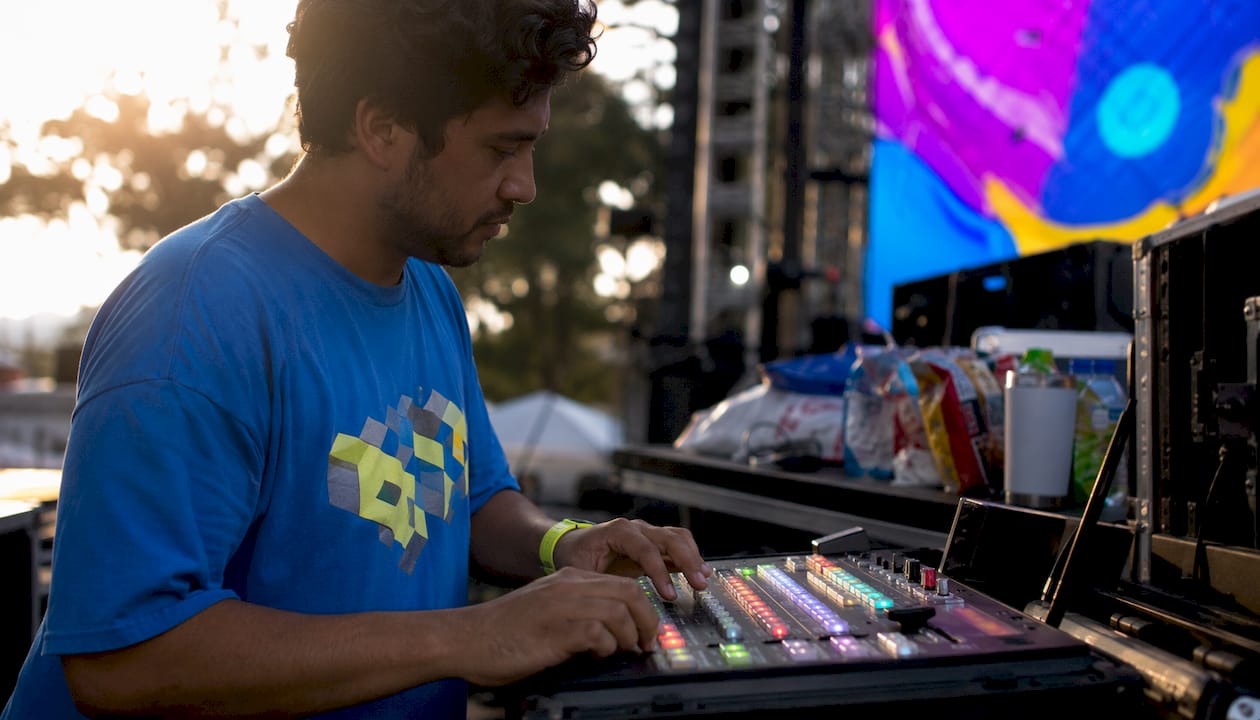
Pro Tip: When speccing an LED wall for a hybrid or broadcast event, always confirm the pixel pitch with your production partner before finalizing the design. A wall that looks great to the live audience can read as pixelated on camera if the pitch is too coarse for the shooting distance.
Lighting
Stage wash, speaker key lighting, audience ambient lighting, LED accents, and moving heads for dynamic looks all live under lighting design. For corporate events with cameras, lighting must serve both the audience and the lens. A room that looks great to the eye can look flat or overexposed on camera without specific key and fill ratios. Lighting design for broadcast-quality corporate events is a specialized skill, not a general AV add-on.
Staging and scenic
The physical stage build, set pieces, backdrops, custom scenic, and branded elements define the visual world the audience inhabits. Corporate scenic tends to be more restrained than concert scenic, but anything above head height still requires structural engineering. Cheap scenic reads as cheap on camera. Treating the stage backdrop as a brand asset rather than a prop is the mindset that separates polished productions from forgettable ones.
Rigging
Every point where something hangs from the ceiling needs engineered rigging. That includes LED walls, lighting trusses, speaker arrays, and scenic elements. Rigging is the most safety-critical discipline in live production, and the one most planners understand least. Every venue has different rigging rules, weight limits, and labor requirements.
Rigging is not a DIY discipline. Engineered hang points, load calculations, and venue compliance documentation are the minimum standard for any production where equipment is suspended above an audience. Cutting corners here is not a budget decision. It is a liability decision.
We also want to emphasize technical redundancy across all five disciplines. Backup microphones, hardwired video feeds, and standby computers prevent failures the audience never sees but that would be catastrophic if they occurred. For keynote-level and executive events, redundancy is the minimum spec, not a luxury upgrade. You can learn more about how media production disciplines connect across live and recorded formats.
Who does what on a live event production team?
A live production runs on a team of specialists who each own a specific domain and communicate in real time throughout the show. Here is how the core roles break down:
Role | Primary Responsibility |
Producer | Owns the overall vision, budget, and client relationship from pre-production through strike |
Technical Director | Leads technical design across all five disciplines and makes real-time decisions during the show |
Stage Manager | Controls talent flow, cues, and on-stage logistics during rehearsal and show call |
Show Caller | Calls every cue live from a headset position, coordinating audio, video, lighting, and stage transitions |
Audio Engineer | Designs and operates the sound system, manages wireless frequencies, and mixes live |
Lighting Technician | Programs and operates lighting consoles, executes cues during the show |
Video Operator | Manages cameras, switching, LED wall content, and streaming feeds |
Rigging Crew | Installs and certifies all hanging points, trusses, and suspended equipment |
The producer and technical director set the direction. The stage manager and show caller execute it in real time. Every other specialist reports into that chain through headsets during the show, creating a communication loop that keeps every moving part synchronized.
Team size scales with event complexity. A small internal meeting might run with a crew of four or five. A multi-day executive summit with cameras, a custom LED build, and hybrid streaming can require 20 or more crew members across all disciplines. For crew management best practices specific to media and production environments, the principles of clear role definition and pre-event briefings apply directly here.
The most common failure point in team structure is unclear communication authority. When two people think they are calling the show, cues get missed. One show caller, one headset chain, one decision-maker per discipline during the live event.
How to evaluate and choose a live event production partner
The right production partner is not the one with the most polished sales deck. It is the one who can demonstrate technical depth, pre-production rigor, and a clear plan for when something goes wrong.
Here is what to assess before signing:
In-house capability across all five disciplines. A vendor who subcontracts rigging or video may not have full accountability when those elements fail. Choosing a vendor with all five disciplines in-house or with verified, long-term subcontractors is the standard worth holding to.
Pre-production documentation. Ask to see a sample room diagram, lighting plot, or audio coverage map from a past event. Partners who produce detailed technical documents before load-in are partners who have done this before.
Technical redundancy plan. Ask directly: what is the backup if the primary audio feed drops? What happens if the LED wall loses signal during the keynote? A good partner answers without hesitation.
Track record with your event format. A company that excels at festival production may not have the corporate keynote experience your executive summit requires. Ask for references from events of similar size and format.
Transparent cost structure. Understand which decisions drive cost: event duration, crew call times, gear complexity, and whether content creation or streaming is included. A 10–15% contingency buffer should be built into the budget from the start, not added as a surprise at the end.
Pro Tip: Ask every production vendor for a detailed equipment list and proof of safety certifications for their rigging crew. Any partner worth hiring will provide both without hesitation. If they push back, that tells you something important about how they operate.
For events with a hybrid component, the bar rises further. Hybrid event design requires dedicated infrastructure for the virtual audience, not a camera pointed at the stage. Confirm that your partner has experience producing two distinct audience experiences simultaneously, with separate audio mixes and streaming redundancy. The technical coordination involved in corporate event production is a discipline in itself, and the best partners treat it that way.
Post-event wrap-up and evaluation
The show ending is not the production ending. What happens in the hours and days after the event shapes the quality of every production that follows.
Load-out is the first priority. Strike plans dictate the exact order of dismantling, from rigging down to cables, to protect equipment and meet venue turnaround deadlines. Experienced crews manage the removal sequence to prevent bottlenecks at freight elevators and avoid damage to gear that will be used on the next show. A disorganized load-out is not just inefficient. It is a safety risk when heavy equipment is moving through a space that may still have venue staff or vendors present.
Within 48 hours of the event, the production team should conduct a debrief covering what worked, what failed, and what needs to change. This includes a technical review of any equipment issues, cue misses, or audio dropouts, as well as a client-facing summary of deliverables and outcomes. Post-event documentation, including updated room diagrams, revised run-of-show notes, and equipment logs, becomes the starting point for the next production.
Client evaluation matters too. Gathering feedback from the event planner, the client stakeholder, and key speakers gives the production team data that no internal debrief can replicate. The best production companies treat this feedback as a design input, not a report card. It directly informs how they approach the next event of similar scale or format. For teams tracking industry trends in media and entertainment, post-event evaluation is also where emerging technology decisions, like new LED formats or streaming platforms, get stress-tested against real audience experience.
Common challenges during live productions and how to handle them
Live events do not allow second takes. The challenges that arise during a show are predictable enough to prepare for, even when the exact form they take is not.
Wireless frequency interference is one of the most common audio problems in corporate environments. Hotels and convention centers run their own wireless networks, and competing signals can cause dropouts mid-presentation. The fix is pre-show frequency coordination using a spectrum analyzer, with backup frequencies assigned and ready to deploy. An experienced audio engineer does this as a matter of course, not as a response to a problem.
LED wall signal loss during a keynote is a high-visibility failure. The mitigation is a hardwired backup feed from the content playback server, with a standby computer ready to take over if the primary drops. This is standard practice for keynote-level events and should be confirmed with your production partner before show day.
Presenter changes at the last minute are nearly universal. A speaker swaps their deck, changes their running order, or adds a video clip 20 minutes before they go on. The show caller and stage manager absorb these changes and update the run-of-show in real time. The key is having a production team that communicates changes across all disciplines immediately, so the lighting, video, and audio operators are all working from the same updated information.
Venue power issues surface during load-in when the actual available power does not match what the venue promised. Pre-production power calculations and a site survey before design finalization catch most of these conflicts before they become show-day emergencies. When they do surface on site, the technical director makes real-time decisions about load balancing and generator deployment.
Hybrid streaming failures are the most damaging in terms of audience experience, because the virtual audience has no fallback. Redundant stream paths, a dedicated streaming technician, and a pre-show test with the streaming platform are the standard mitigations. Treating the virtual audience as a primary deliverable, not an afterthought, is what separates productions that handle hybrid well from ones that do not. More on building that dual-audience experience is covered in our video production guide.
Ready to produce something worth remembering?
At Vainnewyork, we bring the same creative intensity and technical discipline to every production we touch. Whether you are planning a corporate keynote, a brand activation, or a hybrid event that needs to land for both rooms, we build experiences that audiences carry with them long after the lights go down. If you are ready to move from planning to execution, start here and let’s build something together.
Key Takeaways
Live event production succeeds when technical design, disciplined pre-production, and coordinated team execution work together across audio, video, lighting, staging, and rigging.
Point | Details |
Production differs from planning | Production owns technical execution on stage; planning handles logistics and venue strategy. |
Crew and timeline scale with event size | A 500-person keynote requires 12–20 crew members and 8–12 hours for installation. |
Budget for contingency | Build a 10–15% buffer into every production budget to absorb last-minute technical changes. |
Redundancy prevents visible failures | Backup microphones, hardwired video feeds, and standby computers are the minimum standard for keynote events. |
Post-event debrief drives improvement | Technical reviews and client feedback within 48 hours become the design input for the next production. |
Recommended
Comments