One Shoot, Three Cuts: Case Study Video Format for Marketers

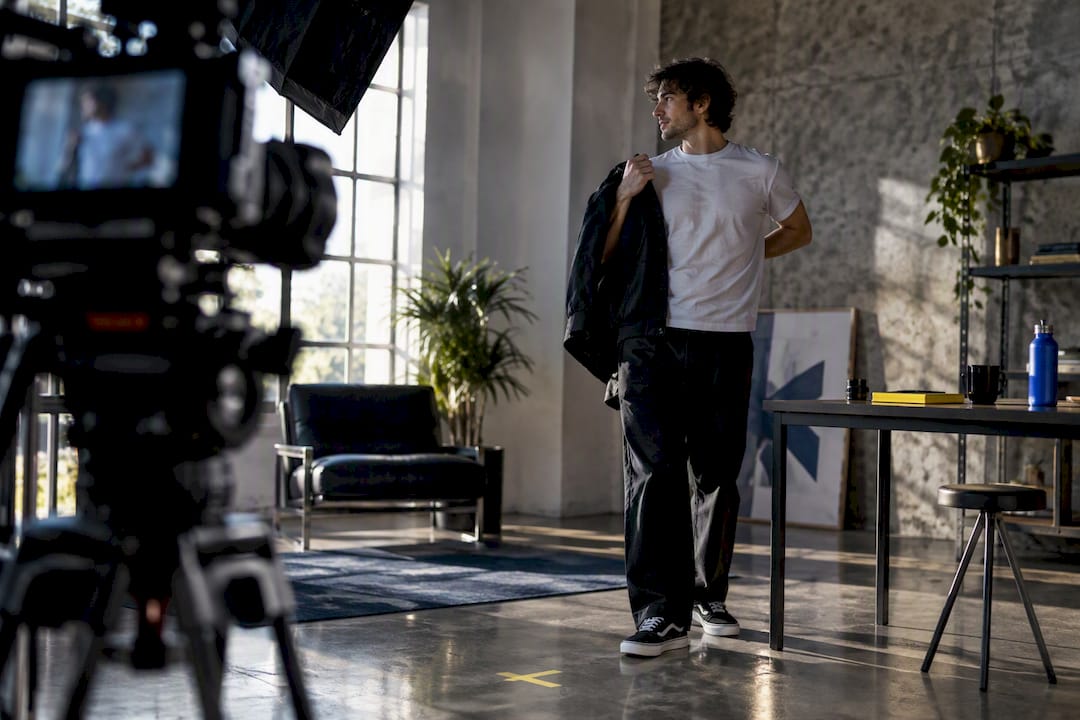
Start with the outcome, not the company name. The strongest case study video format follows a tight arc: result first, then the problem that made it hard, then the decision and the proof. Plan every shoot to deliver at least three cuts, a social proof clip, a sales cut, and a full story, and lock your interview questions and any numbers the customer will say on camera before you press record.
TL;DR:
Short testimonial videos under one minute are effective for top-funnel retargeting, while longer narrative and ROI formats are better for mid- and late-stage deals.
Scripts should follow a specific order, guiding the customer from context to metrics, with numbers presented twice to ensure approval and clarity.
Planning interviews to produce multiple cuts allows content reuse across social, sales, and website channels, extending the value of each shoot.
Pre-approval of claims, delivering transcripts within 48 hours, and involving legal early prevent delays and rework, ensuring a smooth production process.
Specificity in customer stories and peer proof outperform polished but vague features, making authenticity and real results key to persuasion.
Table of Contents
What Is the Best Case Study Video Format for Marketing Teams?
What Does a Case Study Video Production Checklist Look Like?
How Do You Repurpose One Shoot Into a Full Content Calendar?
Vainnewyork’s Production Perspective on Getting More From One Shoot
Get a Managed Production Partner for Your Next Case Study Shoot
What Is the Best Case Study Video Format for Marketing Teams?
The format you choose depends on where the viewer sits in your funnel, not on which one looks most cinematic. A testimonial works as a short, emotional endorsement, usually under a minute, and fits top-funnel retargeting or landing pages. A narrative case study tells the full arc, before, decision, after, and runs 90 seconds to three minutes for mid-funnel nurture emails or sales decks. An ROI or data-driven story leads with a specific number and works best once a prospect is already evaluating vendors. A feature review walks through how a product solves a specific task, useful for product-led sales motions. User-generated content (UGC) style clips, shot on a phone, read as more authentic for social feeds and cold outreach.
Different case study formats suit different buyer stages: testimonial and UGC pull weight early, while narrative and ROI formats close deals later. Before you pick one, run through a quick checklist:
Who watches this: a cold prospect, a warm lead, or a stakeholder in a buying committee?
What footage and data do you already have access to, and what needs a new shoot?
How many people need to sign off on quotes or numbers before this can publish?
How Do You Script a Case Study Video Interview?
A scripted, ordered question set is what separates one usable clip from an interview that yields five. The sequence matters because it walks the customer from context into the number you actually need, rather than asking for a statistic cold.
What was your role, and what does your company do? (context, use in intro cuts)
What problem were you facing before working with us? (pain point, social + narrative)
What made that problem urgent enough to act on? (stakes, narrative)
What did you try before, and why didn’t it work? (contrast, narrative and ROI cuts)
Walk me through the decision to choose us. (decision moment, sales cut)
What did the first 30 days look like? (implementation, full story)
What result can you point to now? (ask for the plain-language version)
Can you put a number on that result? (ask again, specifically, isolate the metric)
What would you tell someone considering us? (peer proof, social cut)
Anything you’d add that we haven’t covered? (safety net for surprise quotes)
Asking for the number twice, once in plain language, once as an isolated numeric prompt, gives editors a clean sound bite instead of a rambling answer buried in a sentence. Before the shoot, send the customer these questions along with two context items: your understanding of their original goal and the metric you believe they’ll cite. Get written sign-off on that number. This single step is what prevents approval delays from killing a finished edit weeks later.
Pro Tip: If a customer hesitates on a hard number, ask for a range or a comparison (“about three times faster”) instead of pushing for false precision. A believable range beats an exact figure nobody will confirm in writing.
How Long Should a Case Study Video Be?
Runtime dictates how many usable answers you need, and planning that math before the shoot saves you from a rushed re-edit later. Shorter cuts under three minutes tend to hold viewer attention far better than anything longer, which is why most production plans build downward from a long interview instead of upward from a short one.
Cut | Runtime | Usable answers needed | Best placement |
Social proof | 15 to 30 seconds | 1 to 2 strong quotes | Paid social, retargeting ads |
Sales cut | 45 to 75 seconds | 3 to 4 answers | Sales decks, outreach emails |
Full story | 90 to 120 seconds | 5 to 7 answers | Website, case study pages |
Long form | 3+ minutes | Full interview | Webinars, YouTube, sales enablement |
If your shoot runs short on time, prioritize questions 2, 5, 7, and 8 first. Those four answers alone can build a social proof cut and a sales cut, even if the interview gets cut off before the full arc is captured.
What Does a Case Study Video Production Checklist Look Like?
A shoot fails less often from bad lighting than from a missed approval. Building the workflow around three phases, pre-shoot, on-set, post-shoot, keeps every deliverable on schedule.
Pre-shoot:
Send the customer a one-page brief, a signed consent and usage release, and the six core interview questions plus two context items in advance.
Confirm the shoot time, the location or call link, and who at the customer’s company needs to approve final claims.
Build a shot list that includes at least three B-roll setups (workspace, product in use, team interaction).
On-set:
Run mic and light checks before the subject sits down, not after they’re already mid-answer.
Shoot B-roll first if the customer is nervous. It warms them up and gives editors safety footage regardless of how the interview goes.
Keep a printed or on-screen copy of the question order so you’re not scrolling a phone between takes.
Post-shoot:
Deliver a full transcript within 48 hours. A transcript-as-deliverable speeds up legal and communications review because approvers can react to text instead of scrubbing through footage.
Highlight the pre-approved claims and numbers directly in the transcript so reviewers know exactly what’s being quoted.
Assign one named approver per client-side stakeholder group, with a deadline attached, so sign-off doesn’t stall in an inbox.
Pro Tip: Ask the customer’s marketing contact to loop in legal or compliance before the shoot, not after the first cut. A reviewer seeing the number for the first time in a finished video is far more likely to ask for a reshoot.
Where Can You Find Templates and Faster Production Recipes?
Editable template libraries save real time, but only if you match the template to your actual format, aspect ratio needs, and brand flexibility. A testimonial template built for square social crops won’t translate cleanly to a 16:9 website embed, so check aspect ratio options before committing to one.
Two shoot recipes cover most marketing calendars:
The one-hour interview. Run through questions 2, 5, 7, 8, and 9 in under 40 minutes, then use the remaining time for B-roll. This alone produces a social proof cut and a sales cut.
The half-day shoot. Cover the full ten-question set plus a second B-roll session (office tour, product demo, team candids). This gives you enough footage for a full story cut and a long-form asset without a second shoot day.
For delivery, keep a standing export preset for captions, safe-zone framing, and brand-color lower thirds so each cut leaves the edit bay ready to publish, not waiting on a second design pass.
How Do You Repurpose One Shoot Into a Full Content Calendar?
One well-planned interview should feed several channels over several weeks, not disappear after a single publish date.
Map each cut to its channel: social proof clips to paid and organic social, the sales cut to outreach sequences and decks, the full story to your website and case study library, and long form to webinars or YouTube.
Stagger the release, don’t dump every cut the same week. Spacing them out extends the shelf life of a single shoot across a full quarter.
Add a clear call-to-action and a trackable link to each cut so you can attribute clicks and pipeline back to the specific asset.
Package the transcript and pull quotes into a one-page sales enablement sheet your team can drop into a deck without editing video.
Vainnewyork’s Production Perspective on Getting More From One Shoot
Vainnewyork treats every case study interview as a multi-asset shoot from the first planning call, not an afterthought once footage lands in the edit bay. Pre-approval on claims and a transcript delivered as a formal asset, rather than a byproduct, are what keep a finished cut from stalling in legal review for weeks.
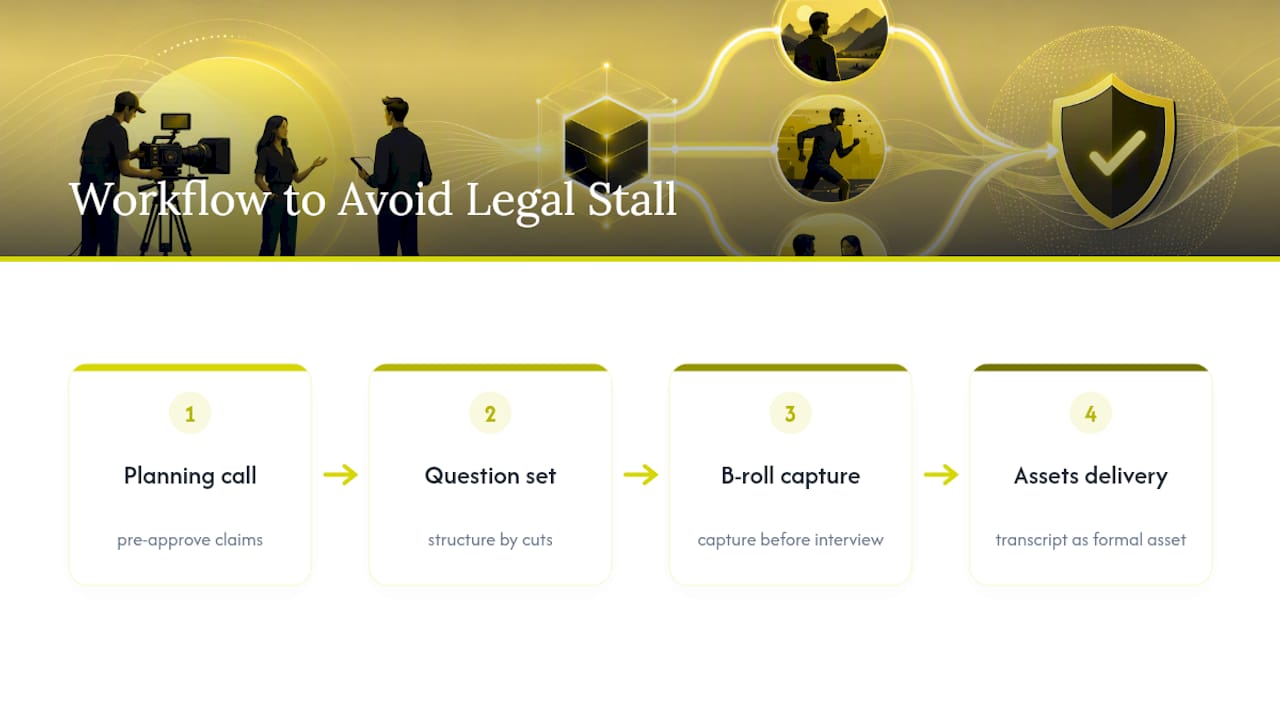
Structuring the question set around cuts, not just chronology, is what guarantees a social clip and a sales clip exist even if a shoot runs short. And candid B-roll comes easier when it’s captured before the interview starts, while the subject is still relaxed and unaware the cameras are already rolling.
What Actually Makes a Case Study Video Persuasive?
Feature-first case studies read like brochures. The ones that convert lead with a peer speaking plainly about a real result, because peer proof outperforms brand-first framing almost every time. Polish matters far less than specificity: a shaky phone clip with a real number beats a beautifully lit interview that stays vague. Plan your next shoot around the answer you want quoted, not the b-roll you want to shoot.
— Vain.
Get a Managed Production Partner for Your Next Case Study Shoot
A creative media company makes ordinary customer footage extraordinary through an intentional, collaborative process built on a curated network of production talent, rather than a one-size-fits-all crew. That means your case study shoot gets the same creative storytelling treatment as a brand campaign, without you managing scripts, releases, and approval chains yourself.
A typical engagement starts with a brief covering your goals, your customer’s availability, and which cuts you need, then moves into production across video, audio, animation, and strategy, depending on what the story requires. Deliverables typically include the full interview, a transcript, and the cut lengths your team can publish, from social clips to a full story asset. If you’re planning a shoot and want a second set of hands on the script, questions, and approval workflow, visit Vainnewyork’s production services page to request a brief.
Sources
For deeper reference while planning your next shoot: Vidyard’s guide to effective case study videos covers outcome-first openings, Sendspark’s format breakdown maps formats to funnel stages, and Envato’s template library offers editable starting layouts. For narrative framing beyond video specifically, this piece on storytelling and brand engagement is worth a read.
FAQ
How Do You Write a Case Study Video Script?
Structure it as an ordered interview, not a monologue: open with context, move through the problem and decision, and end on a specific result stated twice, once in plain language and once as an isolated number. Sending the question set to the customer in advance and pre-approving the metric they’ll cite prevents last-minute claim disputes.
What Are the Standard Formats for Case Study Videos?
The five standard formats are testimonial, narrative, ROI or data-driven, feature review, and UGC style. Each fits a different funnel stage, with testimonial and UGC working best early and narrative and ROI formats closing deals later.
What Is the Proper Length or Format for a Case Study Video?
There’s no single correct length. Plan for multiple cuts from one shoot: a 15 to 30 second social proof clip, a 45 to 75 second sales cut, and a 90 to 120 second full story for your website, since shorter videos generally hold attention better than anything running past three minutes.
How Do You Format a Case Study Presentation for Sales?
Lead with the outcome and the customer’s name before explaining the product, since peer proof outperforms feature-first pitches in sales settings. Pair the sales cut with a one-page pull-quote sheet so reps can reference the story without replaying the full video mid-meeting.
Does Vainnewyork Produce Case Study Videos?
Vainnewyork produces case study videos as part of its broader video and strategy services, managing scripting, shoot planning, and approval workflows for clients. Current pricing for production engagements is available directly on the Vainnewyork site.
Recommended
Comments