When $10,000 Becomes $40,000: NYC Brand Identity Costs and Deliverables


Brand identity work in New York City typically ranges from affordable logo-only packages to costly full enterprise rebrands, with most small and mid-sized businesses investing in foundational or strategic identity systems at moderate price levels. NYC rates run higher than the national average because of senior talent costs and overhead. Before signing anything, request a detailed proposal that spells out every deliverable, the intellectual property terms, expenses, taxes, and a firm schedule.
TL;DR:
Most NYC brand identity projects for small and mid-sized businesses fall into foundational or strategic tiers, often requiring detailed proposals to understand scope.
Higher-priced projects typically include extensive research, brand architecture, and digital assets, which significantly increase total costs and project timelines.
Clear deliverables should specify logo variants, color and typography systems, brand guidelines, source files, and explicit IP and usage rights terms.
Budgeting should consider senior staffing, research depth, rights scope, and production costs, with each factor causing large fee variations.
A detailed, itemized proposal is essential for comparing scope, deliverables, and legal terms, especially regarding ownership rights and revision limits.
Table of Contents
Typical NYC pricing ranges and what each tier includes
Every proposal you receive in this city will fall into one of four rough bands, and knowing which one you’re looking at tells you almost everything about what you should expect to walk away with.
At the entry level, logo-only or “identity starter” packages generally fall within a low to moderate price range. You’ll typically get a primary logo mark, one or two color variations, and a short style sheet. There’s rarely any strategic research behind the design, and revisions are often capped at two or three rounds.
A foundational identity package, the most common request from small businesses and early-stage brands, is priced within a moderate price range. This tier usually includes a logo system (not just one mark, but variations for different contexts), a defined color palette, typography selections, and a lightweight brand guidelines document. Some agencies fold in a basic messaging or tone-of-voice summary.
Strategic identity systems, where an agency does real discovery work before touching a design tool, are typically priced higher in most of New York’s independent and boutique studios. This tier adds market and competitor research, positioning workshops, a fuller icon or pattern system, template collateral, and often a first pass at digital assets like social templates or a website style guide.
Enterprise rebrands, the kind large retailers, media companies, and financial firms commission, are generally high-budget projects varying widely depending on the number of sub-brands, markets, and touchpoints involved. These projects almost always include brand architecture work, motion identity guidelines, extensive documentation, and staged rollout support.
A few packaging patterns show up again and again across NYC studios:
Logo-only engagements are priced and scoped narrowly, with limited or no strategy phase.
Foundational packages bundle logo, color, type, and a basic guidelines PDF as a single fixed fee.
Strategic systems separate discovery and execution into distinct phases, often billed separately.
Enterprise rebrands are usually structured as multiphase engagements with milestone billing tied to each deliverable.
Retainers show up most often after the initial identity is built, when a business needs ongoing brand management: new templates, seasonal campaign assets, or guideline updates as the company grows. Retainer arrangements in New York commonly range from a few thousand dollars a month for light support to considerably more for agencies acting as an embedded creative team. If a proposal mixes project fees and retainer language without separating them clearly, ask for the split in writing.
What brand identity projects typically include
A price tag means little without a clear list of what it buys. The strongest proposals break deliverables into categories rather than bundling everything into one vague line item called “branding.”
The core visual deliverables you should expect to see named individually include:
Logo variants: primary mark, secondary mark, icon or favicon version, and a monochrome version for restricted use.
Color system: a primary palette with exact codes, plus secondary and accent colors for different applications.
Typography selections: primary and secondary typefaces, with usage rules for headlines, body copy, and digital interfaces.
Iconography or pattern systems: a set of custom icons or graphic elements that extend the identity beyond the logo.
Brand guidelines document: the rulebook covering spacing, misuse examples, color application, and voice.
Templates: business cards, letterhead, social media frames, presentation decks, or packaging mockups, depending on the business.
Beyond the visuals themselves, the file and source deliverables matter just as much, and they’re where a lot of buyers get shortchanged. You should expect vector source files (AI or EPS, not just PNGs), licensed or embedded font files where legally permitted, source artboards you can hand to a future designer, and export specifications for both print and digital use. If a proposal doesn’t name these, ask directly. Our visual branding guide breaks down these components in more depth, particularly for media-focused brands managing multiple output formats.
Complexity is what turns a $10,000 project into a $40,000 one. Brand architecture (multiple sub-brands under one parent), motion identity work (logo animations, video intros), and rich content requirements (photography direction, video style guides) all add hours that a simple logo refresh never touches. Each of these should appear as its own line item, not folded into a general “creative fee.”
What drives NYC pricing higher
Two agencies can quote wildly different numbers for what looks like the same project, and the gap almost always comes down to four factors: who’s doing the work, how much research happens before design starts, what rights you’re buying, and what production costs sit outside the creative fee.

Senior staffing is the biggest lever. A project staffed by a creative director, strategy lead, senior designer, and project manager will cost more per hour than one staffed by junior designers alone, but it typically moves faster and produces fewer costly revisions. The 4As 2025 Billing Rate Benchmark Survey is a useful framework here: rather than publishing a single NYC number, it encourages buyers to discuss hourly benchmarks role by role, alongside the specific deliverables those roles are producing.
Statistic Callout: The 4As 2025 Billing Rate Benchmark Survey covers six geographic regions and a mix of network and independent agencies, recommending that buyers evaluate hourly benchmarks in the context of named roles and deliverables rather than treating one blended rate as gospel.
Depth of research is the second factor. A project that starts with competitor audits, stakeholder interviews, and positioning workshops takes meaningfully more hours than one that jumps straight to design execution, even if the final visual output looks similar.
Usage rights and intellectual property terms shift price in ways many buyers don’t anticipate. A fee that covers full IP assignment, meaning you own everything outright, tends to run higher than a fee for a limited license to use the work in specific contexts. Trademark search and legal clearance are typically a separate cost, usually handled by outside counsel rather than the design agency itself.
Production costs, when a project includes photography, video, or motion graphics, are frequently billed outside the core creative fee, since they often involve vendor-managed budgets for crew, equipment, or licensing.
Pro Tip: Ask every agency you’re comparing to name the specific roles assigned to your project and the estimated hours for each. A quote with no named roles is a quote you can’t sanity-check.
Checklist: what to require in an NYC brand identity proposal and contract
Before you sign anything, run the proposal through this checklist. It’s built around the kinds of contract items the AIGA standard form of agreement treats as essential for comparing fees fairly.
Line-item deliverables with named file formats (AI, EPS, SVG, PNG) and clear acceptance criteria for each.
Revision limits, stated as a number of rounds per deliverable, plus the process and cost for change orders beyond that limit.
Schedule and milestones, tied to specific dates rather than vague phase names like “design phase.”
Payment terms, including deposit amount, milestone payments, and how expenses and taxes are itemized.
Usage and IP assignment language, stating explicitly whether you’re receiving full ownership or a licensed scope of use.
Trademark clearance responsibility, since this is normally a client responsibility handled through separate trademark counsel rather than the design agency.
Warranty and indemnity scope, covering what happens if delivered work infringes on someone else’s rights.
A few additional items are easy to overlook but expensive when missing:
Optional add-ons (motion versions, extra template formats) should be priced separately, not assumed as included.
Third-party vendor fees for photography, illustration, or stock licensing should appear as pass-through costs, not buried in the creative fee.
File-prep and vendor liaison time for production-heavy rollouts, such as merchandise or signage, should be scoped explicitly. Our content usage rights guide walks through how licenses and file-delivery terms should read in a contract, which pairs directly with this checklist.
AIGA’s standard agreement notes that full rights assignment can justify a higher fee, and that trademark clearance searches normally fall to the client’s legal counsel rather than the creative team. Nearly every costly surprise in NYC identity work traces back to unclear language in exactly these two areas.
How to budget and choose the right tier for your NYC business
The right tier depends less on your industry and more on your stage. A pre-revenue startup rarely needs a $50,000 strategic system: it needs a clean, flexible foundational identity it can grow into. An established small business preparing to open a second location or raise a funding round benefits far more from the research and positioning work in the strategic tier. Enterprise organizations managing multiple sub-brands or markets need the architecture and documentation that only a full rebuild delivers.
Startups and solo founders: prioritize a foundational package with strong guidelines over a flashy logo alone.
Small businesses scaling locations or teams: invest in strategic positioning work before expanding visual applications.
Enterprise and multi-brand organizations: budget for brand architecture and phased rollout support from the outset.
Strategy is worth paying for when your brand’s biggest problem is confusion about who you’re for and why you’re different. Execution-focused spending makes more sense when your positioning is already clear and you simply need it expressed consistently across more surfaces.
Pro Tip: Use the 4As role-based benchmarks as a gut check: multiply the hours a proposal assigns to each named role by that role’s typical rate range, and see whether the total lines up with the quoted fee.
Timeline and payment models for NYC brand identity work
A logo-only project can move fast, often two to four weeks from kickoff to final files. Foundational identity packages typically take four to eight weeks. Strategic systems, given the research phase alone, often run eight to fourteen weeks. Enterprise rebrands with multiple stakeholders and markets can stretch six months or longer.
Fixed-fee projects offer budget certainty but can strain the relationship if scope creeps mid-project.
Phased or milestone-based payments align cash flow with delivery and give both sides a natural checkpoint to reassess.
Retainers suit ongoing brand management after launch, not the initial identity build itself.
Most NYC studios structure payment around three or four milestones: signed proposal and deposit, concept approval, refinement approval, and final file delivery. Each milestone should have a written acceptance checkpoint so there’s no ambiguity about when a phase is actually complete.
Vain.'s perspective on scope, pricing, and proposal clarity
We approach every NYC engagement by scoping strategy, creative, and production as distinct phases with their own hour estimates, rather than folding everything into one number. That separation is what lets a client see exactly where their budget goes and where they have room to phase work if needed.
Across the clients we work with in this city, three priorities come up constantly: production quality that holds up across video, print, and digital; clear, unambiguous IP terms so there’s no confusion about ownership after launch; and realistic timing that accounts for New York’s compressed production and vendor schedules.
If you’re building out a proposal checklist of your own, our guides on content usage rights and visual branding strategy go deeper into the exact language and deliverables worth requesting before you sign.
An honest read on what actually matters in this budgeting exercise
Most advice on branding costs treats price as the whole story, when the real risk sits in the fine print around rights and revisions, not the headline number. A $15,000 quote with full IP assignment and unlimited reasonable revisions can be a better deal than a $10,000 quote that licenses the work and caps you at one round of changes.

The conventional wisdom of “get three quotes and pick the middle one” falls apart because it compares dollar figures without comparing what those dollars actually buy. Two proposals at the same price can represent completely different amounts of strategic work, senior attention, and usage freedom.
If you take one thing from this guide, make it this: read the deliverables list and the IP clause before you look at the total. The number at the bottom of a proposal only means something once you know exactly what it’s attached to.
— Vain.
Get a clear, itemized quote from a professional creative agency.
Some creative agencies build brand identity and production work as connected processes, from strategy through final creative and, when needed, into merchandise production.
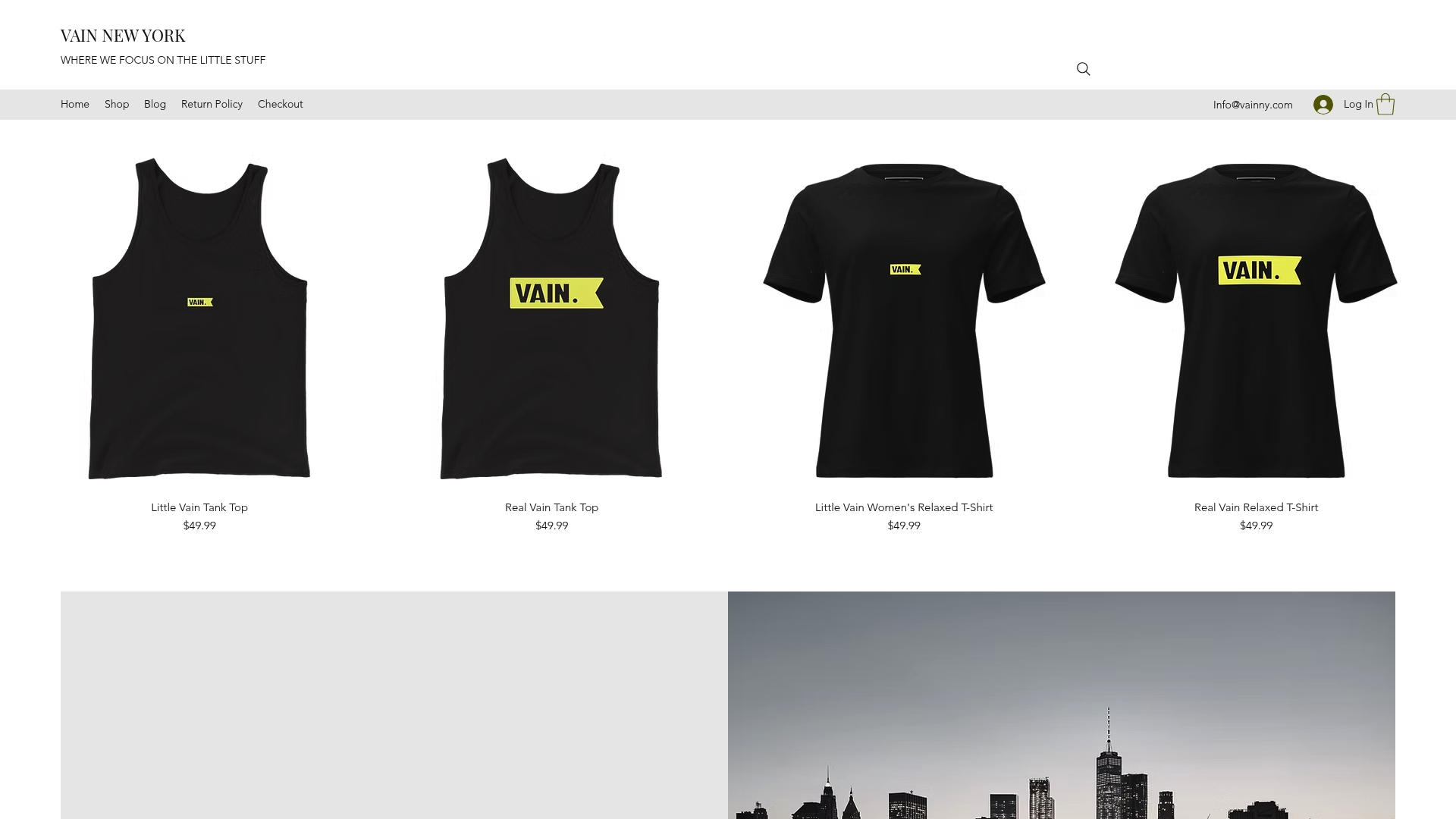
When you reach out, expect a short discovery conversation first, followed by a proposal that lists every deliverable, format, and timeline milestone individually, not bundled into a single vague fee. If your identity work is headed toward merchandise, our product pages show the kind of made-to-order output that clear file specs make possible downstream.
Ready to see what a detailed proposal looks like for your project? Visit Vain. to request a quote and start the conversation.
Sources
The 4As 2025 Billing Rate Benchmark Survey and the AIGA standard form of agreement are the two references cited throughout this guide, covering role-based billing benchmarks and contract essentials respectively. For scoping tools and versioning guidance relevant to production-heavy identity rollouts, BabyLoveGrowth and Arrowhead Sign Company offer useful supporting context.
FAQ
How much does a brand identity cost?
Brand identity costs in New York City typically vary from lower-priced logo-only packages to high-cost enterprise rebrands, with most foundational and strategic identity projects falling within a moderate price range. The exact figure depends on the deliverables included, the seniority of the team assigned, and whether full IP rights are part of the fee.
What is the 3-7-27 rule in branding?
Definitions of this rule vary across the industry and it isn’t a standardized framework covered by the sources referenced in this guide. Rather than relying on an unverified rule, focus your budget conversation on the specific deliverables, research depth, and rights included in a proposal.
What are the 5 P’s of brand identity?
Like the 3-7-27 rule, the “5 P’s” framework isn’t consistently defined across credible branding sources, so treat any specific enumeration with caution. A more reliable approach is to evaluate proposals against concrete deliverables: logo system, color, typography, guidelines, and usage rights, which is the structure this guide follows.
Is $500 too much for a logo?
Entry-level logo-only packages typically start within a low to moderate price range in New York City. A very low price is more likely to come without strategic input, file variety, or usage rights clarity, so weigh the lower price against what deliverables and rights you’d actually receive.
Recommended
Comments