10 Co Branded Campaign Examples and Ready to Use Playbooks


The strongest co-branded campaigns pair two audiences that genuinely overlap, with creative work that both partners actually build together, not a logo stitched onto someone else’s product. That distinction separates the ten examples below, from Dr. Squatch’s sold-out bathwater drop to Tiffany & Co.'s turn inside a Netflix film, each paired with the specific reason it worked and a practitioner playbook we use when we build this kind of work ourselves.
TL;DR:
Dr. Squatch’s bathwater soap sold out in under a minute, while launch week website sessions rose 132%, showing how scarcity can convert cultural attention.
Product drops carry the highest logistics costs; platform partnerships require the most media spending, while experiential and creator campaigns cost less but depend on timing.
Before committing, verify audience overlap with demographic or behavioral data, agree on shared creative ownership, and set KPIs tailored to the campaign before launch.
Measure product drops by sales and site traffic, but assess platform campaigns through awareness and message association, not impressions alone.
Reject partnerships with mismatched values, unresolved reputational exposure, or weak audience overlap; test promising ideas in one market before a full rollout.
Table of Contents
1. Ten co-branded campaign examples worth studying
e.l.f. x Chipotle. When e.l.f. Cosmetics built a makeup line inspired by Chipotle’s menu colors, the partnership worked because both brands share a younger, online-native audience that already treats fast-casual dining as a lifestyle signal rather than just a meal. The collaboration turned a burrito order into a shade palette, which gave both brands a reason to show up in each other’s feeds without feeling forced.
CoverGirl x Lucasfilm. This pairing tied CoverGirl’s cosmetics line to a Star Wars release, leaning on fandom affinity data that marketers increasingly used to validate partner fit. Audience research on franchise favorability by gender shows why beauty brands courting a broad fan base look at demographic splits before committing to a franchise tie-in. The lesson here is less about the glitter eyeliner and more about doing the homework on who actually loves the source material.
Dr Pepper x Bonne Belle (Lip Smacker). Decades before “co-branding” was a marketing department line item, Dr Pepper and Bonne Belle paired a soda flavor with a lip balm scent and built one of the longest-running flavor licensing relationships in retail. The partnership endured because the product fit was literal: a soda you drink and a balm you wear both delivered the same sensory payoff.
Taco Bell x Doritos. The Doritos Locos Taco remains a reference point for product-level co-branding because it merged two snack categories into a single SKU that neither brand could have sold alone. Roundups of successful co-branding partnerships consistently cite this launch as proof that audience overlap plus genuine product fusion, not just marketing overlap, drives sales.
Nike x Apple. The Nike+iPod and later Apple Watch integrations worked because both companies solved half of the same problem: Nike owned the athletic use case, Apple owned the hardware and software layer. Neither brand had to stretch outside its expertise, which is often the quiet reason a tech-and-lifestyle pairing survives multiple product cycles.
Oreo x Pokémon. Limited-edition cookie designs featuring Pokémon characters gave a decades-old snack brand instant relevance with a younger, nostalgia-driven audience, while Pokémon got shelf space in grocery aisles it would never reach on its own. It is a clean example of a legacy brand borrowing cultural energy rather than trying to manufacture its own.
Spotify x Uber. Letting riders control the music during their Uber trip through a Spotify integration turned a utility app into a small moment of personalization, and it did so by solving a real friction point (riders stuck listening to a driver’s playlist) rather than bolting on a sponsorship.

Tiffany & Co. x Netflix. Tiffany’s work on Netflix’s Frankenstein is a model of creative co-creation rather than brand adjacency. The jeweler gave the production access to its archives and commissioned bespoke pieces that became part of the film’s visual language, then extended the story into featurettes, a public exhibition, and flagship window displays. The campaign generated substantial earned media and social impressions precisely because the jewelry was written into the narrative instead of placed beside it.
Dr. Squatch x Sydney Sweeney. The bathwater-scented soap drop is one of the clearest recent proofs that a well-timed cultural stunt converts into measurable commerce. The campaign drew over 1 million giveaway sign-ups, pushed website sessions up 132% during launch week, and sold out the limited run in under a minute, all while generating billions of impressions across social and earned coverage.
Statistic: Dr. Squatch’s Sydney Sweeney drop sold out in under a minute while pushing weekly site sessions up 132%, proof that a scarce, culturally timed product can convert attention into traffic almost instantly.
Lenovo x Seedtag. During a recent FIFA World Cup, Lenovo’s contextual media partnership with Seedtag used Neuro-Contextual targeting alongside layered measurement from Kantar and Lumen, producing a 94% lift in top-of-mind awareness, a 27% increase in unaided awareness, and a 74% jump in message association, showcasing how AI and data can improve sponsorship effectiveness as explained in AI in Sport Sponsorship: Smarter Deals, Better ROI. It stands apart from the product collaborations on this list because the partnership lived entirely in media placement and measurement rigor rather than a physical product.
2. Types of co-branding and when to use each
Not every partnership should look like a product drop, and matching the format to the objective matters more than the partner’s logo recognition. We group co-branded work into a handful of repeatable types:
Product collaborations (Taco Bell x Doritos, Dr Pepper x Bonne Belle) fuse two products into one SKU and work best when the objective is incremental sales and retail shelf presence.
Co-created content or narrative integration (Tiffany & Co. x Netflix) embeds a brand inside a story or platform and fits objectives centered on brand elevation and earned media rather than immediate conversion.
Platform and technology partnerships (Nike x Apple, Spotify x Uber, Lenovo x Seedtag) connect two services at the functional level and suit brands chasing usage frequency, data signal, or media efficiency.
Experiential or IRL activations (the Pitbull concert ambush) trade paid media budget for timing and proximity to a cultural moment, which fits brands with limited budgets but strong creative instincts.
Creator-led or UGC-first drops (Dr. Squatch x Sydney Sweeney, the TikTok jingle moment) lean on an existing cultural spark and scale through earned sharing, making them ideal when speed matters more than polish.
Product collaborations and merch drops carry the highest logistics cost; platform partnerships carry the highest media spend; experiential and creator-led work carry the lowest cost but the highest dependence on timing.
3. What made these campaigns succeed: a checklist for your next pitch
Across every example above, a handful of decisions repeat themselves. Before greenlighting a co-branded campaign, we check for these conditions:
Audience overlap is real, not assumed. Pull actual demographic or behavioral data on both audiences before assuming a fit.
The creative is built together, not handed off. The campaigns that outperformed (Tiffany, Dr. Squatch) involved joint creative authorship, not a sponsor logo added late.
Timing rides an existing cultural wave. The Dr Pepper and TikTok jingle moment worked because the brand recognized an organic creator moment and amplified it rather than manufacturing one from scratch.
KPIs match the campaign’s actual job. A platform partnership should measure awareness and message association; a product drop should measure sell-through and site traffic.
Measurement includes incrementality, not just volume. Reporting on the Dr Pepper and TikTok partnership recommends tracking both short-term lift and longer-term brand metrics rather than relying on impressions alone.
Operational details are locked before launch. IP ownership, approval chains, limited-run quantities, and fulfillment logistics all need sign-off before the first teaser post goes live.
Pro Tip: Treat your merch drop’s fulfillment plan with the same rigor as the creative brief: a sold-out product with a broken checkout page turns a win into a complaint thread.
4. Vain.'s practitioner playbook for building co-branded work
We follow a process for co-branded campaigns that moves through stages, each with its own checklist:
Discovery: We map both partners’ owned audiences, catalog existing creative assets, flag IP constraints early, and align on what each side actually wants to get out of the partnership.
Creative co-creation: We build a shared brief rather than two separate ones, run joint creative reviews so neither partner is surprised by the final cut, and plan an integrated content slate across video, audio, animation, and any merch extension from the start.
Activation and measurement: We sequence the launch so creator seeding happens before paid media, treat earned attention as the primary signal rather than a bonus, and set a measurement framework before the first asset ships, not after.
This sequence mirrors how the stronger examples above were built: Tiffany and Netflix aligned creative before promotion, and the Dr Pepper and TikTok team paired an organic spark with a measurement plan built in advance.
When to say no: reputational risks and red flags

The campaigns that age badly almost always skipped a question someone should have asked at the pitch stage. Mismatched values, a partner carrying unresolved regulatory or activist exposure, or an audience overlap that looks good on paper but thin in practice are the three red flags we treat as deal breakers, not negotiating points.
Our honest take: most co-branding failures are not creative failures, they are diligence failures. A brand that skips the audience research or rushes past the IP agreement to hit a launch date is building a campaign on a foundation nobody checked. When in doubt, pilot small: a limited drop, a UGC-first test, or a single market run before committing to a full rollout, paired with a clear crisis protocol if the cultural moment turns.
— Vain.
How Vain. can help you build your next partnership
We produce the video, audio, animation, and strategy work that co-branded campaigns run on, and when a partnership includes a merch extension, we build that too. Whether you need a joint creative brief turned into a finished asset slate or a standalone campaign built from scratch, our team handles production work that turns a partnership idea into something shippable.
Developing the creative strategy and brief alongside your partner brand.
Producing video, audio, and animation assets for co-branded launches.
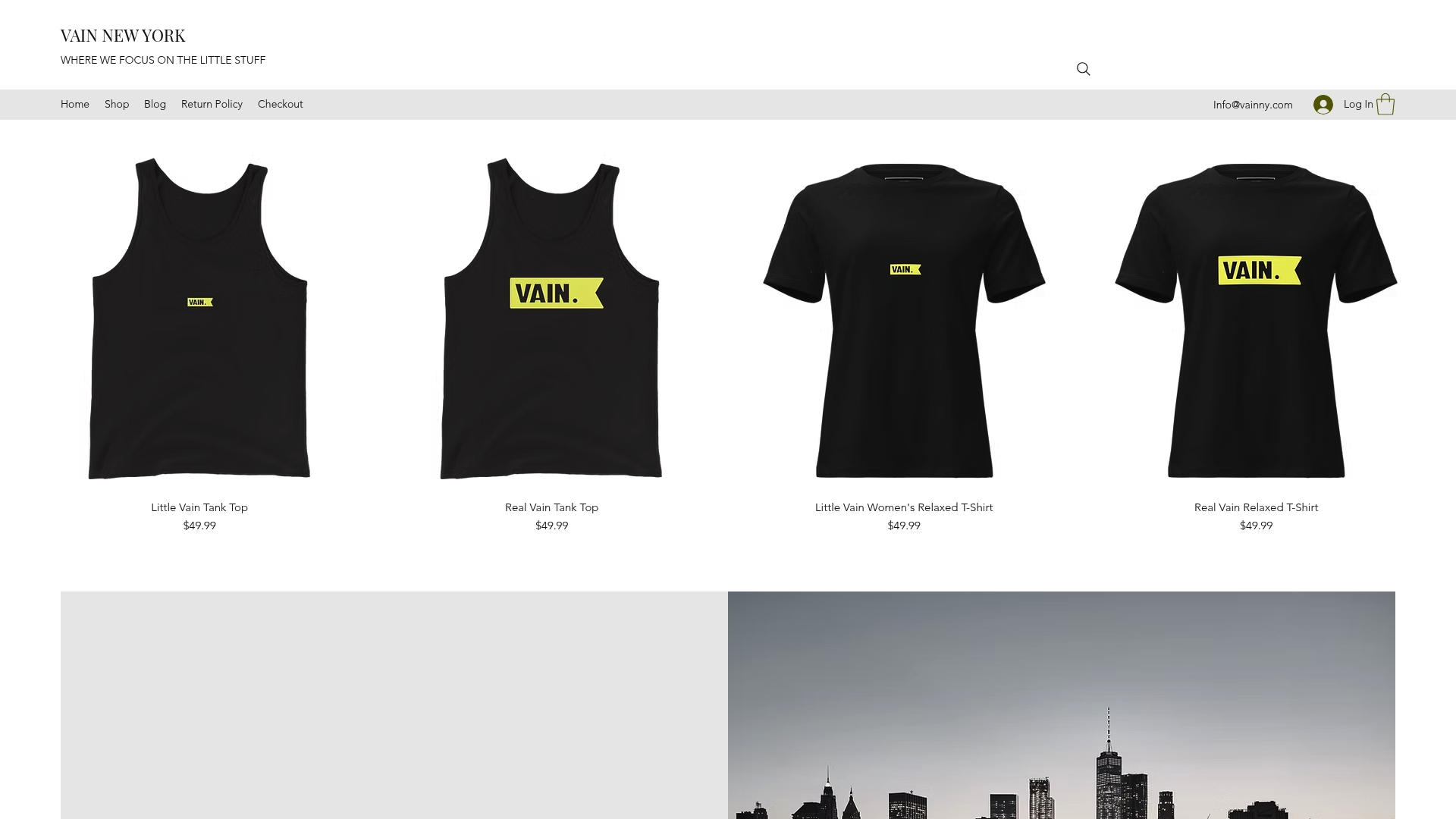
Designing and producing limited-run merchandise tied to campaigns, made to order.
If you are scoping a co-branded campaign and need a production partner who can move from brief to finished assets, visit our services page to review our work and start a conversation about your next collaboration.
FAQ
Can you give examples of partnership-style businesses?
Co-branded partnerships span categories: beauty and food (e.l.f. x Chipotle), beauty and film franchises (CoverGirl x Lucasfilm), snack brands fusing products (Taco Bell x Doritos), tech platforms (Nike x Apple, Spotify x Uber), and entertainment tie-ins (Tiffany & Co. x Netflix). Each pairing works by combining two audiences or two product strengths that neither brand had alone.
What is a marketing campaign, with an example?
A marketing campaign is a coordinated set of creative and media activities built around a specific goal and timeframe. Lenovo’s World Cup partnership with Seedtag is one example: a contextual media campaign measured through brand lift and attention data that produced a 94% increase in top-of-mind awareness.
What does a B2B co-branded partnership look like?
B2B co-branding often takes the form of platform or technology integrations rather than consumer products, such as two software or hardware companies combining services to solve a shared customer problem. Nike and Apple’s fitness-tracking integration is a consumer-facing example of the same logic: each partner contributed the half of the solution it already did best.
What is the “3-7-27” rule in branding?
This is not a standardized or widely documented branding framework, and definitions of it vary across marketing blogs without a consistent source. Rather than relying on an unverified rule, focus on the fundamentals that the examples above share: real audience overlap, genuine creative co-creation, and measurement set before launch.
How do I pitch a brand partnership?
Lead with specific audience overlap data, a concrete creative concept both brands can co-own, and a measurement plan tied to each partner’s actual goals. Campaigns like the Tiffany and Netflix collaboration succeeded because the pitch centered on creative authorship inside the project, not a sponsorship slot bolted onto someone else’s work.
Sources
Recommended
Comments