Social Media Marketing Strategies That Drive Real Results

Social media marketing is the strategic use of social platforms to build brand awareness, engage audiences, and generate measurable business growth. The average consumer spends 143 minutes per day on major social platforms. That kind of daily attention is not a coincidence. It is an opportunity that every marketing professional and business owner must treat with intention, not improvisation. A documented social media strategy makes marketers 377% more likely to succeed than those without one. The difference between brands that grow and brands that stall is almost always structure.
What are the essential components of a social media marketing strategy?
A social media strategy is the plan. Social media marketing execution is what happens when that plan meets a live audience. Confusing the two is the most common mistake marketers make, and it produces inconsistent results regardless of budget or talent.
Effective strategy starts with audience segmentation. You need to know who you are reaching before you decide where and how to reach them. A B2B software company and a direct-to-consumer fashion brand may both use Instagram, but their audience segments, content cadence, and success metrics will look completely different. Platform selection follows from audience data, not from personal preference or industry habit.
The core components of a working strategy include:
Audience profiles: Defined by demographics, behavior, and platform usage patterns
Platform selection: Chosen based on where your audience actually spends time
Content themes: Consistent topics that reflect brand values and audience interests
Posting cadence: A realistic schedule that maintains presence without sacrificing quality
Community management: A clear process for responding to comments, messages, and mentions
Measurement framework: KPIs tied to business outcomes, not just engagement counts
Social listening: Monitoring conversations about your brand, competitors, and industry to surface real audience insights
Social listening is the component most teams skip. It turns passive posting into active intelligence gathering. When you track what your audience says about your category, you find content ideas, product feedback, and audience pain points that no survey would surface.
Pro Tip: Set up keyword alerts for your brand name, top products, and three to five industry terms. Review them weekly and feed what you find directly into your content calendar.
Which content types drive the most engagement in 2026?
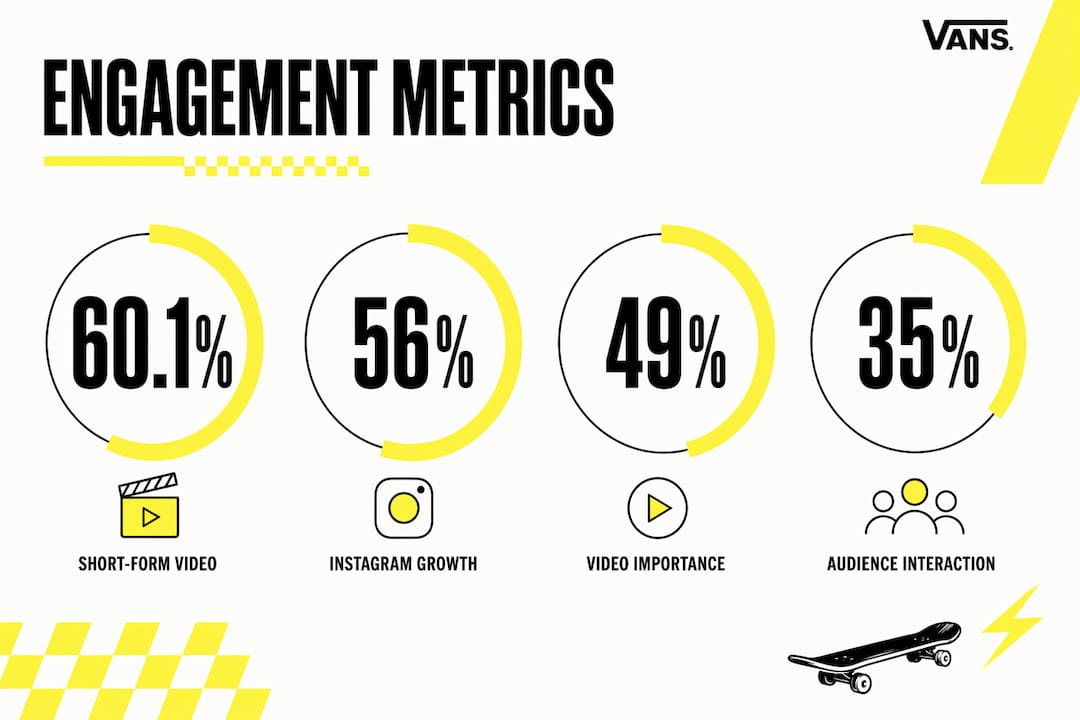
Short-form video is the dominant content format across every major platform. 60.1% of marketers use short-form video and report it delivers the highest ROI of any content type. That number reflects a fundamental shift in how audiences consume information. Attention is short, and video earns more of it than static images or text posts.

56% of marketers plan to increase organic activity on Instagram, and 49% name video as their most important content type. Those two figures together tell a clear story: visual, moving content on high-engagement platforms is where resources should concentrate.
Authenticity separates high-performing content from polished content that nobody shares. Human-generated content, including behind-the-scenes footage, employee stories, and unscripted moments, consistently outperforms heavily produced brand content in organic reach. Audiences have developed a sharp instinct for what feels real versus what feels manufactured.
The 50/30/20 content mix gives teams a practical framework for balance:
50% engagement content: Posts designed to spark conversation, shares, and saves. Think polls, questions, relatable observations, and behind-the-scenes glimpses.
30% curated content: Third-party articles, industry news, or partner content that adds value without requiring original production.
20% promotional content: Direct product features, offers, and calls to action.
This ratio prevents the common trap of turning your feed into a catalog. Audiences follow brands for value, not for ads. The NYC culture and content trends shaping 2026 show that cultural relevance and community-driven storytelling are pulling audiences closer to brands that feel like participants rather than broadcasters.
Influencer marketing fits naturally into the engagement and curated content buckets. Micro-influencers with audiences between 10,000 and 100,000 followers typically generate stronger engagement rates than celebrity accounts. Their audiences trust them, and that trust transfers to the brands they feature.
How do marketers measure social media marketing success?
Vanity metrics are the enemy of real measurement. Follower counts, raw impressions, and total likes feel satisfying but rarely correlate with leads, revenue, or customer care outcomes. A brand with 500,000 followers and 0.1% engagement is performing worse than a brand with 20,000 followers and 4% engagement.
Marketing teams that prove ROI measure outcomes, not activity. The KPIs that matter fall into four categories:
Business Goal | KPIs to Track |
Brand awareness | Reach, share of voice, branded search volume |
Audience engagement | Engagement rate, saves, shares, comments |
Lead generation | Click-through rate, form completions, cost per lead |
Revenue impact | Attributed conversions, revenue per campaign, customer lifetime value |
Measuring brand awareness through reach, engagement rate, click-through rates, and revenue-attributed metrics gives a far more accurate picture than impressions alone. Impressions tell you how many times content appeared. Engagement tells you how many people cared.
Cross-platform dashboards consolidate data from multiple channels into one view. Without consolidation, teams spend more time pulling reports than reading them. A weekly dashboard review and a monthly deep-dive analysis create the feedback loop that keeps strategy current. Understanding your media mix and KPIs across channels is what separates reactive posting from deliberate marketing.
Pro Tip: Tie at least one social media KPI directly to a revenue or pipeline metric in every quarterly review. If you cannot draw a line from a social activity to a business result, that activity needs to be reconsidered.
What are the key trends shaping social media marketing in 2026?
Generative AI has moved from experiment to standard practice. 62% of marketers use generative AI daily for content creation and strategy execution. That adoption rate means AI is no longer a differentiator. It is table stakes. The real differentiator is how teams balance AI efficiency with the authentic voice that audiences respond to.
The risk of over-relying on AI-generated content is real. Audiences recognize generic, templated posts. The brands winning in 2026 use AI to handle research, caption drafts, and scheduling, then apply a human layer of brand voice, cultural context, and genuine perspective before publishing.
Platform focus beats platform breadth. The SES framework, which stands for Search, Email, Social, recommends concentrating efforts on three core digital channels rather than spreading resources across every platform that launches. A concentrated presence on one or two social platforms that match your audience consistently outperforms a diluted presence spread across six. Depth of community beats width of reach.
Key practices defining 2026 social media strategies include:
Quarterly roadmap planning: Adapting strategy every 90 days in response to algorithm shifts and audience behavior changes, rather than locking into a rigid annual plan
Search integration: Treating social content as discoverable content by using keywords, hashtags, and captions that align with how audiences search on platforms like TikTok and Instagram
Email and social alignment: Using social data to inform email segmentation, and email lists to build custom social audiences
CRM integration: Feeding social data into CRM systems to enable personalized customer engagement at scale, a competitive advantage most businesses still overlook
The brands that will lead in the next two years are the ones treating social media as a data source, not just a publishing channel. Every comment, share, and click is a signal. Teams that read those signals and act on them within a 90-day cycle will consistently outperform teams that review strategy once a year.
Key Takeaways
A documented, data-driven social media strategy is the single most reliable predictor of marketing success, connecting platform activity directly to business outcomes.
Point | Details |
Strategy before execution | Document your goals, audience, and KPIs before posting a single piece of content. |
Short-form video leads | 60.1% of marketers report short-form video delivers the highest ROI of any content type. |
Measure business outcomes | Replace vanity metrics with KPIs tied to leads, revenue, and customer engagement. |
Focus over breadth | A concentrated presence on one or two platforms outperforms a thin presence across many. |
Quarterly planning wins | Adapt your social roadmap every 90 days to stay ahead of algorithm and audience shifts. |
Why most social media efforts fall flat (and what actually fixes it)
After working in content strategy and brand development, the pattern I see most often is not a lack of creativity. It is a lack of structure. Teams post consistently for six weeks, see modest results, and then pivot to a completely different approach before the first strategy has had time to compound. That cycle repeats indefinitely, and the brand never builds real momentum.
The fix is not a better content calendar. It is a commitment to building relationships over chasing volume. The brands I have seen grow the fastest on social are the ones that respond to every comment, ask genuine questions, and treat their audience like a community rather than a conversion funnel. That behavior is not scalable in the traditional sense, but it creates the kind of loyalty that no paid campaign can manufacture.
Data has to drive the next move. A cyclical, analytics-informed approach where every 90-day roadmap is built from the previous quarter’s performance data is the most reliable system I know. It removes guesswork and replaces it with evidence. The brands that resist this approach, usually because it requires admitting what is not working, are the ones that stay stuck.
My honest recommendation: pick two platforms, go deep, and measure everything against a business outcome. Resist the pressure to be everywhere. Presence without purpose is noise.
— Neville
How Vainnewyork supports your social media campaigns
Creative social media campaigns need more than a content calendar. They need assets that carry your brand identity into every post, story, and collab. Vainnewyork builds exactly that kind of creative foundation for brands that want their social presence to feel as considered as their product.
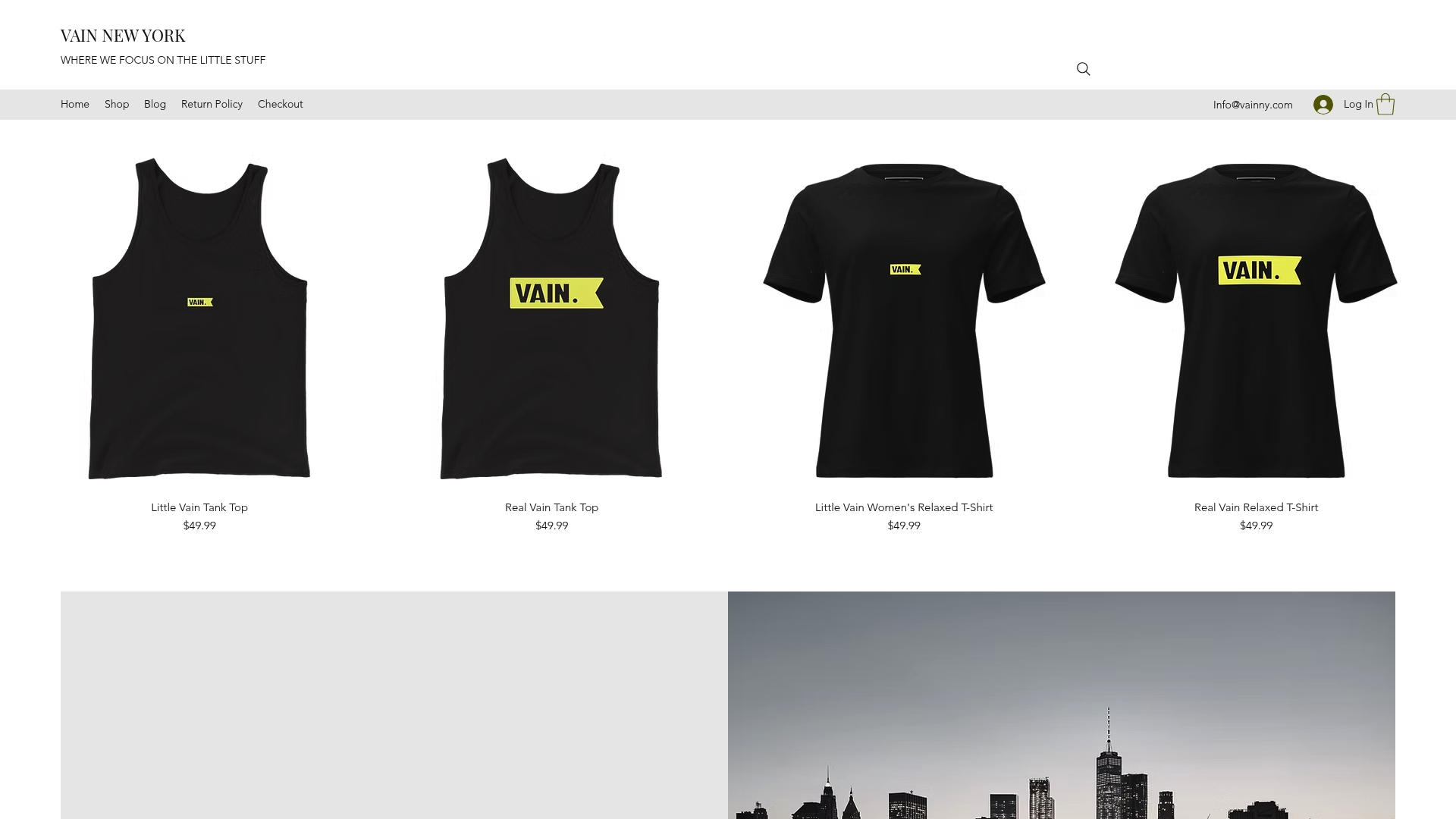
The Vainnewyork shop offers branded merchandise and visual assets that translate directly into content-ready campaign material. Whether you are building an influencer gifting program, shooting behind-the-scenes content, or creating a product-forward campaign, physical brand touchpoints make your social content more tangible and more shareable. Pieces like the Little Vain Auburn One-Piece are designed to photograph beautifully and carry a distinct visual identity that stands out in a crowded feed. When your brand looks this intentional, your audience notices.
FAQ
What is social media marketing?
Social media marketing is the strategic use of social platforms to engage audiences, build brand awareness, and drive business outcomes including leads and revenue. It combines content creation, community management, paid advertising, and analytics into a unified approach.
How often should you post on social media?
Posting frequency depends on your platform and audience, but consistency matters more than volume. A reliable schedule of three to five posts per week on a focused platform outperforms daily posting with no strategic intent.
What metrics actually measure social media ROI?
ROI-linked metrics include click-through rate, cost per lead, attributed conversions, and revenue per campaign. Follower counts and raw impressions are activity indicators, not business outcome metrics.
How does short-form video compare to other content types?
Short-form video delivers the highest ROI of any content format, with 60.1% of marketers using it as a primary content type. Its combination of high engagement rates and platform-algorithm favor makes it the most efficient format for organic reach in 2026.
How many social media platforms should a brand focus on?
Most brands perform better by concentrating on one or two platforms where their audience is most active. The SES framework recommends depth over breadth, treating social as one of three core digital channels alongside search and email.
Recommended
Comments