How to Hire a Freelance Business for Creative Projects

When your brand needs a video series, a rebrand, or a merchandise drop, the right move is to hire a project-based creative production and consultancy studio. Not a solo freelancer. Not a 50-person agency. A studio built around your scope, your timeline, and your creative vision. Gather your brief, define your deliverables, and request a scoped estimate before your first call.
Before you go further, scan any candidate studio for three quick trust signals:
Portfolio relevance: Does their past work match your industry, format, or aesthetic?
Process clarity: Can they walk you through phases, milestones, and approval points without hesitation?
IP/usage policy: Do they have a written policy on who owns the final assets?
A project-based creative studio typically covers video production, audio and podcast production, motion graphics and animation, brand identity, marketing strategy, audience growth, and branded merchandise. That breadth is what separates this model from a single-discipline freelancer and what makes it worth the investment for scoped, outcome-driven work.
Key Takeaways
Hiring a project-based creative production studio is the most direct path from a scoped brief to finished, rights-cleared creative assets for U.S. brands and organizations.
Point | Details |
Hire for scope, not category | A project-based studio covers video, audio, brand identity, and merchandise under one contract. |
Evaluate on four criteria | Score finalists on portfolio relevance, process clarity, contract completeness, and references. |
Budget to deliverables | U.S. projects range from $3,000 for a social series to $75,000+ for a full rebrand and campaign. |
Protect scope in writing | Every contract needs a change-order clause, revision limits, and explicit IP assignment terms. |
Vainnewyork | Offers scoped discovery, production, and delivery with written contracts and clear usage rights. |
Table of Contents
How do you evaluate and hire a creative production studio?
Strong hiring decisions come from a structured evaluation, not gut feel. Work through these criteria before you commit.
Selection criteria
Portfolio relevance: Has the studio produced work in your format (short-form video, brand film, podcast, merchandise)?
Process transparency: Can they share a production workflow, not just a mood board?
Role clarity: Who is your day-to-day contact? Who approves creative decisions internally?
Legal and IP clarity: Do they use written contracts with explicit IP assignment and usage-rights language?
Outcome measurement: Do their case studies cite results, not just aesthetics?
Team capacity: Can they staff your project without subcontracting the core deliverables to unknown parties?
Questions to ask on a discovery call
Walk me through how you handled a project similar to ours from brief to delivery.
What is your standard timeline for a project of this scope?
How many revision rounds are included, and what triggers a change order?
How do you handle a dispute if the final deliverable misses the brief?
Can you provide two client references from projects in the last 18 months?
Contract checklist
A strong scope document must define the business objective, measurable deliverables, in-scope and out-of-scope items, assumptions, constraints, acceptance criteria, and change-control procedures. Every contract should also include:
Payment schedule (deposit, milestones, final payment)
Revision limits and change-order process
IP assignment and usage-rights terms
Warranties, liability caps, and termination clauses
Red flags to watch for
Deliverables described in vague language (“content,” “assets,” “materials”)
Unlimited revisions with no change-order clause
Reluctance to sign IP assignment terms
Pricing that shifts after the proposal without a written change order
No references, no published case studies, or case studies with no measurable outcomes
Pro Tip: When comparing three finalists, score each one on portfolio relevance, process clarity, contract completeness, and reference quality. A studio that scores well on all four is worth a premium over one that wins only on price.
What services and workflow does a creative studio deliver?
Creative production work maps best to a six-phase creative process rather than generic project management frameworks. Here is what that looks like in practice.
Core services and typical deliverables
Creative strategy: Brand positioning documents, messaging frameworks, campaign concepts
Video production: Short-form social clips, brand films, product demos, interview series
Audio and podcast production: Branded podcasts, voiceover, sound design, music licensing
Motion graphics and animation: Explainer videos, title sequences, animated social content
Brand identity: Logo systems, visual guidelines, typography, color palettes
Marketing strategy: Channel plans, content calendars, paid media briefs
Audience growth: Community strategy, influencer briefs, distribution playbooks
Branded merchandise: Made-to-order apparel, mugs, stickers, and accessories
Standard production workflow
Brief: Client submits a one-page intake covering goals, audience, budget, and timeline.
Discovery: Studio reviews the brief, asks clarifying questions, and confirms scope.
Production: Creative work begins in sprints aligned to milestones.
Review: Client receives a draft and submits consolidated feedback within an agreed window.
Refinement: Studio incorporates approved revisions within the contracted round limit.
Delivery: Final assets are delivered in agreed formats with an IP transfer document.
A producer’s playbook paired with a production management workspace reduces coordination waste and speeds approvals. Producers who track time-to-first-comment and review rounds consistently shorten project cycles.
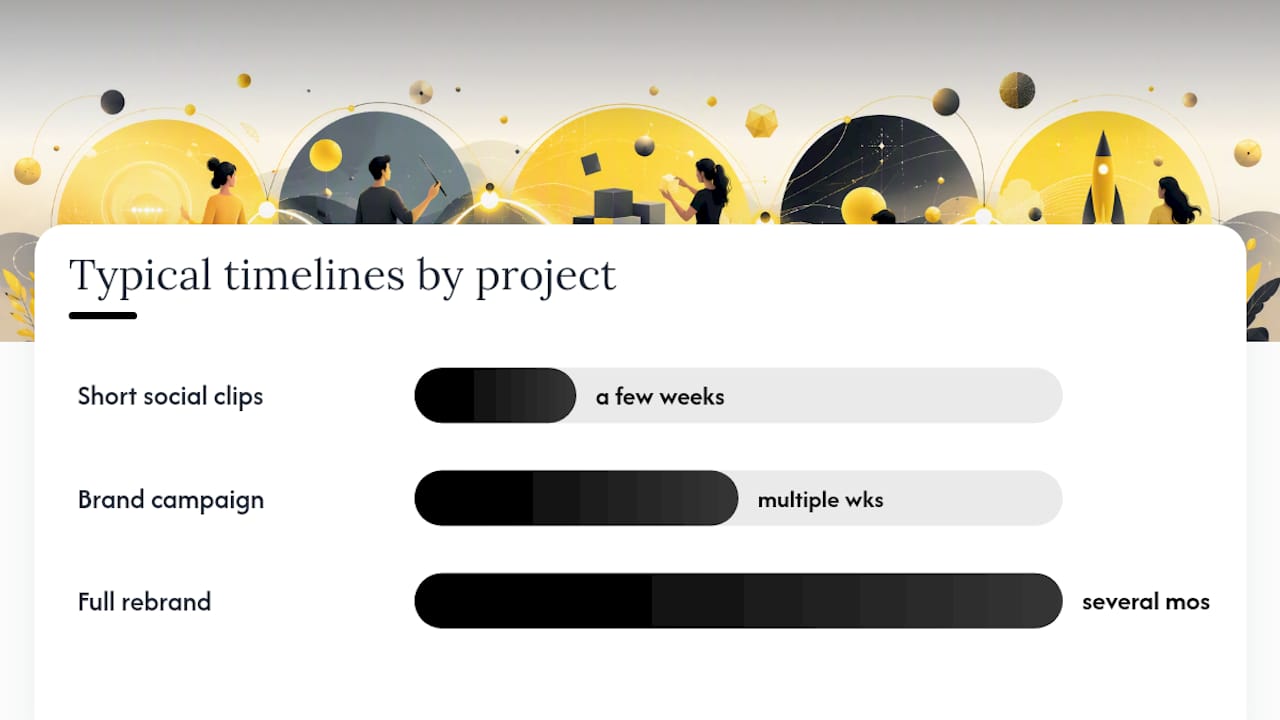
Sample timeline estimates by project type
Project Type | Typical Timeline | Key Phases |
Short social series clips | a few weeks | Brief, shoot, edit, delivery |
Brand campaign (video + copy) | multiple weeks | Strategy, production, review, launch |
Full rebrand (identity + guidelines) | several months | Discovery, concept, refinement, rollout |
What do engagement models and pricing look like in the U.S.?
Choosing the right engagement model shapes your budget, your timeline, and your risk exposure. Most U.S. studios offer four structures.
One-off project: A single scoped deliverable with a fixed fee. Best for a defined need like a brand film or a merchandise run.
Phased milestone-based: Larger projects split into funded phases. Each phase has its own deliverable and payment trigger.
Rolling retainer: A monthly commitment for ongoing production. Suits brands with a consistent content calendar.
Productized package: A fixed-price bundle (e.g., four social videos per month). Predictable cost, defined output.
What common budgets buy in the U.S. market
Budget Band | Typical Deliverables | Estimated Timeline |
Typical lower budget | Short social series, brand photography, basic motion graphics | a few weeks |
Typical mid budget | Brand campaign, podcast launch, visual identity system | multiple weeks |
Typical higher budget | Full rebrand, multi-format campaign, audience growth strategy | several months |
Payment terms in the U.S. Studios working with U.S. clients should provide a W-9 for 1099 reporting when fees exceed $600 in a calendar year.
Pro Tip: *Build a change-order clause into every contract before work begins. Any request outside the original scope triggers a written change order with a revised fee and timeline.
How does Vainnewyork approach creative production?
Vainnewyork operates through a discovery-first methodology that treats every project as a collaboration between the studio’s network and the client’s vision.
Vainnewyork’s production methodology
Discovery: Intake call to align on goals, audience, and success criteria
Framing: Creative brief and scope document drafted and approved before any production begins
Production sprints: Work delivered in milestone-aligned sprints with clear review windows
Proxy reviews: Internal quality check before client-facing delivery
Delivery and measurement: Final assets handed over with usage documentation; KPIs tracked against the original brief
Studios that follow this kind of structured process consistently reduce the number of revision rounds and shorten time-to-approval, two of the metrics that production managers track to measure efficiency.
Case example: Brand campaign for an independent artist
Challenge: An independent artist needed a short-form video series and a merchandise line ready for a tour launch, with a six-week window and no in-house production team.
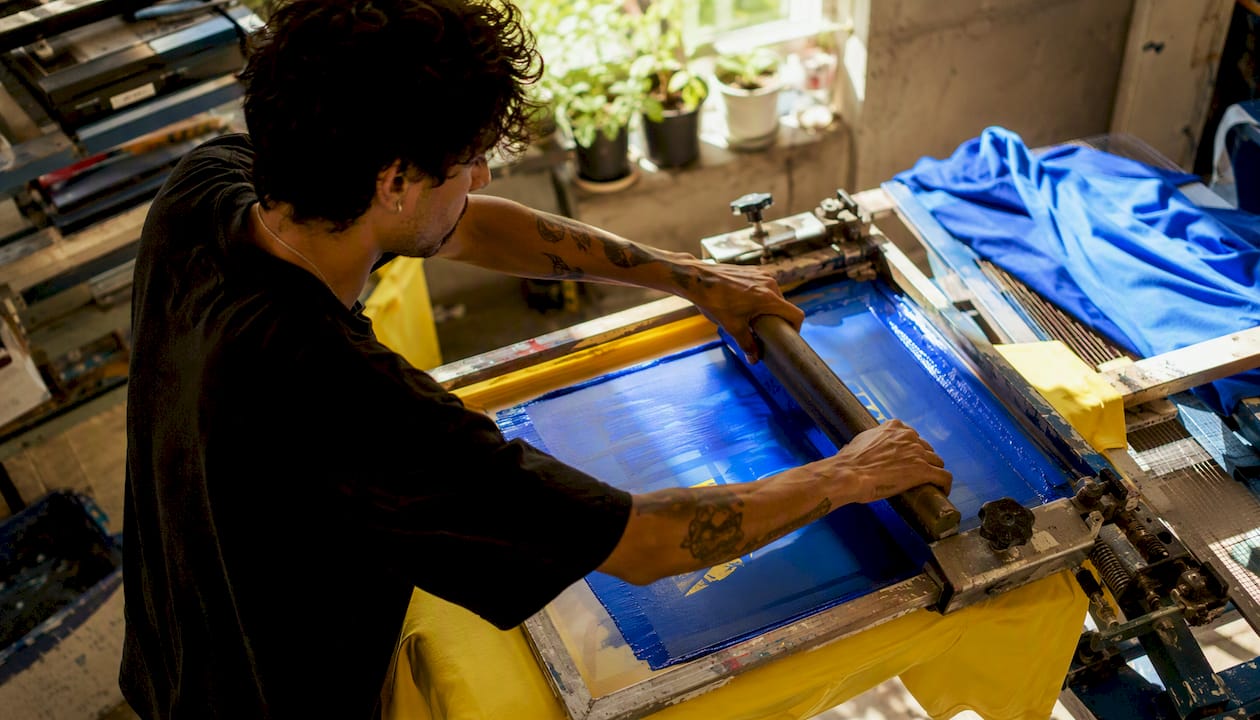
Approach: Discovery session to define the visual language, a two-week production sprint for four social clips, and a parallel merchandise run using the same visual assets.
Outcome: All deliverables delivered within the six-week window. The artist launched with a consistent visual identity across digital and physical touchpoints.
What studios wish you knew before the first call
The brands that get the most from a creative partnership come in prepared. They have a one-page brief, a single internal approver, and a folder of existing brand assets ready before kickoff. That preparation alone cuts the discovery phase in half.
Pre-kickoff checklist for clients
One-page intake: goals, audience, budget range, hard deadline
Single named approver with authority to sign off on creative decisions
Asset bundle: existing logos, fonts, brand colors, past campaign files
Brand do/don’t list: what the brand sounds like, what it never does
Communication norms worth requesting
Ask your studio for a weekly status update (even a three-line email), a consolidated feedback window (not rolling comments), and a named point of contact for every phase. A five-stage onboarding system that moves from contract signing through a first deliverable win inside two weeks is the standard for well-run studios. If a studio cannot describe their onboarding process, that is a signal worth noting.
Vainnewyork is ready to scope your next creative project
Vainnewyork brings together video, audio, animation, brand strategy, and merchandise production under one creative roof, built for brands, artists, and organizations that need real deliverables on a defined timeline.
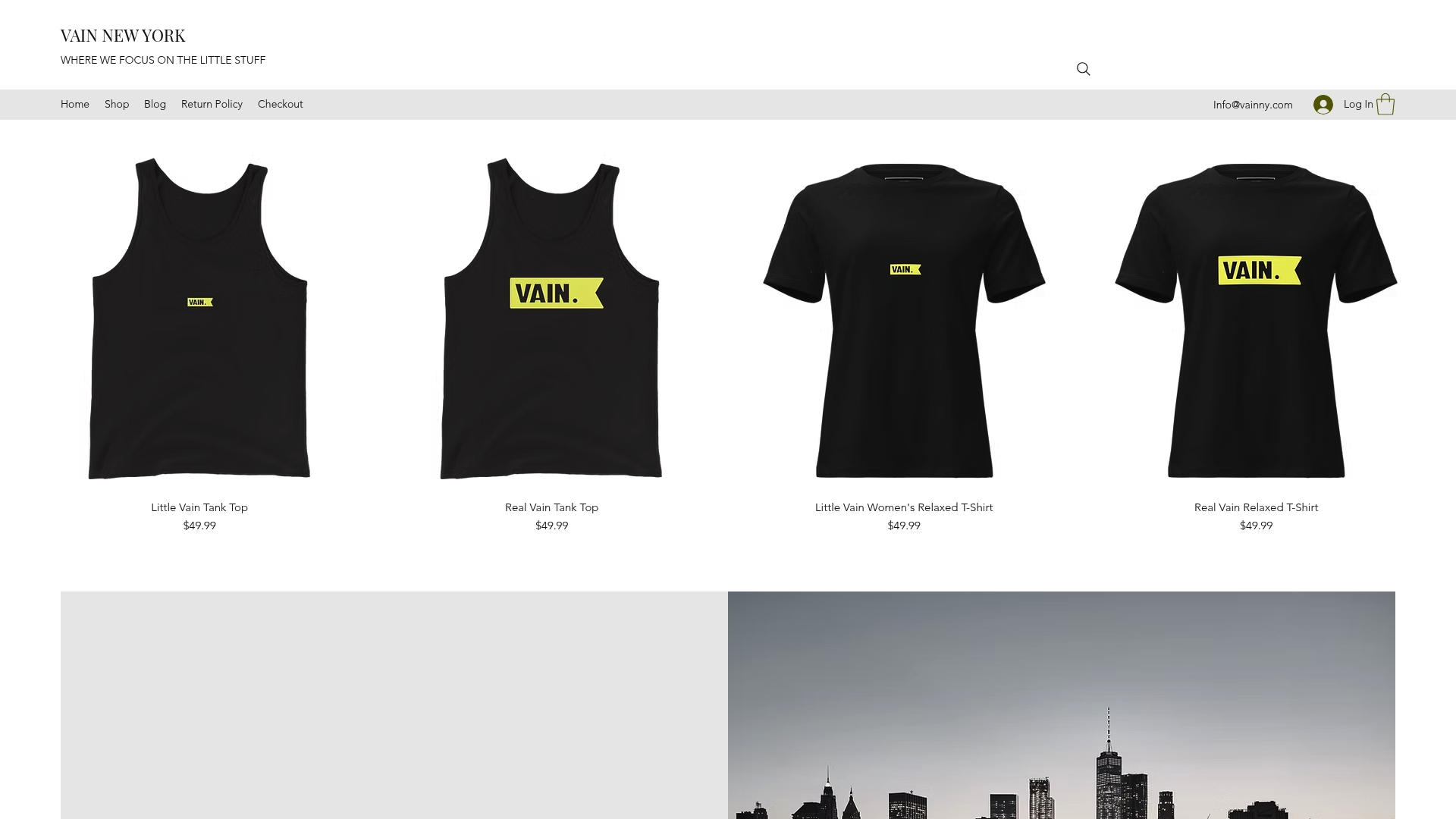
The first step is a scoped discovery session: a focused conversation that produces a written brief, a deliverable list, and a ballpark estimate. No retainer required to start. Whether you need four social clips for a product launch or a full visual identity for a rebrand, Vainnewyork can scope it, produce it, and deliver it with clear IP terms and a written contract. Visit Vainnewyork to request your scoped estimate and start the conversation.
Useful resources for contracts, onboarding, and production playbooks
These U.S.-focused resources help you draft a brief, structure a contract, and manage a creative project from kickoff to delivery.
How to Write a Project Scope for Creative Agencies: Scope language, in-scope/out-of-scope structure, and change-control clauses for agency work.
The Client Onboarding Process: A 5-Stage System: A practical onboarding framework covering confirmation, intake, kickoff, setup, and first win.
Creative Project Management Process: The six-phase creative process used by senior PMs at major studios and brands.
The Producer’s Playbook: Brief templates, role checklists, and production metrics for running creative projects efficiently.
Creator Workflows: Your 2026 Guide to Smarter Production: Collaboration models between creative studios and media organizations, with workflow recommendations.
Video Production: A Complete Guide for Professionals: Practical production steps, deliverable checklists, and timeline guidance for video projects.
Use these resources to build your initial brief and contract checklist before your first studio call. A prepared client gets a better proposal.
Sources
Recommended
Comments