Creative Storytelling: A Practitioner's Guide for Creatives


Creative storytelling is the deliberate use of narrative frameworks, craft devices, and audience focus to make ideas memorable and move people to action. Whether you’re shaping a brand campaign, pitching a concept, or producing a short film, the single most important thing to do first is this: put your audience at the center as the hero, not your brand, product, or idea.
Before you write a single word of copy or script, get these four things locked in:
Who is the audience, and what do they want? Name a specific person, not a demographic.
What is your Big Idea? One sentence that captures the transformation you’re offering.
What are the stakes? What does the audience lose if they don’t act or change?
What’s the hook? The first line, frame, or image that earns the next 30 seconds of attention.
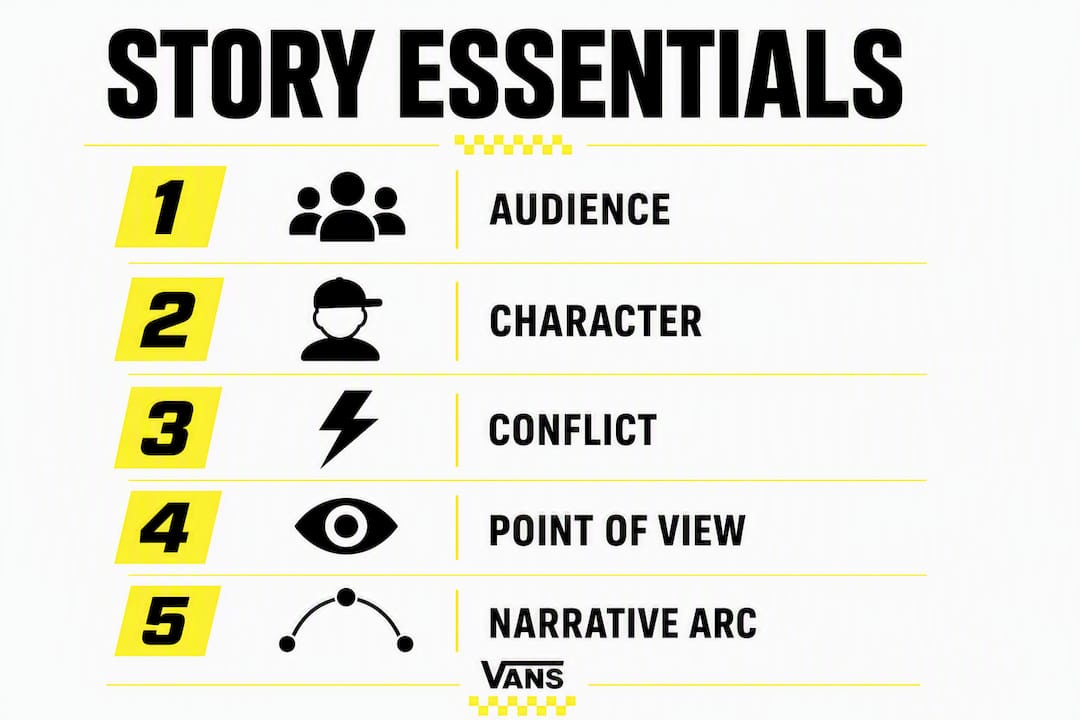
A successful story must include:
A clear character or audience-as-hero (someone the reader recognizes as themselves)
Genuine conflict or stakes (something meaningful is at risk)
A narrative arc with a beginning, middle, and end
A hook that opens with tension, surprise, or a vivid scene
A resolution that delivers a transformation, not just a conclusion
Get these five elements right, and the framework you choose almost doesn’t matter. Miss even one, and no amount of craft technique will save the piece.
Table of Contents
Why creative storytelling is the most powerful communication skill you can build
Craft techniques and literary devices that make stories feel alive
How to adapt your story across platforms without losing its core
A repeatable step-by-step process to craft one story from idea to edit
Research-backed perspectives and ethical considerations for communicators
Why the best storytellers we know treat craft as a discipline, not a talent
Why creative storytelling is the most powerful communication skill you can build
Stories outperform raw data in persuasion and recall because the human brain processes narrative differently than it processes lists or statistics. When we hear a well-structured story, our brains synchronize with the storyteller’s, a phenomenon researchers call neural coupling. Data tells people what to think; stories show them how to feel, and feeling drives decisions.
For brands and communicators, this has concrete implications. Strategic storytelling functions as a leverage skill for senior professionals because stories create alignment by making data meaningful in the context of stakeholder priorities. A quarterly revenue chart is forgettable. The story of one customer whose business survived because of your product is not.
Here’s what narrative does that a slide deck of facts cannot:
Builds brand recognition by creating a consistent emotional signature across touchpoints
Drives stakeholder alignment by giving teams a shared mental model of where they’re going and why
Increases recall because facts embedded in a story are far easier to retrieve than isolated data points
Compels action by connecting information to personal stakes and a clear next step
For brand work specifically, a well-crafted narrative does something no media buy can replicate: it gives your audience a role to play. When people see themselves in your story, they don’t just remember you. They advocate for you. That’s the leverage. A solid content strategy built around narrative consistently outperforms one built around information delivery alone.
What every great story must contain, regardless of medium
Think of these elements as a pre-flight checklist. Before any story goes out, every item should be checked.

Audience-as-hero and the Big Idea. The Duarte Method places the audience at the center: the storyteller’s job is to make the audience the hero by mapping their goals and showing a credible path to a better outcome. Starting with company “me-ness” kills engagement immediately. Your Big Idea is a single sentence that states the transformation: “When independent restaurants own their data, they compete on equal footing with chains.” That’s a Big Idea. “We offer analytics for restaurants” is not.
Character, conflict, and arc. Every story needs a protagonist the audience can inhabit, a conflict that creates genuine tension, and an arc that moves from a before-state through struggle to a transformed after-state. Without conflict, there is no story. Without an arc, there is no satisfaction.
Point of view and voice. POV determines whose emotional experience the audience shares. First-person narration creates intimacy; third-person omniscient creates scope. Voice, the rhythm and personality of the language, is what makes a story feel authored rather than assembled.
Sensory detail and emotional anchor. Abstractions don’t land. Specifics do. “The smell of burnt coffee in a fluorescent-lit office at 11 PM” does more emotional work than “a stressful work environment.” One concrete sensory detail per scene is usually enough.
Quick validation prompts for each element:
Character: Can you describe your protagonist in one sentence? Does the audience see themselves in that person?
Conflict: What would be lost if the protagonist did nothing? Is that loss meaningful?
Arc: Can you summarize the story as “Before X, then Y happened, so now Z”?
Sensory detail: Read the opening aloud. Does it create a picture, a sound, or a feeling within the first three sentences?
Big Idea: Can someone who hasn’t read your story repeat your core claim after hearing it once?
Six proven narrative frameworks and when to use each
Choosing the right framework is a craft decision, not a formula. Each one solves a different communication problem.

Golden Circle (Simon Sinek). Start with Why, then How, then What. Use it for leadership communications, brand manifestos, and any message where belief alignment matters more than feature explanation. A tech company using Golden Circle opens with “We believe creativity should be accessible to everyone” before mentioning a single product.
SCQA (Situation, Complication, Question, Answer). McKinsey’s classic consulting structure. Use it for executive presentations, strategy memos, and any context where the audience is analytical and time-poor. It respects intelligence: here’s the world as it is, here’s what changed, here’s what that means, here’s what to do.
ABT (And, But, Therefore). Developed by scientist and filmmaker Randy Olson. Use it for pitches, social captions, and any short-form narrative that needs to move fast. “We had a loyal customer base and strong product, but our story wasn’t reaching new audiences, therefore we rebuilt our content strategy around a single character.” Clean, propulsive, impossible to ignore.
3-Act Structure. The backbone of screenwriting and longform narrative. Act 1 establishes the world and stakes, Act 2 complicates and tests, Act 3 resolves and transforms. Use it for video content, case studies, brand films, and any story that has room to breathe. It’s the most flexible framework here because it accommodates subplots, multiple characters, and tonal shifts.
Monroe’s Motivated Sequence. Five steps: Attention, Need, Satisfaction, Visualization, Action. Purpose-built for persuasive presentations and sales narratives. It’s the only framework on this list that explicitly ends with a call to action baked into the structure, which makes it ideal for product launches and fundraising pitches.
Before-After-Bridge (BAB). Show the painful before-state, paint the desirable after-state, then bridge them with your solution. Use it for social ads, landing page copy, and short video scripts. It’s the fastest framework for emotional contrast and works especially well when the audience already knows they have a problem.
Framework | Best for | Core move | Typical length |
Golden Circle | Brand manifestos, leadership talks | Why → How → What | several minutes |
SCQA | Executive decks, strategy memos | Situation → Complication → Question → Answer | a few minutes |
ABT | Pitches, social captions, short scripts | And → But → Therefore | short durations |
3-Act Structure | Brand films, case studies, longform | Setup → Conflict → Resolution | varied lengths |
Monroe’s Motivated Sequence | Sales presentations, fundraising | Attention → Need → Satisfaction → Visualization → Action | several minutes |
Before-After-Bridge | Social ads, landing pages, short video | Before → After → Bridge | brief timeframes |
These strategic storytelling frameworks help turn technical complexity into business value and align stakeholders around a shared direction. For production workflows that need to map a framework to a deliverable, the creator workflow guide offers a practical production-side view.
Craft techniques and literary devices that make stories feel alive
Frameworks give you structure. Devices give you texture. The best stories use both, but selectively. Overloading a 60-second social video with foreshadowing, flashbacks, and an unreliable narrator is a recipe for confusion. Choose one or two devices per piece and deploy them with intention.
Core devices with short examples:
Narrative hook: An opening that creates immediate tension or curiosity. “The last time we ran this campaign, it failed publicly” is a hook. “We’re excited to share our new campaign” is not.
Foreshadowing: A subtle early detail that pays off later. A brand film that opens with a shot of an empty chair gains new meaning when the story reveals who used to sit there.
Flashback: Dropping back in time to reveal context that reframes the present. Used in case studies to show the “before” state without front-loading it.
Unreliable narrator: A character whose account is incomplete or biased, creating productive tension. Rare in brand work but powerful in documentary and editorial content where the audience is meant to question assumptions.
Dialogue: The fastest way to create character and conflict simultaneously. Two lines of sharp dialogue reveal more about a relationship than three paragraphs of description.
Sensory detail: Specific, physical language that places the audience inside the scene. Not “a busy city street” but “the hiss of a bus door opening at 7 AM on Flatbush Avenue.”
Defamiliarization: Presenting something ordinary in an unexpected way so the audience sees it fresh. A brand that describes its product from the perspective of the person it helps, rather than the company that makes it, is using defamiliarization.
These narrative techniques shape audience perception and memory in ways that pure information delivery cannot.
“Narrative techniques are distinguished from narrative elements, which exist inherently in all works of narrative, rather than being merely optional strategies.” — Wikipedia, List of Narrative Techniques
Pro Tip: Test your hook in 30 seconds: read only your opening line to someone unfamiliar with the project and ask them one question: “What do you think happens next?” If they can’t answer, the hook isn’t working. A strong hook creates a question the audience needs answered.
Voice and technique serve different functions. Technique is what you do; voice is who you are on the page. Authenticity comes from voice, not from the number of devices you deploy. A story told in a genuinely distinct voice with no flashbacks will outlast a technically complex piece that sounds like everyone else.
How to adapt your story across platforms without losing its core
The Big Idea and the audience’s role stay constant across every format. What changes is pacing, hook placement, sensory emphasis, and where the call to action lives.
Platform | Hook placement | Optimal length | Key constraint | CTA placement |
Social (short-form) | First moments | brief durations | No context assumed | Embedded or caption |
Video (brand film) | Early seconds | short video lengths | Attention drops quickly | Near end |
Presentation | First slide | brief presentations | Audience multitasking | Near end |
Longform article | Start | moderate length articles | Skimmability required | Mid-body + closing |
Short ad (display/pre-roll) | First frame | very short videos | Sound-off viewing | On-screen text |
What must stay the same: the Big Idea, the audience’s role as hero, the emotional tone, and the core conflict. Strip those out and you don’t have a repurposed story. You have a different story.
Platform-specific guidance:
Social: Lead with the conflict or the after-state, not the setup. Audiences scroll past setup. Captions carry the narrative weight that visuals can’t.
Video: The first 10 seconds determine whether the audience stays. Open on a character in motion or mid-conflict, never on a logo or a title card.
Presentations: The opening slide should state the Big Idea as a single provocative sentence, not a topic label. “Why our best customers almost left us” beats “Q3 Customer Retention Review.”
Longform: Structure for skimmers and readers simultaneously. Subheadings carry the narrative for skimmers; body paragraphs reward readers who stay.
Short ads: Design for sound-off. Every visual must carry meaning without audio. Sensory detail shifts entirely to image and motion.
The primary forms of creative writing — fiction, nonfiction, poetry, and screenwriting — each demand different structural decisions, and the same is true across digital platforms. For a deeper look at how platform trends are reshaping format choices, the media and entertainment trends guide is worth reading alongside this section.
Quick repurposing checklist: Take any finished story and ask these three questions before adapting it.
Does the hook work without the context the original format provided?
Is the Big Idea still legible in the new length?
Does the CTA make sense for this platform’s audience behavior?
Leaders should also consider co-creative approaches: inclusive storytelling that invites audience participation increases cultural resonance and brand adoption, especially for community-driven platforms.
A repeatable step-by-step process to craft one story from idea to edit
This workflow applies to a brand film, a presentation, a social series, or a longform article. The steps are the same. The timebox changes.
Define your audience and goal (20 minutes). Name one specific person. What do they want? What do they fear? What does success look like for them after they experience your story?
Write your Big Idea sentence (15 minutes). One sentence: “[Audience] can [transformation] by [path].” Test it by asking: would someone disagree with this? If not, it’s too safe.
Map the arc (20 minutes). Sketch the before-state, the complication, and the after-state. Identify the single moment of highest stakes. That moment is your story’s emotional center.
Choose your framework (10 minutes). Match the framework to your goal using the table in the frameworks section. ABT for speed; 3-Act for depth; Monroe’s for persuasion.
Draft the opening hook (15 minutes). Write three different hooks: a question, a scene, and a provocative claim. Pick the one that creates the strongest “what happens next?” pull.
Draft the full story (45–60 minutes). Follow the framework. Use data and evidence as support, not as the lead. Connect every piece of evidence to the arc: Goal, Problem, Stakes, Path, Resolution.
Read aloud and cut (20 minutes). Every sentence that doesn’t advance the arc or deepen character gets cut. If you stumble reading it aloud, rewrite it.
Test the hook and CTA (10 minutes). Share the opening and closing with one person outside the project. Can they state the Big Idea back to you? Does the CTA feel like a natural next step?
Short template outline you can copy:
Opening hook: Scene, question, or claim that creates immediate tension
Stakes: What is at risk for the audience if nothing changes?
Complication: The obstacle, surprise, or turning point
Proof: One piece of evidence or example that makes the path credible
Invitation/CTA: The specific next step the audience can take right now
For content creation workflows that integrate this process into a broader marketing calendar, the platform-specific guidance there pairs well with this step-by-step approach.
Practical exercises to build your storytelling craft fast
Skill in storytelling comes from repetition, not from reading about it. These drills are designed to be done in short, focused sessions. Pick one per day for four weeks and you’ll notice a measurable shift in how you open, structure, and close a narrative.
The drills:
Hook drill (5 minutes). Write three opening lines for the same story: one question, one scene, one bold claim. Read them aloud. Which one makes you want to keep reading?
ABT rewrite (15 minutes). Take any piece of copy you’ve written recently and rewrite it using And-But-Therefore. If you can’t find the “But,” the original piece has no conflict.
POV swap (15 minutes). Take a story you know well and retell it from a different character’s perspective. Notice how the emotional stakes shift entirely.
60-second social pitch (10 minutes). Write a story that fits in 150 words or less. It must have a hook, a conflict, and a CTA. Time yourself.
Sensory detail scavenger hunt (30 minutes). Spend 30 minutes in a public space and write down 10 specific sensory details: sounds, smells, textures, temperatures. Use three of them in a story draft the same day.
Collaborative co-create exercise (60 minutes). Share a story brief with a collaborator and have them write the opening. You write the middle. They write the end. Discuss where the story diverged from your original intent and why. This exercise, inspired by co-creative storytelling principles, reveals assumptions you didn’t know you were making.
Data-to-narrative conversion (20 minutes). Take a statistic or data point from your work and write a 100-word story that makes that number feel real. The number should appear once, near the end, as proof, not as the opening.
Peer review session (30 minutes). Share a draft with one peer using this checklist: Does the opening create a question? Is the audience the hero? Are the stakes clear by the midpoint? Does the ending deliver on the opening’s promise?
Four-week micro-practice plan:
Week 1: Hook drill and ABT rewrite daily. Focus entirely on openings and structure.
Week 2: POV swap and sensory scavenger hunt. Focus on voice and specificity.
Week 3: 60-second social pitch and data-to-narrative conversion. Focus on compression and evidence.
Week 4: Collaborative co-create and peer review. Focus on audience reception and iteration.
For creator tools that support rapid drafting and ideation during these exercises, there are practical recommendations worth exploring alongside this practice plan.
Common mistakes that kill stories before they land
Most storytelling failures come down to the same handful of problems. Here’s how to spot them and fix them fast.
Me-ness. Problem: The story is about the brand, not the audience. Fix: Replace every “we” with “you” in your first draft and see what breaks.
Data-first opening. Problem: Leading with statistics before establishing emotional stakes. Fix: Move data to the middle of the arc, after the audience cares about the outcome.
Vague stakes. Problem: The audience doesn’t know what’s at risk. Fix: Write one sentence that completes this: “If nothing changes, [specific person] will [specific loss].”
Overloaded devices. Problem: Flashbacks, foreshadowing, and an unreliable narrator in a 90-second video. Fix: Choose one device per piece. Deploy it once, cleanly.
Missing CTA. Problem: The story ends without telling the audience what to do next. Fix: Every story needs an invitation, even if it’s just “share this with someone who needs it.”
Weak hook. Problem: The opening describes context instead of creating tension. Fix: Start in the middle of the conflict, not before it begins.
No arc. Problem: The story is a list of facts or features with no transformation. Fix: Apply the ABT test: if you can’t find the “But,” there’s no story yet.
Red flags that a story won’t land:
Audience confusion about who the story is for
A CTA that doesn’t connect logically to the story’s resolution
Stakes that are abstract (“improving efficiency”) rather than personal (“losing the account”)
An opening that could belong to any brand in any category
Research-backed perspectives and ethical considerations for communicators
The effectiveness of narrative frameworks isn’t just practitioner wisdom. Narrative strategies for professional communication rest on a well-documented principle: every message has an angle, and communicators who acknowledge that angle build more trust than those who pretend to be neutral.
“Media literacy and narrative judgment are crucial for professional communicators: every message has an angle, and cross-checking sources and avoiding jargon improves trust.” — Penn LPS Online, Narrative Strategies for Professional Communication
What the research tells us:
Narrative frameworks work because they map to how the brain already organizes experience. The brain thinks in story structures and remembers facts in story form.
Data should support the narrative rather than lead it. Connect evidence to a clear arc — Goal, Problem, Stakes, Path, Resolution — so stakeholders can act rather than passively agree.
The Hero’s Journey, while powerful, can default to exclusionary archetypes. Leaders should rework familiar frameworks so narratives reflect dignity and inclusivity rather than defaulting to a single hero archetype.
Co-creative storytelling, where audiences contribute to or remix the narrative, increases cultural resonance and brand adoption. This is especially relevant for community-driven campaigns and participatory media.
Ethical considerations every communicator should hold:
Transparency about sourcing builds trust; audiences increasingly expect clear evidence when stories make factual claims.
Emotional manipulation and genuine emotional resonance are not the same thing. The difference is whether the emotion serves the audience’s understanding or exploits their vulnerability.
Inclusive narrative structures give more people a point of entry into the story. A story that only one demographic can inhabit is a story that leaves most of your audience outside.
For teams embedding storytelling into regular workflows, the most durable approach is a repeatable framework, not a one-time campaign. Assign a Big Idea owner, run a brief ABT test on every major communication, and build peer review into the production calendar. Tracking impact through social media analytics tools gives teams the feedback loop they need to iterate on what’s working.
Key takeaways
Creative storytelling’s single most powerful lever is placing the audience at the center as the hero, supported by a clear Big Idea, genuine stakes, and a framework matched to your communication goal.
Point | Details |
Audience-as-hero first | Replace brand-centric “we” framing with audience-centric “you” framing before anything else. |
Match framework to goal | Use ABT for speed and pitches, 3-Act for depth, Monroe’s for persuasion, SCQA for executive audiences. |
Data supports, never leads | Place evidence mid-arc after emotional stakes are established, not as the opening move. |
Practice with timeboxed drills | The four-week micro-practice plan builds measurable craft through daily 5–60 minute exercises. |
Vainnewyork for production | Vainnewyork translates story frameworks into produced campaigns, brand films, and content strategy. |
Why the best storytellers we know treat craft as a discipline, not a talent
At Vainnewyork, we’ve seen the same pattern across every project we touch: the communicators who get results aren’t the ones with the most natural charisma. They’re the ones who treat storytelling as a repeatable craft, who run the ABT test on every brief, who ask “what are the stakes?” before they ask “what’s the format?” The frameworks in this guide aren’t shortcuts. They’re the accumulated discipline of practitioners who learned, often painfully, that a beautiful execution of the wrong story still fails.
What we’d push back on, gently, is the idea that storytelling is primarily a writing skill. It’s a thinking skill first. The clearest signal that a story will land isn’t the quality of the prose. It’s whether the person who made it can state the Big Idea in one sentence without hesitating. That clarity, earned through the kind of deliberate practice outlined in the exercises above, is what separates communication that moves people from communication that merely informs them.
Vainnewyork brings your stories to life as produced work
The frameworks and techniques in this guide give you the thinking tools; Vainnewyork provides the production and strategy muscle to turn that thinking into work that actually reaches an audience.
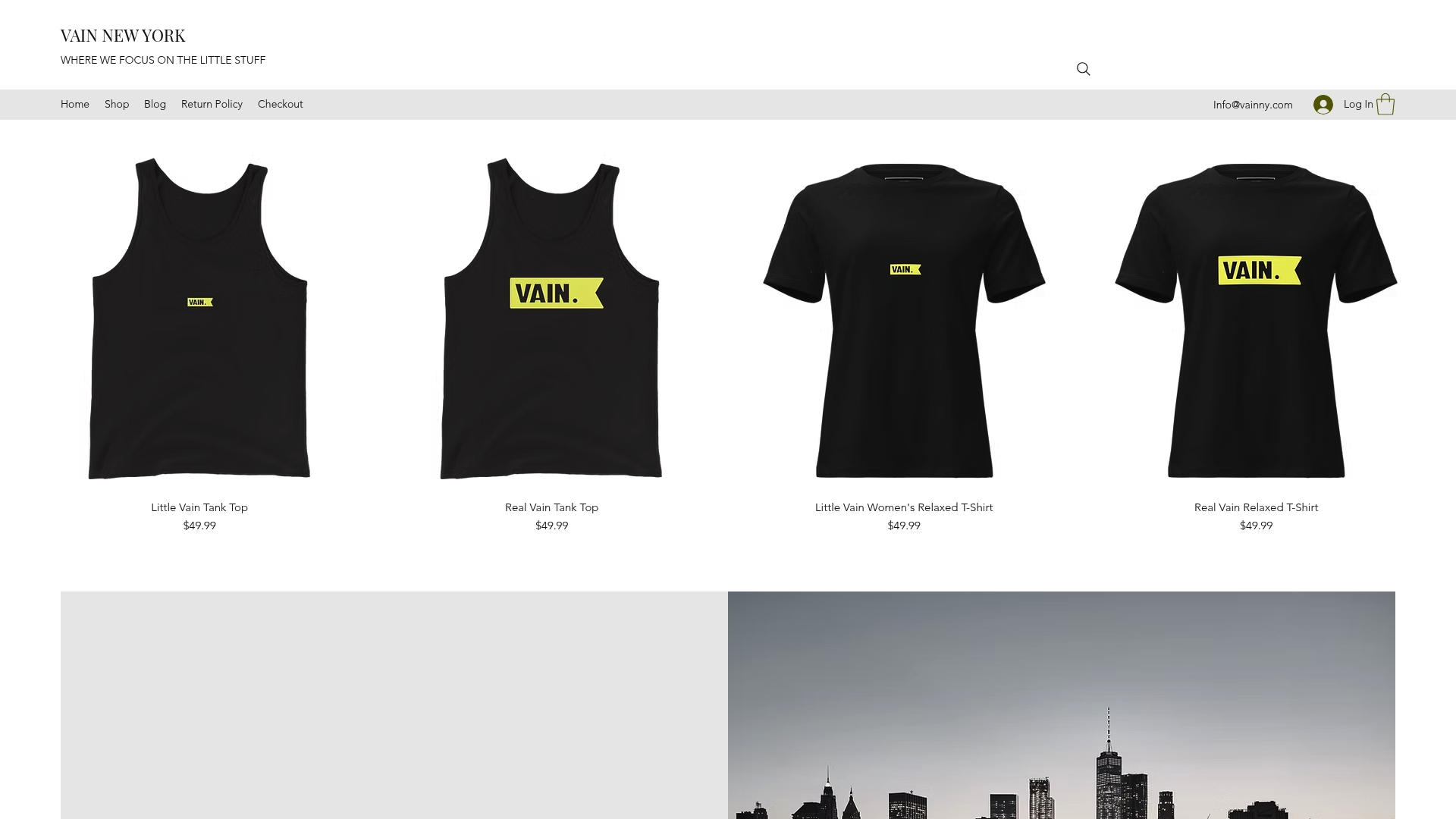
We work with brands, artists, and organizations across the United States on creative production and consultancy projects: brand films, video content, animation, marketing strategy, brand development, and audience growth campaigns. The difference between a story that lives in a document and one that moves people is production craft and strategic clarity working together. That’s what we do.
If you’re ready to take a story from concept to screen or campaign, start the conversation and let’s build something worth watching.
Useful sources and further reading
These are the sources that informed this guide, annotated for where they’re most useful and why they’re worth your time.
Strategic Storytelling at Work — Maya Grossman. The clearest practitioner articulation of why narrative outperforms data in stakeholder communication. Read this for the Goal-Problem-Stakes-Path-Resolution arc and for the argument that storytelling is a leverage skill, not a soft skill. Supports the “why it matters” and “process” sections of this guide.
Business Storytelling — Duarte. The definitive resource on audience-as-hero framing and the Big Idea concept. Nancy Duarte’s Sparkline method is the most rigorous framework available for presentation and campaign structure. Supports the “core elements” and “research-backed perspectives” sections.
Strategic Storytelling Frameworks — Juan Fernando Pacheco. A practical breakdown of Golden Circle, SCQA, ABT, and 3-Act Structure with business application examples. Use this when you need to choose a framework quickly for a specific communication goal.
Narrative Techniques — StudioBinder. The most accessible reference for craft devices: POV, foreshadowing, flashbacks, unreliable narrator, and dialogue. Particularly useful for screenwriters and video producers adapting literary techniques to visual media.
Narrative Strategies for Professional Communication — Penn LPS Online. A strong resource on media literacy, ethical communication, and the role of narrative in professional contexts. Read this for the ethical considerations section and for guidance on transparent sourcing.
Storytelling in Leadership — IDEO U. The best available resource on co-creative and inclusive storytelling. Challenges the default Hero’s Journey model and offers a more participatory approach. Relevant for teams building community-driven campaigns or working in diverse cultural contexts.
What Are the 5 C’s of Creative Writing? — ZipRecruiter. A compact checklist resource for story development and revision. Useful as a quick-reference tool during the editing phase of the workflow described in this guide.
Creative Writing — Study.com. A clear overview of the primary forms of creative writing: fiction, nonfiction, poetry, and screenwriting. Useful for understanding how structural and stylistic decisions differ across forms, which directly affects how you adapt a story to different platforms.
Storytelling — Wikipedia. A broad reference for the cultural, educational, and therapeutic dimensions of storytelling. Particularly useful for understanding why narrative is a universal cognitive tool, not just a marketing technique.
Recommended
Comments