Content Marketing Strategy: A 2026 Guide for Marketers


Content marketing is the process of creating and sharing valuable, relevant content designed to attract, engage, and convert a clearly defined audience. Unlike traditional advertising, it builds trust before asking for a sale. The Content Marketing Institute defines it as a strategic marketing approach focused on creating and distributing consistent, useful content to drive profitable customer action. For marketing professionals and business owners in 2026, this discipline now integrates SEO foundations, AI-driven discovery, structured content ecosystems, and measurable conversion pathways. Done well, it compounds over time. Done poorly, it drains budget with nothing to show.
How to build a digital content strategy that drives results
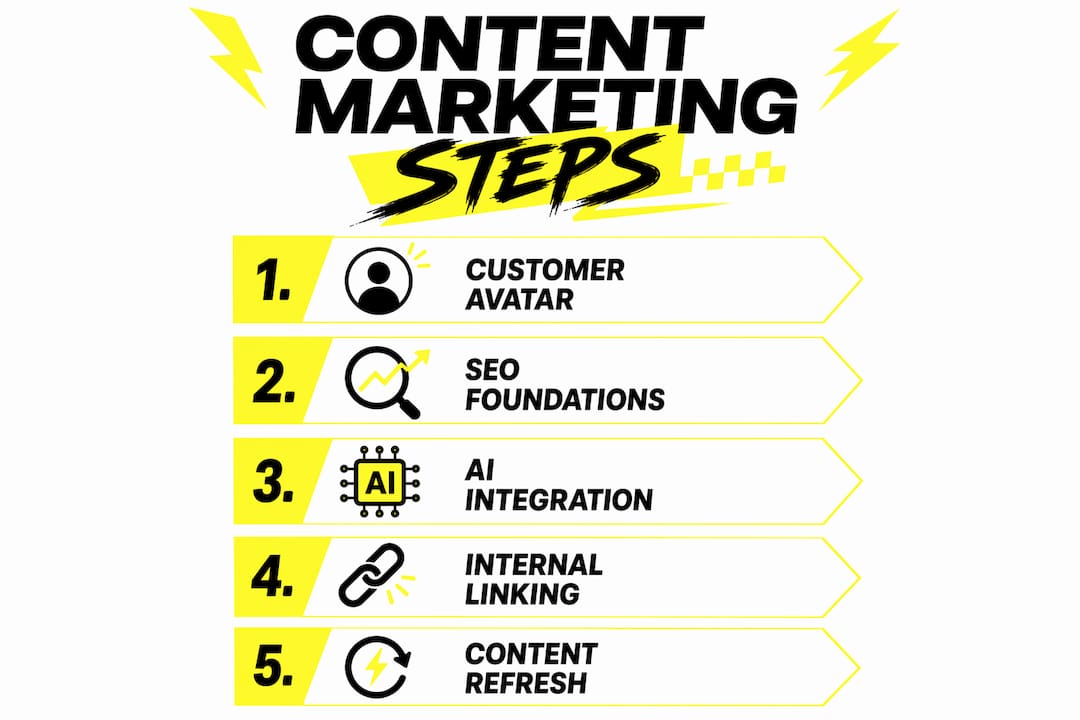
Every effective content marketing program starts with one thing: a detailed customer avatar. Before you write a single word, you need to know exactly who you are writing for, what keeps them up at night, and what questions they type into search engines at 11 PM. Assumptions here are expensive. Real research, including customer interviews, support ticket reviews, and sales call recordings, reveals pain points that generic personas miss entirely.
Once you know your audience, map content to each stage of the buyer journey. A prospect who has never heard of your brand needs educational content that answers broad questions. A prospect comparing options needs proof, case studies, and specifics. A prospect ready to buy needs clear conversion pathways. Treating all three with the same blog post is one of the most common and costly mistakes in the field.
A content calendar is not where strategy begins. It is where strategy lands after you have done the upstream thinking. Too many teams jump straight to scheduling topics without first defining what job each piece of content is supposed to do. The calendar should reflect your strategy, not replace it.
Build your customer avatar. Interview real customers, not just your sales team’s assumptions. Document their exact language, fears, and goals.
Identify specific pain points. Each piece of content should address one pain point directly. Broad topics dilute impact.
Map content to journey stages. Awareness content educates. Consideration content compares. Decision content converts.
Build your content calendar downstream. Schedule topics only after you know their purpose and intended audience stage.
Choose metrics tied to business goals. Pipeline influence, demo bookings, and CRM-tracked conversions matter far more than page views.
Pro Tip: Track which content pieces appear in your CRM as first-touch or last-touch before a deal closes. That data tells you which topics actually drive revenue, not just traffic.
What are the best content marketing practices in 2026?
SEO remains the foundation of content visibility in 2026, but it no longer works alone. AI-driven search discovery now functions as a parallel distribution channel, favoring content that is easy to quote, verify, and scan. Answer engine optimization, or AEO, requires structured answers, clear evidence blocks, and trust signals like author bylines and cited sources. If your content cannot be quoted cleanly by an AI summary, it is invisible to a growing share of your audience.

Quality has replaced quantity as the defining standard. Google’s people-first guidance rewards content with original insights, real examples, fresh updates, and clear author credibility. Publishing ten thin posts a week produces less compounding authority than publishing two deeply researched pieces. The market is saturated with generic content. Differentiation now comes from specificity, proof, and a genuine point of view.
The best content programs in 2026 operate across multiple formats and channels without losing consistency. A single well-researched article can become a LinkedIn post, an email newsletter section, a short video script, and a sales enablement document. Repurposing content across email, social, video, and sales assets increases efficiency and reinforces messaging at every buyer touchpoint. This is not laziness. It is smart asset management.
SEO plus AEO: Optimize for both traditional search and AI-generated summaries by using structured headings, direct answers, and cited evidence.
Format variety: Use long-form articles for awareness, case studies for consideration, and landing pages for conversion.
Content freshness: Update high-performing posts every six to twelve months with new data, examples, and internal links.
Trust signals: Include author bios, publication dates, and external citations on every piece.
Distribution first: Plan where content will live and how it will be promoted before you write it, not after.
A well-constructed content system integrates SEO, AI visibility, and internal linking into one operating model. That integration is what separates programs that compound over time from those that plateau after six months. Your visual branding strategy should align with this system, reinforcing recognition across every channel where your content appears.
How do you measure content marketing performance effectively?
Measurement is where most content programs lose credibility inside their own organizations. Traffic numbers look impressive in a slide deck but mean nothing if they do not connect to revenue. The metrics that actually matter are engaged sessions, content-influenced pipeline, demo requests attributed to content, and CRM-tracked conversions. These numbers tell you whether your content is doing its job or just filling a blog archive.
Setting up proper tracking requires connecting your content platform to your CRM. When a prospect reads three blog posts before booking a demo, that sequence should be visible in your data. Without that connection, you are flying blind and making editorial decisions based on gut feeling rather than evidence.
Engaged sessions: Time on page and scroll depth reveal whether readers actually consume your content.
Content-influenced pipeline: Tag deals in your CRM where content was a touchpoint before the sale.
Demo and lead attribution: Track which posts generate the most form fills and meeting requests.
Conversion rate by content type: Compare how case studies, how-to guides, and comparison pages each convert.
Returning visitor rate: Audiences that come back are building trust, which is the precursor to purchase.
Patience is not optional. Most content programs see meaningful results only after 6–9 months of consistent publishing. That timeline frustrates executives who want immediate ROI, but it reflects how trust and authority actually accumulate. Cutting a program at month three because traffic is modest is the equivalent of abandoning a garden the week before harvest.
Pro Tip: When a post underperforms, change the headline and the call-to-action before rewriting the entire piece. Eighty percent of the time, the content is fine. The entry point and the next step are broken.
How to build a sustainable content creation and distribution system
Consistency beats intensity every time in content marketing. Publishing two posts a week for twelve months outperforms a burst of twenty posts followed by three months of silence. The compounding effect of regular publishing builds domain authority, audience trust, and search visibility in ways that irregular sprints simply cannot replicate.
A sustainable system starts with a repeatable workflow, not a content calendar. The workflow defines every step from brief to draft to edit to publish to distribution to refresh. Without a documented workflow, every piece of content becomes a custom project, which burns time and creates inconsistency.
Create a brief template. Every piece starts with a one-page brief: audience, pain point, format, target keyword, and intended conversion action.
Set a realistic cadence. Weekly or biweekly publishing is sustainable for most teams. Monthly is the minimum for compounding results.
Use AI for drafts and outlines. AI tools accelerate the research and structure phase. Human editors add the original insight and brand voice that AI cannot replicate.
Assign clear ownership. Every piece needs one owner responsible for delivery. Shared ownership produces missed deadlines.
Build a refresh schedule. Every six months, audit your top-performing posts and update them with new data, examples, and internal links.
Repurposing core assets across channels is the most underused efficiency in content operations. A 1,500-word article contains at least five LinkedIn posts, one email, and a short video script. Extracting that value requires a deliberate repurposing step in your workflow, not an afterthought. Understanding your media mix helps you decide which channels deserve which content formats, so you distribute with purpose rather than habit.
Pro Tip: Schedule your content refresh audit as a recurring calendar event, not a task you add when things slow down. Refreshed content often outperforms new content in search within sixty days.
Key Takeaways
Effective content marketing requires upstream strategy, consistent execution, and measurement tied directly to business outcomes rather than vanity metrics.
Point | Details |
Strategy before calendar | Build your customer avatar and map content to journey stages before scheduling any topics. |
SEO and AEO together | Optimize for both traditional search and AI-generated summaries using structured, cited content. |
Metrics that matter | Track pipeline influence, demo attribution, and CRM conversions, not just traffic or rankings. |
Consistency compounds | Publishing two posts a week for twelve months outperforms short bursts followed by silence. |
Repurpose every asset | Extract LinkedIn posts, emails, and video scripts from every long-form article you publish. |
Why most content programs fail before they find their footing
I have watched dozens of content programs launch with real ambition and collapse within six months. The pattern is almost always the same. The team skips the customer avatar work, publishes content that feels right internally, measures success by page views, and then declares the channel “doesn’t work” when the pipeline stays flat.
The uncomfortable truth is that connecting blog content to conversion pathways is the step most teams skip entirely. They build a beautiful editorial calendar and forget to ask: what does a reader do after they finish this article? If the answer is “close the tab,” the content is not doing its job, regardless of how well it ranks.
AI search has added a new layer of complexity that I find genuinely exciting. Visibility in AI summaries is real and growing, but it rewards a different kind of writing. Structured, specific, cited content wins. Vague, keyword-stuffed content disappears. The teams that will win in 2026 are the ones treating content as a craft, not a commodity. They measure what matters, refresh what works, and build systems that outlast any individual campaign.
The brands I respect most treat their content the way Vainnewyork treats creative production: with intention, craft, and a commitment to making something worth a reader’s time. That standard is harder to maintain than a posting schedule, but it is the only one that compounds into lasting authority.
— Neville
Vainnewyork and the craft behind great brand content
Great content does not exist in isolation. It lives inside a brand identity that gives it texture, voice, and visual coherence. Vainnewyork was built on exactly that principle: making the ordinary extraordinary through content, collaboration, and culture.
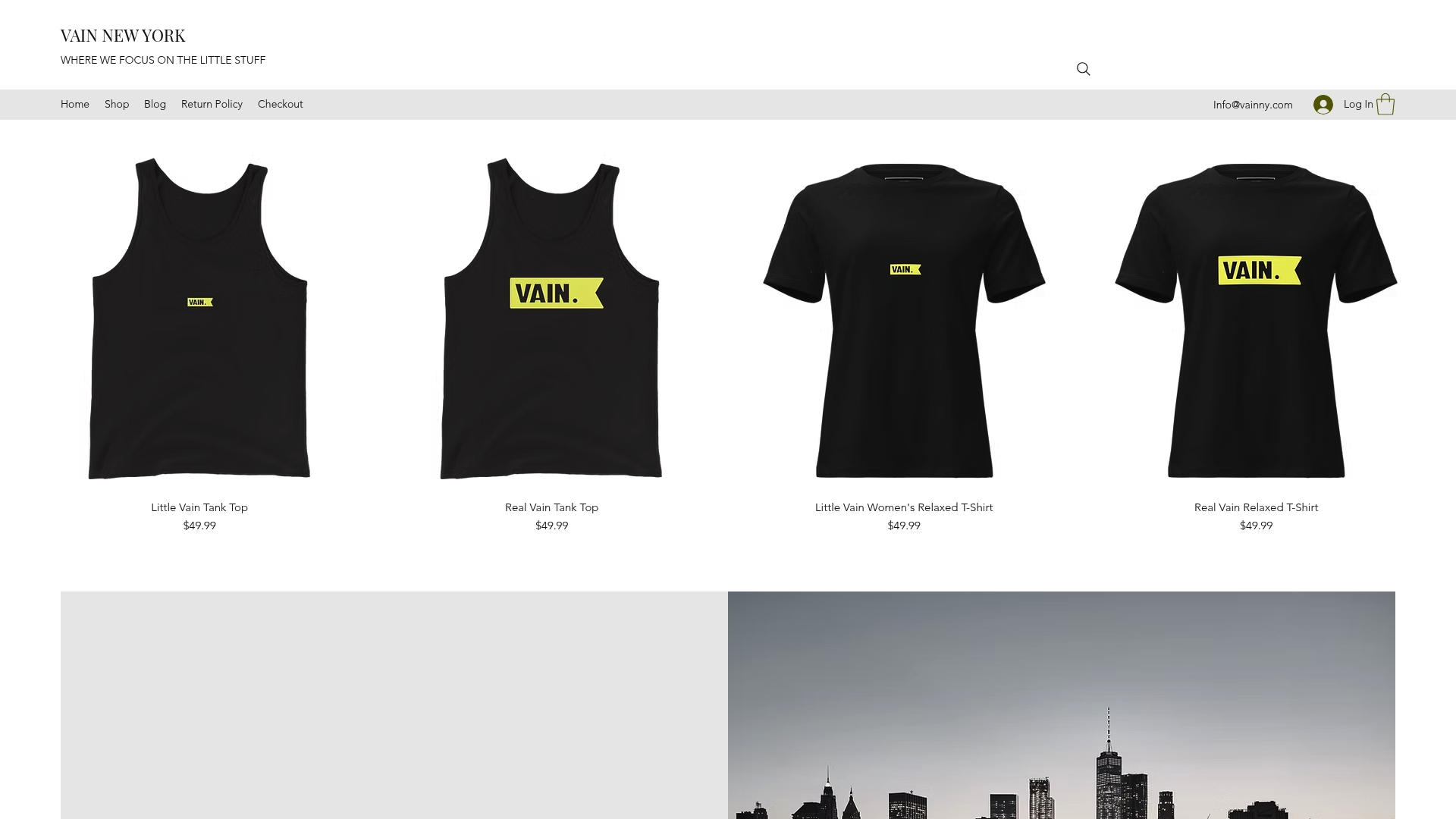
If you are building a content program that reflects genuine brand character, the products and creative work at Vainnewyork show what that commitment looks like in practice. The Vainnewyork shop brings together curated pieces that embody the same creative discipline this article describes: intentional, specific, and built to resonate. Explore the collection and see how brand identity and content strategy reinforce each other at every touchpoint.
FAQ
What is content marketing in simple terms?
Content marketing is the practice of creating and sharing useful, relevant content to attract and convert a specific audience. It builds trust before asking for a sale, making it more effective than interruptive advertising over time.
How long does content marketing take to show results?
Most programs see meaningful results after 6–9 months of consistent publishing. Patience and a steady cadence are the two factors that separate programs that compound from those that stall.
What are the 3 C’s of content marketing?
The 3 C’s are Creation, Curation, and Conversation. Creation means producing original content. Curation means selecting valuable third-party content. Conversation means actively engaging your audience around both.
What metrics should I track for content marketing success?
Track pipeline influence, demo requests attributed to content, CRM-tracked conversions, and engaged sessions. Page views and rankings are secondary signals. Revenue-connected metrics tell you whether content is actually working.
How does AI search change content marketing strategy?
AI-driven search favors content that is structured, specific, and easy to quote in summaries. Marketers must optimize for answer engine visibility alongside traditional SEO to maintain discovery across both channels.
Recommended
Comments